

Home » Uncategorized » Becoming a Counsellor in the UK: Your 2026 Guide to a Fulfilling Career
Quick Answer: Becoming a counsellor in the UK involves a structured pathway of accredited training, supervised practice, and professional registration, typically starting with introductory courses before progressing to a diploma or degree-level qualification. This career is ideal for individuals with strong empathy and communication skills who are dedicated to supporting others through emotional and psychological challenges.
Key Takeaways:
A counsellor in the UK offers professional guidance and support to individuals, couples, families, or groups facing a wide range of emotional, psychological, and social difficulties. The core purpose is to provide a safe, confidential, and non-judgmental space where clients can explore their feelings, thoughts, and behaviours, gain new perspectives, and develop effective coping strategies to improve their overall well-being. This is distinct from coaching, which typically focuses on future goals, or psychiatry, which involves medical diagnosis and prescribing medication.
Counsellors utilise various therapeutic approaches, from person-centred therapy to cognitive behavioural therapy (CBT), tailored to the individual needs of their clients. A typical session involves deep listening, asking probing questions, and reflecting on what the client shares, without offering direct advice. Instead, the counsellor empowers the client to find their own solutions and build resilience. For example, a client struggling with anxiety might explore the root causes of their worry, learn relaxation techniques, and challenge unhelpful thought patterns with the counsellor’s support. This often involves working with clients to set achievable goals and track their progress over time.
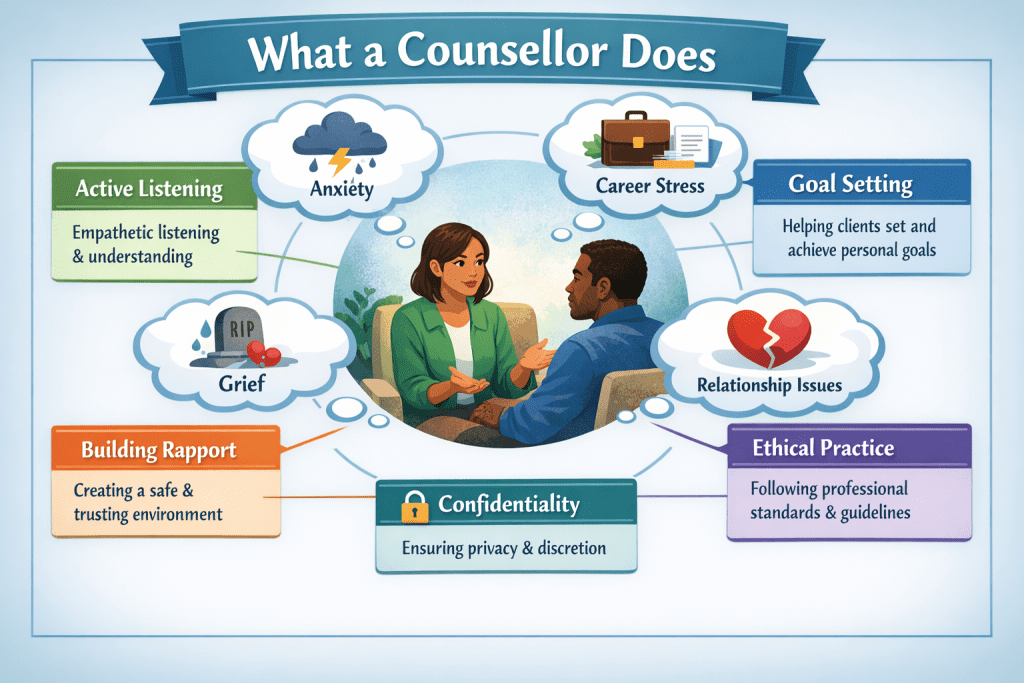
A common misconception is that counsellors simply ‘tell people what to do’. In reality, the counsellor’s role is facilitative; they act as a guide, not a director. They help clients unlock their own insights and potential for change, fostering self-awareness and personal growth. For instance, imagine Sarah, who felt stuck in her career. Through counselling, she explored her values, skills, and fears, realising her true passion lay in a different field. Her counsellor didn’t tell her to quit her job, but helped her uncover that desire herself. This process is often deeply transformative and requires a consistent, trusting relationship between the counsellor and client.
To be an effective counsellor, a unique blend of personal qualities and honed professional skills is essential, all centered around facilitating positive change in others. While academic qualifications are vital, the ability to genuinely connect and support clients is paramount.
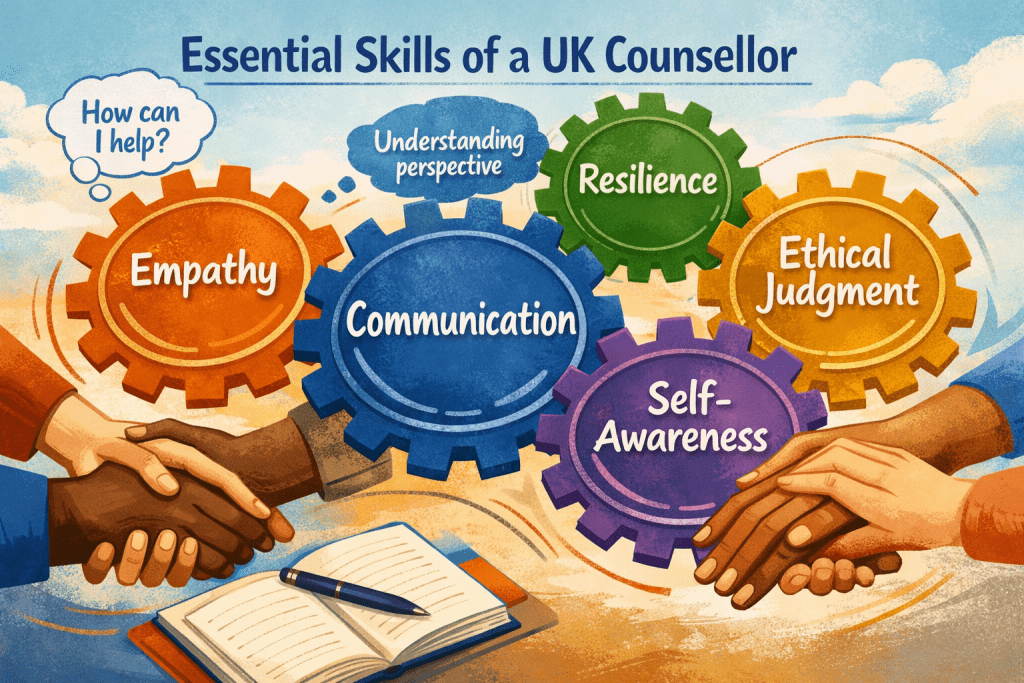
A common mistake aspiring counsellors make is believing they need to have all the answers. The true skill lies in guiding the client to discover their own answers. For instance, a client grappling with a difficult decision might benefit less from direct advice and more from a counsellor expertly facilitating a pros and cons discussion, exploring their feelings about each option, and building confidence in their own judgment. Another critical skill for a counsellor in a diverse UK society is cultural competence – understanding how different cultural backgrounds can influence a client’s experiences and perspectives.
The journey to becoming a qualified counsellor in the UK is structured and typically requires completing an accredited training programme, followed by supervised practice and professional registration. There isn’t a single “fast track,” but rather a series of progressive steps designed to ensure competence and ethical practice.
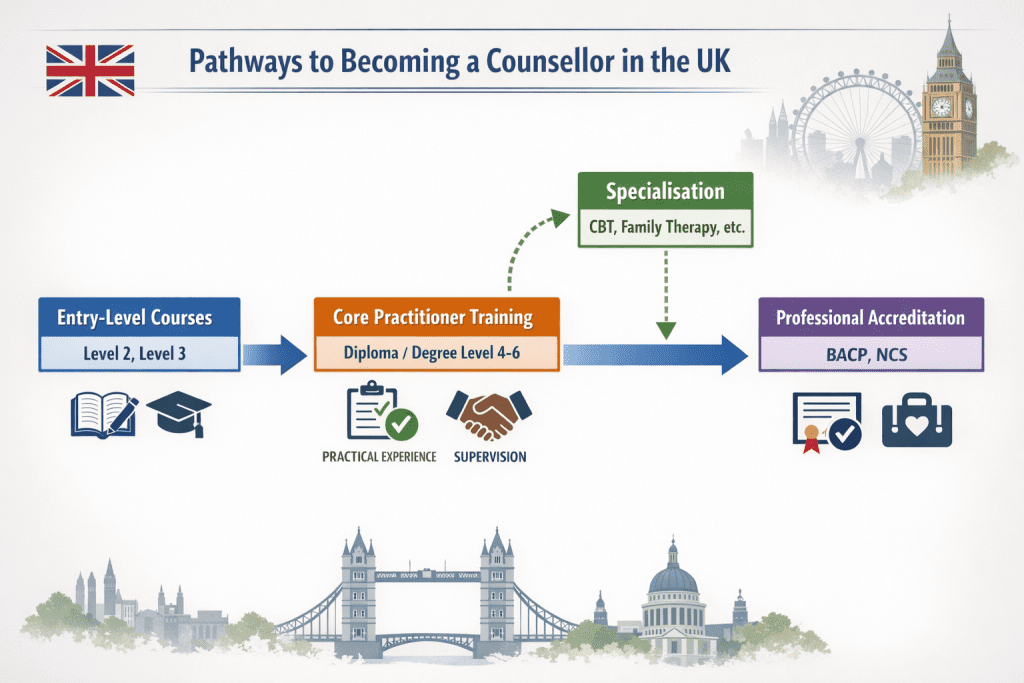
In the UK, the two main professional bodies for counsellors are:
When choosing a course, it is critical to ensure it is BACP or NCS accredited (or leads to eligibility for their registers). Opting for a non-accredited course might severely limit your ability to gain employment or professional indemnity insurance. For instance, if you pursue an overseas qualification, you would need to confirm its recognition by UK professional bodies, which can often involve a complex equivalency process.
A note on degree pathways: While a diploma is the traditional route, a university degree in counselling or psychotherapy (e.g., an MSc in Counselling Psychology) provides a more academic and often research-focused foundation, which can open doors to roles in academia, advanced clinical practice, or specific specialist areas. Some roles, particularly within the NHS or certain private organisations, may prefer candidates with a degree.
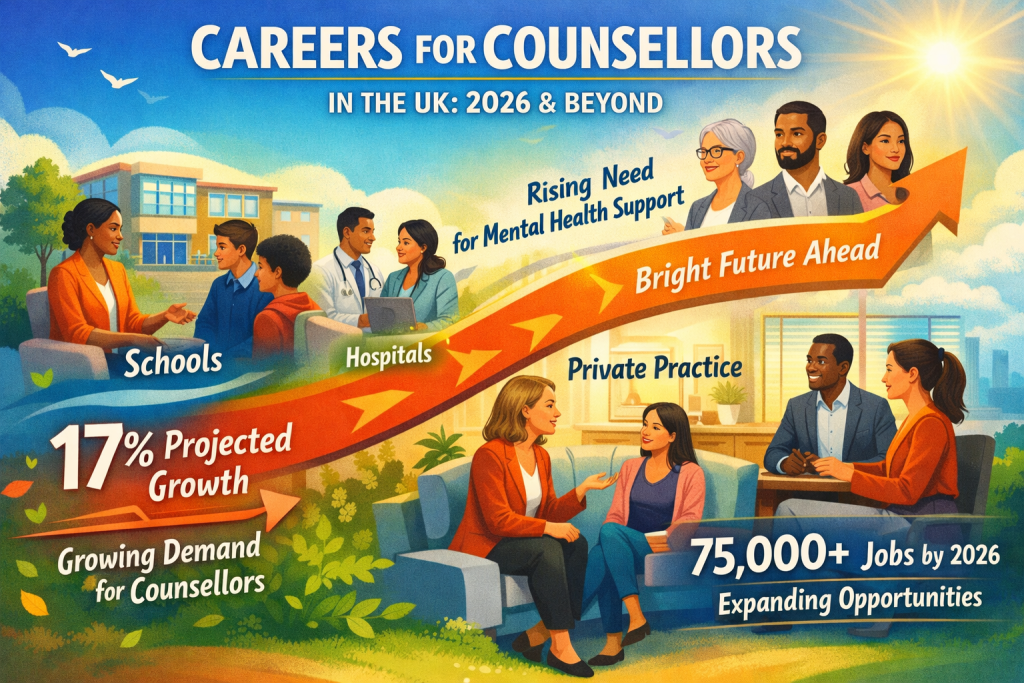
The career landscape for counsellors in the UK is vibrant and growing, offering a wide array of opportunities across diverse settings. Driven by increasing mental health awareness and a significant demand for services, the job outlook for counsellors is exceptionally strong, presenting a promising path for those entering the profession in 2026 and beyond.
Counsellors can find fulfilling roles in many different environments:
The demand for qualified counsellors in the UK is high and projected to increase significantly. Globally, mental health provider shortages are a critical issue; for example, in the US, 37% of the population lives in mental health professional shortage areas, with only 26.4% of the workforce need being met [1]. This reflects a broader trend of rising demand for mental health support.
While the median counsellor compensation in the US is reported around $59,190, with full-time professionals earning an average of $71,000 [3], salaries in the UK vary significantly based on experience, sector (NHS vs. private), location, and specialisation. Newly qualified counsellors in the NHS typically start on Band 5 or 6, while experienced private practitioners can command higher hourly rates. The rewarding nature of supporting people’s well-being is often a stronger motivator than purely financial gain for many in the profession.
However, potential challenges exist, such as the significant student loan debt many counsellors accrue (US data suggests 113% higher than the national average [3]), which can be a barrier to entry. Additionally, the risk of burnout is high in the behavioural health field [2], underscoring the importance of good supervision and self-care practices. Despite these challenges, the expanding market and crucial societal role make counselling an incredibly valuable and in-demand career.
Embarking on a career as a counsellor is a rewarding journey that requires dedication, self-reflection, and a structured approach to training. Here are the practical steps you can take to begin your path in 2026.
By following these practical steps, you can build a solid foundation for a successful and impactful career as a counsellor in the UK, helping individuals navigate life’s challenges and foster positive change.
Here are some common questions about pursuing a career as a counsellor in the UK.
While often used interchangeably, there are distinctions. A counsellor typically works with specific issues, often in the present, helping clients develop coping strategies. A psychotherapist generally engages in longer-term, deeper work, exploring underlying issues and past experiences. A psychologist (specifically a clinical psychologist) holds a doctorate, focusing on diagnosis, assessment, and treatment of mental health disorders, often using scientifically validated therapies.
Typically, it takes 3 to 5 years to become a fully qualified and registered counsellor. This includes introductory courses (Level 2/3), a core practitioner diploma or degree (Level 4+), and a supervised placement.
No, not necessarily. While university degrees are an option, a Level 4 Diploma in Therapeutic Counselling (or equivalent) from a BACP-accredited or NCS-recognised training provider is generally the minimum professional qualification required to practice in the UK.
BACP (British Association for Counselling and Psychotherapy) accreditation is a quality assurance mark for both training courses and individual counsellors. It signifies that a course or practitioner meets rigorous professional and ethical standards. It’s important because many employers require it, and it provides assurance to clients that you are a competent and ethical professional.
Yes, many counsellors, especially those in private practice, work part-time. This flexibility is one of the attractions of the profession. However, full-time employment is also widely available, particularly within larger organisations or the NHS.
Starting salaries for newly qualified counsellors vary. In the NHS, entry-level roles might be on Band 5 or 6, while in the charity sector, salaries can be modest. Private practice rates are set by the individual counsellor, ranging from £40-£70+ per session depending on location and experience.
Yes, most accredited core practitioner training programmes in the UK mandate that students undertake a certain number of hours of personal therapy. This is considered essential for self-development, understanding the client experience, and preventing personal issues from impacting client work.
Clinical supervision is a formal arrangement where a qualified counsellor regularly meets with an experienced supervisor to discuss their client work. It’s crucial for ensuring ethical practice, supporting the counsellor’s well-being, enhancing skills, and addressing any professional challenges. It is a mandatory ongoing requirement for all practising counsellors.
Key challenges include managing the emotional demands of working with clients in distress, preventing burnout, dealing with administrative tasks, building a client base (if in private practice), and keeping up with ongoing professional development. The high student loan debt mentioned (US data) can also be a significant barrier for some.
Absolutely. Progression can involve specialising in specific therapeutic modalities (e.g., CBT, family therapy), working with particular client groups (e.g., children and young people, addiction), moving into supervisory roles for other counsellors, becoming a trainer, or taking on management positions in counselling services.
Yes — counselling is one of the most accessible professions for mature students and career changers. In fact, many training providers actively welcome applicants with life experience, as maturity, emotional insight, and interpersonal skills are highly valued in therapeutic work.
People often transition into counselling from careers such as teaching, healthcare, social work, HR, law enforcement, or even corporate roles. Previous experience dealing with people, conflict resolution, or emotional support can be particularly beneficial.
Unlike many professions, there is no strict upper age limit. Some individuals begin training in their 40s, 50s, or even later and go on to establish successful private practices or specialist roles. Training programmes typically assess readiness based on personal development, self-awareness, and commitment rather than age alone.
Do counsellors need insurance in the UK?
Yes. Professional indemnity insurance is essential before working with clients independently. This protects both the counsellor and clients in the event of complaints, legal claims, or professional disputes.
Most employers will require proof of insurance, and professional bodies such as the British Association for Counselling and Psychotherapy and the National Counselling Society often provide access to discounted policies for members.
Key types of coverage typically include:
Without adequate insurance, it can be difficult — or impossible — to practice legally or ethically.
Yes. Online counselling has grown dramatically, particularly since the pandemic. Many practitioners now offer therapy via video calls, telephone sessions, or secure messaging platforms.
Online work allows counsellors to:
However, remote practice requires additional competencies, including digital confidentiality, safeguarding procedures for distant clients, and familiarity with online therapy ethics. Many CPD courses now focus specifically on digital practice.
After qualifying, counsellors often develop expertise in particular areas. Specialisation can improve employability, allow higher fees in private practice, and increase professional satisfaction.
Common UK specialisations include:
Some specialisms require additional postgraduate training or supervised experience, but they can significantly enhance career opportunities.
Building a client base takes time, especially in private practice. New counsellors typically use a combination of approaches:
Many practitioners start part-time while working in another role until their caseload becomes sustainable.
While not always mandatory, volunteering is extremely common and often expected. It provides supervised experience with real clients, helps develop confidence, and demonstrates commitment to the profession.
Typical volunteer placements include:
Some diploma courses require a minimum number of client hours that may initially be completed in voluntary settings.
Counselling training is not purely academic — it is deeply personal. Many students experience significant emotional growth as they explore their own histories, beliefs, and behavioural patterns.
Common challenges include:
However, supervision and personal therapy are designed to support trainees through these challenges safely.
No. Counsellors in the UK do not prescribe medication. Prescribing is restricted to medical professionals such as psychiatrists and certain qualified healthcare practitioners.
Counsellors focus on psychological and emotional support through talking therapies rather than medical treatment. If a client may benefit from medication, the counsellor may suggest consulting a GP or psychiatrist.
Ethics are central to counselling practice. Professional bodies maintain strict codes of conduct to protect clients and maintain public trust.
Core ethical principles include:
Breaches of ethics can result in disciplinary action, loss of registration, or legal consequences.
Is private practice financially viable?
Private practice can be financially rewarding, but income varies widely depending on location, experience, specialisation, and business skills.
Factors influencing earnings include:
Many counsellors diversify income through workshops, group therapy, supervision, teaching, or corporate wellbeing work.
Supervision remains mandatory throughout a counsellor’s career. It provides a structured space to reflect on client work, manage ethical dilemmas, and maintain professional effectiveness.
Regular supervision helps prevent burnout, ensures accountability, and supports ongoing development. Most professional bodies specify minimum supervision hours based on client caseload.
For many practitioners, counselling is deeply meaningful work. Witnessing clients gain insight, heal from trauma, or rebuild their lives can be profoundly fulfilling.
Common sources of professional satisfaction include:
However, the rewards come alongside emotional demands, making self-care essential.
Possibly — but recognition varies by country. Some nations accept UK qualifications, while others require additional licensing, exams, or supervised practice.
Counsellors interested in working abroad should research local regulatory requirements carefully. Online therapy may allow international work, but practitioners must still comply with laws in both their own country and the client’s location.
While training teaches skills, certain personal characteristics strongly support effectiveness:
Importantly, counsellors do not need to be “perfect” — self-awareness matters far more than flawless emotional stability.
Given rising awareness of mental health, ageing populations, social pressures, and workplace stress, demand for counselling services is expected to remain strong for decades.
Technological changes may alter how therapy is delivered, but the need for human empathy, understanding, and professional guidance is unlikely to disappear. As society becomes more open about mental health, counselling is increasingly viewed as essential rather than optional support.
Becoming a counsellor in the UK is a profound and impactful career choice, offering the unique opportunity to support individuals through their most challenging times and witness their growth. With increasing societal recognition of mental health needs, the demand for skilled and empathetic counsellors is set to remain strong well into 2026 and beyond.
The journey requires dedication, involving a structured pathway of accredited training, supervised practice, and a commitment to continuous professional development. From introductory courses to advanced diplomas and professional accreditation, each step is designed to equip you with the essential skills – from active listening and empathy to ethical judgment and resilience. While the path demands significant investment of time and personal reflection, the rewards of facilitating genuine change in people’s lives are immeasurable.
If you possess a deep desire to help others, a strong capacity for empathy, and a commitment to lifelong learning, the counselling profession in the UK offers diverse career opportunities across the NHS, private practice, education, and voluntary sectors. Take the first step today by researching accredited training programmes and exploring the rich, fulfilling world of counselling.