
How to Reheat Food Without a Microwave is a common question for anyone looking for practical alternatives to microwave heating. Microwaves are quick, convenient, and common in many kitchens, but they are not the only way to reheat food.
Quick Overview
This guide on how to reheat food without a microwave explains practical and safe methods for warming leftovers using common kitchen tools such as the stovetop, skillet, oven, toaster oven, air fryer, steaming methods, steamer basket and hot water bath.
Whether you are reheating food at home, at work, or without full kitchen access, this guide walks you through:
✅ Choosing the right method based on food type (saucy, crispy, moist or delicate).
✅ Using tools like stovetop pans, skillets, ovens, air fryers and steam for best results.
✅ Keeping food safe by ensuring even heating, proper storage and avoiding repeated reheating.
In fact, depending on what you are warming up, a microwave may not even be the best option. Some foods can become rubbery, soggy, or unevenly heated in a microwave, whereas other reheating methods can better restore their texture, flavour, and freshness.
So, how do you reheat food without a microwave? The simple answer is that you can use steam, a stovetop pan, a skillet, an oven, a toaster oven, an air fryer, a steamer basket, or a hot water bath, depending on the type of food. The most effective method will vary according to whether the food is dry, saucy, crispy, delicate, dense, or already portioned.
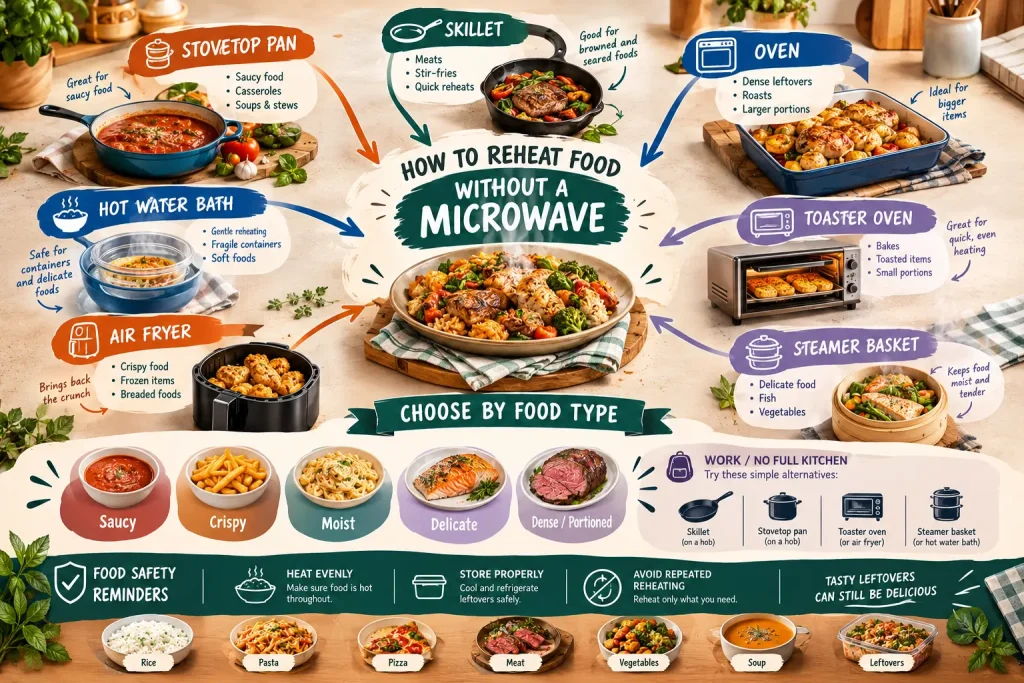
This guide explains how to reheat food without a microwave safely and effectively. Drawing on established food reheating practices, we cover the best microwave alternatives, how to warm up food without a microwave at work, what to do if you do not have access to an oven or stovetop, and which methods work best for common foods such as rice, pasta, pizza, meat, vegetables, soup, and leftovers.
Whether you work in hospitality, catering, care, office food service, or simply prepare meals at home, knowing how to heat up food without a microwave is a valuable everyday skill. Using the right reheating method can help maintain food quality, reduce waste, and support food safety. Jobsland focuses on practical career and workplace knowledge, and food handling is one of those areas where small habits can make a significant difference.
Why Reheating Food Properly Matters
Understanding how to reheat food without a microwave starts with recognising that reheating is not just about making food taste warm again. It is also about food safety.
Cooked food can become unsafe if it is cooled slowly, stored incorrectly, left out for too long or reheated unevenly. When food is reheated, it should be hot all the way through, not just warm at the edges. This is especially important for foods such as rice, meat, poultry, seafood, sauces, soups and ready meals.
In practical terms, you want the food to be steaming hot throughout. If you use a food thermometer, the centre should be properly hot before serving. If you do not use a thermometer, check that the food is evenly hot, stir where possible and allow enough time for heat to reach the middle.
Another key rule is to reheat only what you plan to eat. Repeated reheating and cooling can increase food safety risks and reduce food quality. If you cooked a large batch, divide it into smaller portions before storing so you can reheat one portion at a time.
Good reheating starts before the reheating stage. Leftovers should be cooled quickly, stored properly in the fridge or freezer, and kept covered. If food has been left out for too long or smells, looks or feels wrong, do not try to save it by reheating. Heating may kill some bacteria, but it does not automatically make badly stored food safe to eat.
Before You Reheat: The Basic Safety Checklist
Before choosing a microwave-free reheating method, check whether the food is suitable for reheating. This is an important step when learning how to reheat food without a microwave safely and effectively.
First, think about how it was stored. Food that needed refrigeration should not have been left sitting at room temperature for hours. If it has been in the fridge, it should have been stored covered and kept cold. If it has been frozen, it should usually be defrosted safely before reheating unless the food instructions say it can be reheated from frozen.
Second, check the portion size. Large, dense portions take longer to heat through. If possible, divide food into smaller pieces or portions. A thick block of rice, pasta bake or stew will heat more evenly if loosened or broken up first.
Third, choose the right container. Some reheating methods require heatproof dishes, pans, oven trays, steamer baskets or sealed food-safe bags. Do not use plastic containers in ovens, air fryers or pans unless they are clearly designed for that purpose.
Fourth, think about moisture. Many leftovers dry out when reheated. Adding a splash of water, stock, sauce or oil can help bring back texture. On the other hand, crispy foods need dry heat rather than too much moisture. This is one reason people often ask, can you reheat food in an air fryer? In many cases, an air fryer can be an effective option for restoring crispness while heating food thoroughly.
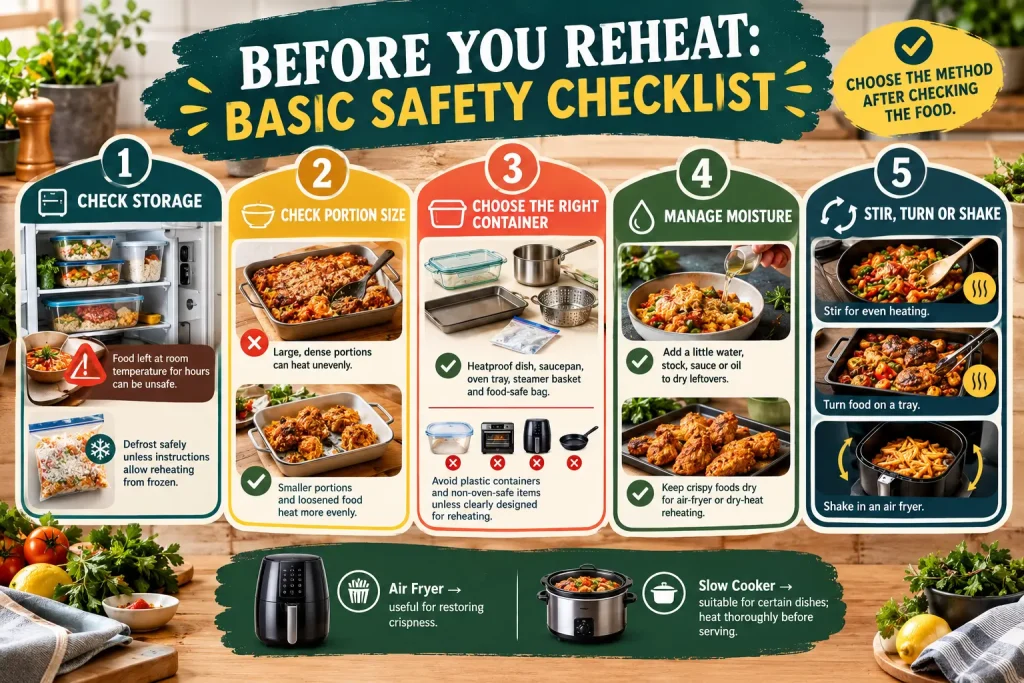
Finally, stir, turn or shake food during reheating where possible. This helps avoid cold spots. Some people also wonder, can you reheat food in a slow cooker? While a slow cooker can be suitable for certain dishes, it is important to ensure that the food reaches a safe temperature throughout before serving.
Practical Ways to Reheat Without a Microwave
There is no single best way to reheat food without a microwave. Understanding how to reheat food without a microwave starts with choosing the method that best suits the food and the equipment available to you.
A microwave is fast because it heats water molecules inside food, but it can heat unevenly. Other methods usually take longer, but they often produce better texture. A skillet can revive fried rice. An oven can bring back crispness to pizza. Steam can gently reheat rice and dumplings. A hot water bath can warm delicate sealed foods without drying them out. Many of these methods are also useful if you are looking for how to reheat food without a microwave or oven.
The sections below explain the main microwave alternatives and how to use them properly, helping you understand how to reheat food without a microwave safely and effectively.
The Steaming Method
The steaming method is one of the best ways to reheat food without a microwave when you want moisture, gentle heat and even warming. For many people learning how to reheat food without a microwave, steaming is one of the most reliable options.
Steam works well because it surrounds the food with moist heat. This helps prevent dryness and is especially useful for rice, vegetables, dumplings, bao buns, fish, chicken pieces, pasta with a little sauce and other delicate leftovers.
To use the steaming method, place a small amount of water in a pan and bring it to a gentle simmer. Put the food in a heatproof bowl, plate or steamer insert above the water. Cover the pan with a lid so the steam circulates. Heat until the food is steaming hot all the way through.
If you are reheating rice, loosen the grains first and add a few drops of water if it looks dry. For vegetables, use shorter reheating times to avoid making them mushy. For dumplings or buns, steam helps restore softness better than dry heat.
The steaming method is especially useful if you want to know how to reheat food without a microwave or oven but do not want to dry food out. It is slower than a microwave, but the texture is often much better.
One thing to remember is that steam can burn. Open the lid away from your face and use oven gloves or a cloth when handling hot bowls or baskets. Following these basic precautions is an important part of how to reheat food without a microwave safely.
Stovetop Reheating
The stovetop is one of the most flexible ways to reheat food without a microwave. It works especially well for soups, stews, curries, sauces, pasta dishes, rice dishes, cooked vegetables and anything with moisture. It is also one of the most practical answers to how to reheat food without a microwave or oven.

To reheat food on the stovetop, place it in a saucepan or pan over low to medium heat. Add a splash of water, stock, milk or sauce if needed. Stir regularly so the food heats evenly and does not catch on the bottom.
Soups and stews are usually the easiest foods to reheat because liquid transfers heat effectively. Bring them to a gentle simmer and stir from time to time. Do not use excessively high heat, as this can burn the bottom while the centre is still warming.
For pasta, add a little sauce, water or oil to stop it sticking. For curry or chilli, stir often and make sure the thickest parts are heated thoroughly. For rice, use low heat and a little moisture, but be careful not to turn it into a paste.
Stovetop reheating is also useful when you want better control. You can see, stir and adjust the food as it warms. This makes it easier to avoid cold spots and achieve more even heating, which is an important aspect of how to reheat food without a microwave.
If you are asking how to reheat food without a microwave in a typical kitchen, the stovetop is often one of the first methods to try because it is simple, widely available and suitable for a wide range of foods.
Skillet Reheating
A skillet or frying pan is ideal for foods that benefit from direct heat and a little crispness. For many people researching how to reheat food without a microwave, a skillet is one of the most effective and accessible options.
This method works well for pizza slices, fried rice, noodles, tortillas, cooked potatoes, roasted vegetables, pancakes, flatbreads, quesadillas, some meats and leftover stir-fries.
The key is to use moderate heat. If the pan is too hot, the outside may burn before the inside warms through. Add a small amount of oil or butter if the food needs it, or a splash of water if the food needs extra moisture. Using controlled heat is an important part of how to reheat food without a microwave safely and effectively.
For pizza, place the slice in a dry skillet over medium-low heat. Cover with a lid for a few minutes. The base becomes crisp while the top warms and the cheese softens. This often works better than a microwave because the crust does not become limp.
For fried rice or noodles, break up any clumps first. Add a small amount of oil or water, then stir frequently. Make sure the food heats evenly and does not remain cold in the centre.
For cooked meat, slice it before reheating if possible. Smaller pieces heat more evenly and are less likely to dry out. Add a little sauce, gravy or water if needed to help retain moisture.
Skillet reheating is one of the best ways to reheat food without a microwave when texture matters. It is not suitable for every food, but for leftovers that should be warm and slightly crisp, it can produce excellent results. It is also a practical solution for anyone wondering how to reheat food without a microwave at work, provided access to a hob or kitchenette is available.
Oven or Toaster Oven
An oven or toaster oven is useful for reheating larger portions and foods that should remain crisp or baked. For many households, this is a reliable answer to how to reheat food without a microwave.
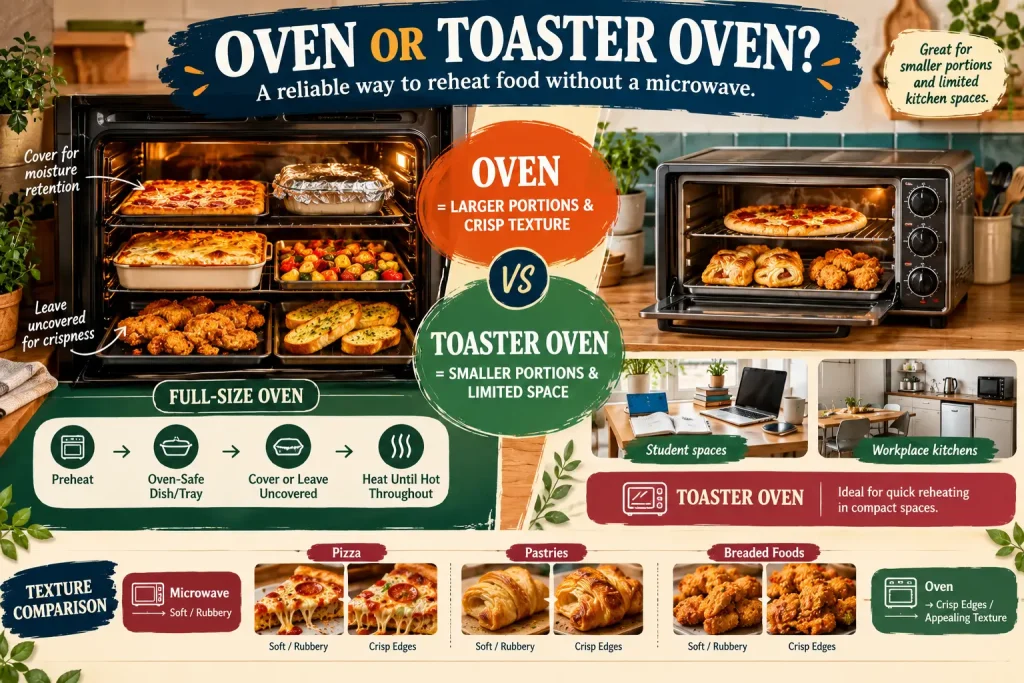
This method works well for pizza, pies, pastries, roasted vegetables, lasagne, pasta bake, casseroles, breaded chicken, garlic bread and many takeaway leftovers.
To reheat food in an oven, preheat it first. Place the food in an oven-safe dish or tray. Cover with foil if you want to retain moisture, or leave it uncovered if you want crispness. Heat until the food is hot all the way through.
For pasta bakes and casseroles, covering with foil at the beginning helps prevent the top from burning before the centre becomes hot. You can remove the foil near the end if you want the top to crisp.
For pizza, pastries and breaded foods, dry oven heat helps restore texture. A microwave often makes these foods soft or rubbery, whereas an oven can bring back crisp edges and a more appealing texture.
A toaster oven is a smaller version of the same idea. It heats more quickly than a full-sized oven and is useful for smaller portions. It can be especially handy for students, small flats or workplaces with limited kitchen space when considering how to reheat food without a microwave at work.
If you are wondering how to reheat food without a microwave or stove, an oven or toaster oven is often one of the most practical answers. It takes longer than some methods, but it is reliable and suitable for a wide range of foods.
Air Fryer
Many people ask whether an air fryer can be used when learning how to reheat food without a microwave. The answer is yes. You can reheat many foods in an air fryer, and it is often one of the best options for foods that should remain crisp.
An air fryer works like a small convection oven. It circulates hot air around the food, helping to restore crispness without requiring much oil.
Air fryers work well for chips, fried chicken, pizza, pastries, roasted vegetables, breaded foods, spring rolls, samosas, onion rings and some cooked meats. They are less suitable for very saucy foods, soups or foods that may spill through the basket.
To reheat food in an air fryer, preheat it if your model recommends doing so. Place food in a single layer so the hot air can circulate properly. Use a moderate temperature rather than the highest setting. Shake or turn the food halfway through if needed. Heat until it is hot throughout.
For chips, the air fryer can restore crispness far better than a microwave. For fried chicken, it can revive the coating while maintaining texture, although you should always ensure the inside is heated thoroughly. For pizza, it can crisp the base quickly and evenly.
Be careful with lightweight foods, as the circulating air can move them around. Also avoid overcrowding the basket. If food is piled up, some pieces may remain cold and may not reheat evenly.
If you are looking for the best way to reheat food without a microwave for crispy leftovers, the air fryer is often one of the strongest choices. It can also be a useful option for people researching how to reheat food without a microwave or stove, particularly in settings where an air fryer is available but traditional cooking appliances are not.
Steamer Basket
A steamer basket is a more structured version of the steaming method. It can be made from metal, bamboo or silicone, depending on what you have available. For anyone learning how to reheat food without a microwave, a steamer basket is one of the most reliable tools for gentle, even heating.
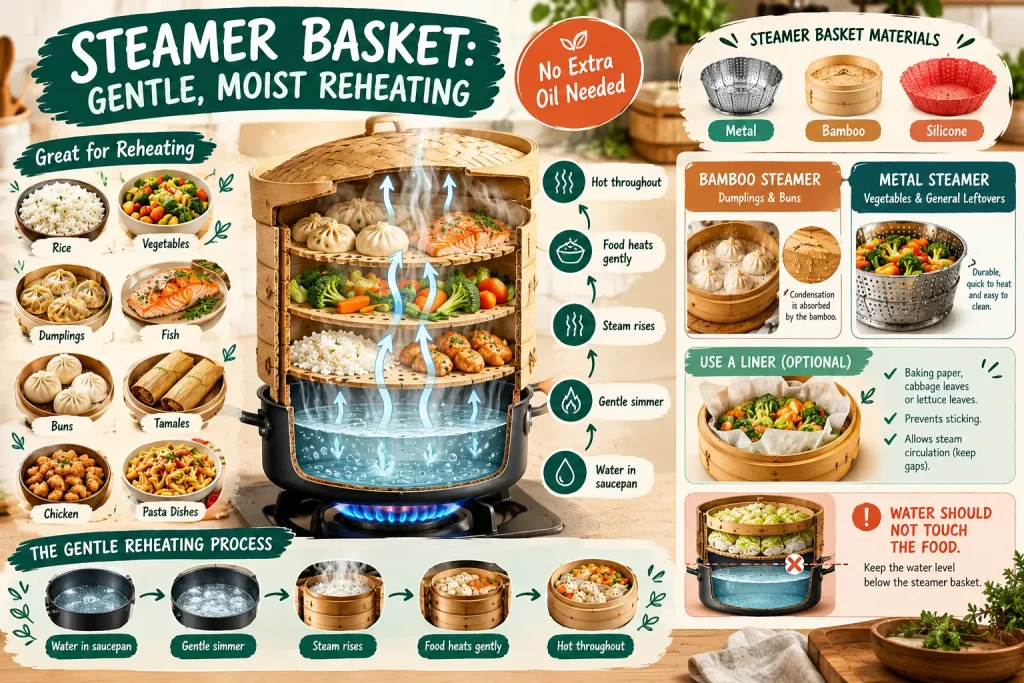
It is excellent for foods that should stay moist and soft, such as rice, steamed vegetables, dumplings, fish, buns, tamales, small pieces of chicken and some pasta dishes.
To use a steamer basket, add water to a saucepan, making sure the water does not touch the food. Bring the water to a simmer, place the basket over it, add the food and cover with a lid. Let the steam heat the food gently until it is hot throughout.
A bamboo steamer works particularly well for dumplings and buns because it absorbs some condensation and provides gentle, even heat. A metal steamer basket is practical for vegetables and general leftovers.
The steamer basket method is useful when learning how to reheat food without a microwave while preserving moisture and texture. It is also ideal if you want to avoid adding extra oil during reheating.
One tip is to line the basket with baking paper, cabbage leaves or lettuce leaves for foods that might stick, such as dumplings or rice-based items. Make sure steam can still circulate properly.
Hot Water Bath
A hot water bath is a gentle method for reheating food that is sealed in a food-safe bag or container. It is especially useful for delicate foods that can dry out with direct heat and is another practical option for how to warm up food without a microwave.
This method can work for cooked meat in sauce, vacuum-sealed portions, some rice packs, sauces, mashed potato, cooked fish, and meal-prep portions stored in suitable sealed bags.
To use a hot water bath, bring water to a simmer, then reduce the heat. Place the sealed food-safe bag or container into the hot water and allow it to warm gradually, turning occasionally if needed. The food must be heated thoroughly before serving to ensure safe consumption.
This method is not suitable for loose food in ordinary plastic bags that are not designed for heat. Only use food-safe, heat-resistant bags or containers, and ensure no water leaks into the food. Following proper handling is an important part of learning how to heat up food without a microwave safely.
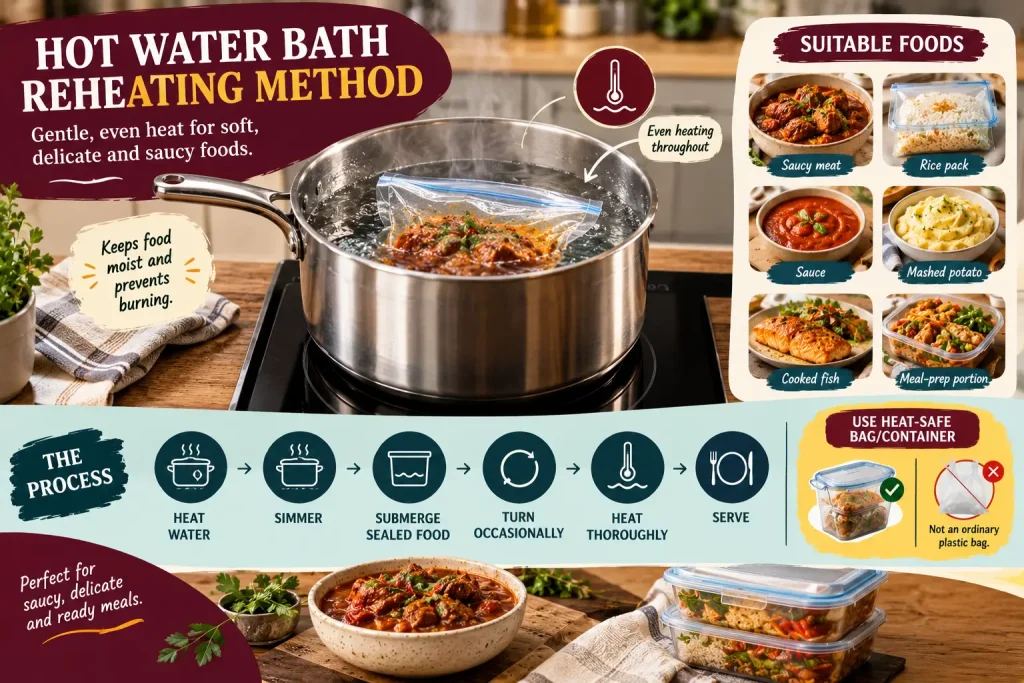
A hot water bath is useful if you are exploring how to reheat food without a microwave or stove in the traditional direct-contact sense, although you still need a kettle, hot water source or pan to heat the water. It is also effective for gently reheating food without drying it out.
For workplace use, a hot water bath can sometimes be used with a heatproof container and kettle water, provided workplace food safety rules allow it and the food reaches a safe, even temperature. However, it is usually slower than most other reheating methods.
Can You Reheat Food in a Slow Cooker?
Many people ask, can you reheat food in a slow cooker when exploring how to reheat food without a microwave. In most cases, a slow cooker is not the best method for reheating leftovers.
A slow cooker is designed to cook food slowly over several hours. That gradual heating process can be problematic for leftovers because food may spend too long in the “warming” phase before reaching a safe temperature. This can create food safety concerns, particularly for meat, rice, sauces, soups and other high-risk foods.
A better approach when considering how to heat up food without a microwave is to use faster, more direct methods such as a stovetop, oven, steamer or air fryer. These methods bring food up to a safe temperature more quickly and reduce the risk of bacterial growth.
Once food is already piping hot, a slow cooker may be used to keep it warm for serving if handled correctly. However, it should not be relied on as the primary method for reheating.
If you are reheating soup, stew, chilli or curry, it is safer to use a saucepan first. Bring it to a proper hot temperature, stir thoroughly, and then serve. If you are using a slow cooker in a workplace or buffet setting, follow strict food safety procedures and avoid leaving food at unsafe temperatures for extended periods.
So, while the answer to “can you reheat food in a slow cooker” is sometimes technically yes, it is usually not the safest or most effective option when learning how to warm up food without a microwave. Faster reheating methods are generally recommended.
How to Reheat Food Without a Microwave or Oven
If you do not have a microwave or oven, the best way to reheat food without a microwave is usually to rely on the stovetop, skillet, steaming method, steamer basket, air fryer or a hot water bath. Understanding how to reheat food without a microwave safely helps ensure both good food quality and food safety.
For saucy foods, the stovetop is the most reliable method. Soups, curries, stews, pasta sauces and chilli reheat well in a saucepan. Add a little water or stock if needed and stir frequently to ensure even heating. This is often considered the best way to reheat food without a microwave for moist dishes.
For rice, dumplings and vegetables, steaming is highly effective. A steamer basket or a covered pan with a small amount of water can warm food gently and evenly while preserving moisture.
For crispy foods, use a skillet or air fryer. Pizza, fried potatoes, flatbreads and roasted vegetables generally taste better with dry heat, making these methods ideal when learning how to reheat food without a microwave without losing texture.
For delicate sealed portions, a hot water bath is useful. This method is suitable for foods that may dry out under direct heat and is another practical option when considering how to warm up food without a microwave or stove alternatives in limited setups.
If you are asking how to reheat food without a microwave or oven, the stovetop and skillet will cover most everyday meals. However, if you also do not have a stove, your options become more limited, but there are still safe alternatives depending on available equipment.
How to Reheat Food Without a Microwave or Stove
Reheating food without a microwave or stove is more difficult, but still possible in certain situations when you apply safe food handling practices.
Your best options include an oven, toaster oven, air fryer, electric steamer, food warmer, kettle-based hot water bath or an insulated food flask prepared in advance. These methods represent practical solutions for anyone exploring how to warm up food without a microwave or stove in restricted environments.
If you have an air fryer, you can reheat crispy foods and some dry leftovers effectively. If you have a toaster oven, you can reheat pizza, pastries, small casseroles and baked foods evenly. If you have an electric steamer, it works well for rice, vegetables and dumplings.
If you only have a kettle, you may be able to use a hot water bath with a suitable heat-safe sealed container. This method is slower and must be done carefully, and it works better for small portions than dense meals.
Another practical option is to avoid reheating at work altogether by using an insulated food flask. Heat the food properly at home until it is piping hot, preheat the flask with boiling water for a few minutes, empty it, then add the hot food and seal it. This helps maintain temperature for several hours depending on flask quality.
This is especially useful when considering the best way to reheat food without a microwave for soups, stews, curries, chilli and porridge-style meals. However, it is not suitable for crispy foods.
If you regularly need to know how to warm up food without a microwave or stove, it may be worth investing in safe, workplace-friendly equipment such as a food flask, electric lunch box or approved food warmer, depending on your environment.
How to Reheat Food Without a Microwave at Work
Reheating food at work can be challenging because not all workplaces provide a microwave, oven or full kitchen facilities. However, there are still practical and safe solutions.
If your workplace has a kettle, you can prepare instant-style meals, soups in heatproof containers, or use a hot water bath for sealed food-safe containers. If an air fryer or toaster oven is available, you may be able to reheat sandwiches, pastries or small portions, provided workplace food safety rules allow it.
An insulated food flask is often the most reliable option. It allows you to carry properly heated food from home while maintaining safe temperatures for several hours.
This method is particularly effective for soup, dhal, curry, chilli, pasta sauce, porridge and stew. It is less suitable for foods that rely on crisp texture.
Another safe alternative is to bring meals that do not require reheating. Salads, wraps, sandwiches, pasta salads, couscous bowls, cold chicken with salad, cheese and crackers, boiled eggs, fruit, yoghurt and snack boxes can all work well if stored correctly.
If you want to understand how to reheat food without a microwave at work, the best method depends entirely on available facilities. Unsafe practices such as using non-food appliances, placing containers on radiators or leaving food in hot vehicles should be avoided, as they can create serious food safety risks and reduce food quality.
Microwave-Free Heating: Food Type, Microwave Alternative & Tips
The table below gives a quick guide to common foods and the best microwave alternatives when learning how to reheat food without a microwave in a safe and practical way.
| Food Type | Microwave Alternative | Tips |
| Soup | Stovetop | Heat in a saucepan, stir often and bring to a gentle simmer. |
| Stew or curry | Stovetop | Add a splash of water if thick, stir well and heat until hot throughout. |
| Rice | Steamer basket or covered pan | Add a little water, loosen grains and steam until evenly hot. |
| Pasta with sauce | Stovetop | Add extra sauce or water, stir often and use medium-low heat. |
| Pasta bake | Oven or toaster oven | Cover with foil first, then uncover near the end if you want a crisp top. |
| Pizza | Skillet, oven or air fryer | Use dry heat to restore the crust. A covered skillet works very well. |
| Chips or wedges | Air fryer or oven | Spread in a single layer and shake or turn halfway through. |
| Fried chicken | Air fryer or oven | Use moderate heat and ensure the inside is fully hot. |
| Roasted vegetables | Oven, air fryer or skillet | Dry heat brings back better texture than steam. |
| Steamed vegetables | Steamer basket | Reheat briefly to avoid overcooking. |
| Dumplings or buns | Steamer basket | Steam gently until soft and hot throughout. |
| Cooked meat slices | Skillet or hot water bath | Add moisture or sauce to prevent dryness. Heat thoroughly. |
| Fish | Steamer or low oven | Use gentle heat to avoid drying it out. |
| Sauce or gravy | Stovetop | Stir regularly and heat until bubbling and smooth. |
| Bread or rolls | Oven or toaster oven | Wrap in foil for softness or leave uncovered for crispness. |
| Mash | Stovetop or hot water bath | Add a little milk, butter or water and stir gently. |
| Pancakes | Skillet or toaster oven | Reheat gently to keep them soft. |
| Lasagne | Oven | Cover with foil and allow enough time for the centre to heat. |
| Takeaway noodles | Skillet | Add a splash of water or oil and stir constantly. |
| Meal-prep sealed portions | Hot water bath | Use only heat-safe food bags or containers and heat thoroughly. |
This table is a practical starting point for anyone learning how to reheat food without a microwave or oven, but always consider the exact food type, portion size and storage history before reheating.
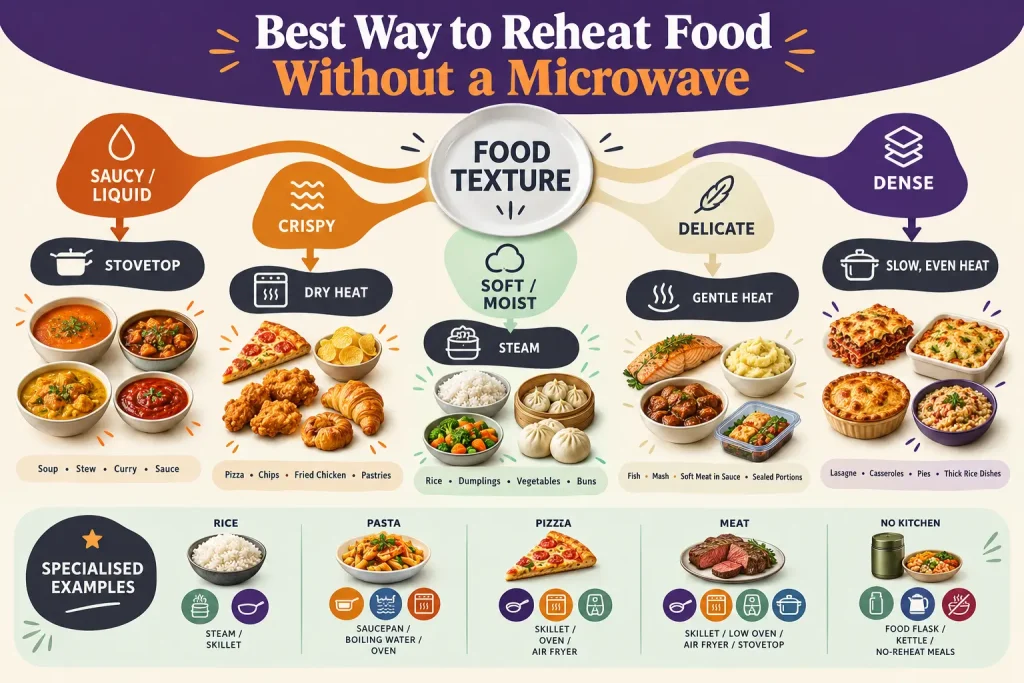
Best Way to Reheat Food Without a Microwave by Food Texture
The best way to reheat food without a microwave depends heavily on texture and available equipment.
If the food is saucy or liquid, choose the stovetop. Liquid transfers heat efficiently, and stirring helps prevent cold spots. Soups, stews, curries and sauces usually reheat best this way when learning how to reheat food without a microwave safely.
If the food is crispy, choose dry heat. An air fryer, oven, toaster oven or skillet will usually perform better than steam. Pizza, chips, fried chicken and pastries benefit most from dry heat, which is especially important when considering how to warm up food without a microwave or oven in limited kitchen setups.
If the food is soft and moist, choose steam. Rice, dumplings, vegetables and buns reheat well with steam because it prevents drying and maintains texture.
If the food is delicate, choose gentle heat. Fish, soft meat in sauce, mash and sealed meal-prep portions may be better suited to a hot water bath or low oven.
If the food is dense, use patience. Lasagne, casseroles, pies and thick rice dishes need enough time for the centre to become properly hot. Covering with foil or a lid helps heat distribute evenly without burning the surface.
Texture is important because reheating is not only about food safety, but also about maintaining quality and enjoyment. Choosing the right method is a key part of how to reheat food without a microwave effectively.
How to Reheat Rice Without a Microwave
Rice requires careful handling because it can pose food safety risks if it is cooled and stored incorrectly. The main concern is often not reheating itself, but how long cooked rice remained at room temperature before refrigeration.
If the rice has been stored safely, steaming is usually the best microwave-free method. Loosen the rice with a fork, add a small splash of water and place it in a steamer basket or covered pan. Steam until it is hot throughout.
You can also reheat rice in a skillet as fried rice. Add a little oil, break up the rice and stir constantly. Ensure every portion becomes fully hot. This works well when combined with vegetables, egg or cooked meat, but all ingredients must be reheated properly.
Avoid reheating a large solid block of rice without breaking it up, as this can lead to uneven heating and cold spots.
Only reheat the portion you plan to eat. Repeated reheating is not recommended and can increase food safety risks when practising how to reheat food without a microwave in everyday situations.
How to Reheat Pasta Without a Microwave
When learning how to reheat food without a microwave, pasta is a good example because it can easily dry out or become sticky if reheated incorrectly. Moisture and gentle heat are key.
For pasta with sauce, use a saucepan or skillet. Add a splash of water, stock or extra sauce, then heat over medium-low heat. Stir regularly until everything is hot throughout. This is a practical method when considering how to reheat food without a microwave while maintaining texture.
For plain pasta, you can briefly dip it in boiling water using a sieve or colander, then drain it immediately. This refreshes the texture quickly. You can then add sauce separately for best results.
For pasta bake, the oven is usually the best option. Place the pasta bake in an oven-safe dish, cover with foil and heat until the centre is hot. Remove the foil near the end if you want the top to brown slightly. This method is often recommended when learning how to reheat food without a microwave for baked dishes.
If the pasta contains meat, seafood or dairy-based sauce, be extra careful to ensure it is heated thoroughly and not left at room temperature for too long before reheating. Food safety is an important part of how to reheat food without a microwave effectively and responsibly.
How to Reheat Pizza Without a Microwave
Pizza is one of the best examples of why microwave-free reheating can produce better results. A microwave often makes the base soft and chewy, whereas alternative methods can restore crispness.
A skillet, oven or air fryer can all be effective when learning how to reheat food without a microwave for pizza.
The skillet method works particularly well. Place the pizza slice in a dry pan over medium-low heat. Cover with a lid and heat for a few minutes. The base crisps while the top warms. If the cheese needs more melting, add a few drops of water to the side of the pan (not directly on the pizza), then cover briefly so steam helps warm the toppings.
The oven method is suitable for multiple slices. Preheat the oven, place pizza on a tray and heat until the base is crisp and the toppings are hot throughout.
The air fryer is a fast option for one or two slices. Use moderate heat and check frequently to avoid overcooking the crust.
For many people, pizza demonstrates that the best way to reheat food without a microwave is not always the fastest method, but the one that delivers the best texture and eating experience.
How to Reheat Meat Without a Microwave
Meat requires careful handling when learning how to reheat food without a microwave, as it can easily dry out if overheated.
For sliced meat, a skillet with a splash of water, stock or gravy works well. Cover the pan so steam helps retain moisture. Turn the pieces regularly and heat until hot throughout.
For roasted meat, a low oven with foil can help preserve moisture. Adding a little stock or gravy to the dish can further prevent dryness and improve texture.
For crispy breaded meat, such as fried chicken, an air fryer or oven is ideal for restoring texture. However, it is essential to ensure the inside is fully hot, not just the coating. This is an important safety consideration when practising how to reheat food without a microwave.
For meat in sauce, use the stovetop. Stir regularly and heat until both the sauce and meat are hot throughout. This method is often the most reliable for evenly reheating mixed dishes.
Whenever possible, avoid reheating large thick pieces straight from cold. Cutting meat into smaller portions before reheating helps ensure even heating and reduces the risk of a cold centre, which is a key principle in how to reheat food without a microwave safely.
How to Reheat Food Without a Microwave or Any Kitchen
When learning how to reheat food without a microwave, sometimes you may not have access to a proper kitchen at all. This can happen in offices, shared accommodation, student housing, travel settings or temporary workplaces.
In such situations, planning is more important than reheating itself.
An insulated food flask can be one of the best solutions when considering how to reheat food without a microwave in advance. Heat the food properly at home before leaving and store it in the flask while it is still piping hot. Choose foods that hold heat well, such as soup, stew, curry, chilli, dhal, porridge or pasta sauce.
If you have access to a kettle, you can consider simple hot-water-friendly options. These include instant oats, cup soups or sealed heat-safe meal portions. Always use proper food-safe containers and avoid unsafe improvisation, which is an important safety principle in how to reheat food without a microwave in non-kitchen environments.
You can also plan meals that do not require reheating. This avoids the problem entirely and is often the most practical approach when learning how to reheat food without a microwave at work or on the go. Good options include wraps, sandwiches, pasta salad, rice salad (if stored safely), cold roasted vegetables, boiled eggs, tuna salad, hummus boxes, fruit, yoghurt and cheese.
If you regularly work without a kitchen, it is important to build your meal plan around safe storage practices. Use cool bags and ice packs for chilled foods where needed, and never leave perishable food in a warm environment for extended periods. This is a key part of understanding how to reheat food without a microwave safely in real-world conditions.
Common Mistakes When Reheating Without a Microwave
One common mistake when learning how to reheat food without a microwave is using heat that is too high. This can burn the outside while leaving the inside cold. Moderate heat and patience are more effective and safer.
Another mistake is failing to add moisture when needed. Rice, pasta, meat and mashed potatoes can dry out quickly. A small splash of water, stock, sauce or milk can significantly improve texture and reheating results.
Some people also forget to stir or mix food during reheating. Stirring helps distribute heat evenly and prevents cold spots, especially in soups, curries, sauces and pasta dishes.
Another frequent issue is overcrowding pans, oven trays or air fryer baskets. If food is piled too high, heat cannot circulate properly. Reheating in smaller portions is often more effective when applying how to reheat food without a microwave in practice.
A more serious mistake is reheating food that has not been stored safely. Reheating cannot fix poor storage. If food has been left out too long, smells unusual, has changed texture, or you are unsure about its safety, it is better not to consume it.
Finally, avoid reheating food repeatedly. For safe food handling, portion leftovers before storing and only reheat what you plan to eat. This is a fundamental rule in how to reheat food without a microwave safely.
Reheating Food for Work, Training and Hospitality Settings
Food reheating is not only a home-based skill; it is also important in many workplaces.
In hospitality, catering, care homes, schools, offices and training centres, food may need to be stored, transported, held or reheated safely. Poor reheating practices can create health risks and reduce trust in food services. (food.gov.uk)
Workers in food-related roles should understand safe storage, temperature control, cleaning procedures, cross-contamination risks and proper reheating methods. Even if you are not a chef, you may still handle food in a workplace setting, such as serving meals, supporting events, preparing staff food or assisting in care environments.
For jobseekers, basic food hygiene knowledge is valuable across hospitality, catering, childcare, health and social care, cleaning, facilities, retail food service and school support roles. Employers value candidates who understand practical safety and responsible food handling.
Jobsland supports learners and jobseekers by connecting practical knowledge with workplace readiness. Understanding how to reheat food without a microwave may seem simple, but it reflects broader workplace skills such as planning, safety awareness, attention to detail and responsibility.
Quick Guide: Which Method Should You Choose?
If you are still unsure about how to reheat food without a microwave, use this quick guide to choose the most suitable method based on food type and texture.
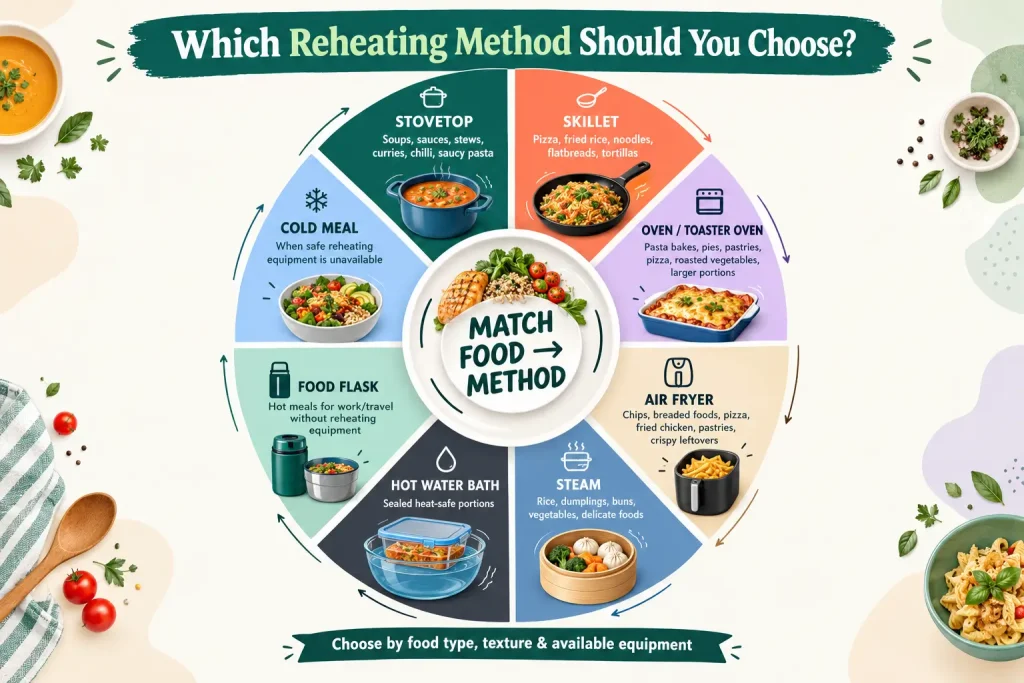
Choose the stovetop for soups, sauces, stews, curries, chilli and pasta with sauce. This is often the most reliable option when learning how to reheat food without a microwave for moist and liquid-based meals.
Choose a skillet for pizza, fried rice, noodles, flatbreads, tortillas and foods that benefit from light crisping. A skillet is particularly useful in everyday situations where you are deciding how to reheat food without a microwave while maintaining texture.
Choose an oven or toaster oven for pasta bakes, pies, pastries, pizza, roasted vegetables and larger portions. This method is often preferred when considering how to reheat food without a microwave for baked or bulk meals.
Choose an air fryer for chips, breaded foods, pizza, fried chicken, pastries and crispy leftovers. It is one of the most effective modern tools when learning how to reheat food without a microwave for restoring crunch.
Choose steam for rice, dumplings, buns, vegetables and delicate foods that need moisture. Steaming is a gentle and safe method within how to reheat food without a microwave practices.
Choose a hot water bath for sealed, heat-safe portions that require gentle warming. This is useful in specific cases of how to reheat food without a microwave where direct heat is not suitable.
Choose a food flask if you need hot food at work without reheating equipment. This is often the most practical solution for how to reheat food without a microwave at work, especially in offices or travel situations.
Choose cold meals if you cannot reheat safely or do not have suitable equipment. This is also an important part of understanding how to reheat food without a microwave in real-world conditions.
Conclusion
Learning how to reheat food without a microwave gives you more flexibility, better texture and safer meal options. A microwave may be convenient, but it is not always the best tool. Stovetop pans, skillets, ovens, toaster ovens, air fryers, steamer baskets and hot water baths can all work effectively when used correctly.
The best method depends on the food type. Saucy meals usually suit the stovetop. Crispy foods are best reheated using an oven, skillet or air fryer. Moist foods often suit steaming. Delicate sealed portions may benefit from a hot water bath. If you are at work without a microwave, a food flask or cold meal plan may be the safest and most practical solution.
The most important principle is food safety. Always reheat food until it is hot throughout, avoid repeated reheating, store leftovers properly, and never rely on reheating to make unsafe food safe again.
Whether you are preparing lunch at home, managing meals at work or building food hygiene knowledge for employment, how to reheat food without a microwave is a practical and valuable everyday skill. With the right method, leftovers can be safe, enjoyable and sometimes even better than when freshly cooked.