Becoming a childminder in the UK offers a rewarding career path for individuals passionate about early childhood development and seeking to work from home, providing flexible and nurturing care for children. This comprehensive guide covers everything from the role’s responsibilities and required skills to the qualifications, training pathways, and robust career opportunities available in 2026 for those looking to start or advance their childcare career.
Key Takeaways
A childminder provides home-based childcare for children under 8, offering a flexible and personal environment.
Key skills include patience, empathy, excellent communication, organizational abilities, and a creative approach to learning.
Registration with Ofsted (or a childminder agency) is mandatory in England, involving specific training and checks.
Qualifications like Level 2 or 3 in Early Years Education and Childcare are highly beneficial and often expected.
The job outlook for childminders in the UK remains strong, driven by parental demand for flexible childcare.
Practical steps involve gaining experience, undertaking training, applying for registration, and preparing your home.
Childminding offers the advantage of self-employment and working from a familiar, comfortable setting.
Ongoing professional development is crucial for staying updated with best practices and regulations.
While rewarding, the role requires dedication, adherence to regulations, and continuous engagement with families.
What Does a Childminder Do?
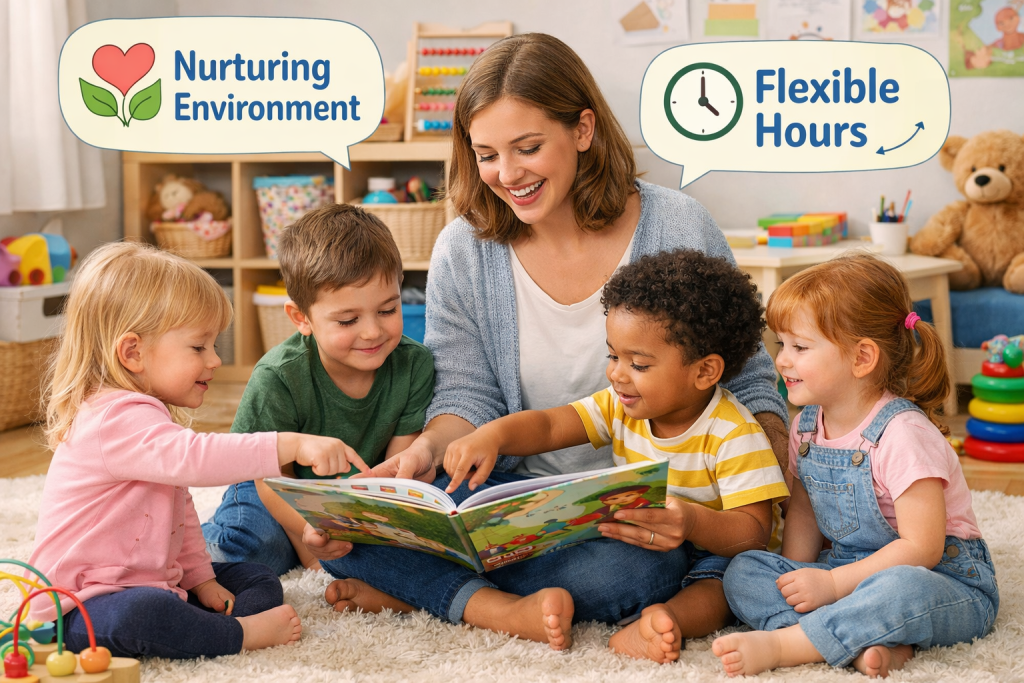
A childminder provides professional childcare services from their own home, typically caring for small groups of children under the age of eight, creating a familiar, nurturing, and stimulating environment. This role differs from other childcare providers like nurseries or nannies by offering a more intimate, home-based setting, often providing greater flexibility for parents.
Imagine Sarah, a former primary school teacher, who decided she wanted to spend more time with her own young children while still using her skills. She transformed a spare room and garden into a vibrant learning space, becoming a registered childminder. Each morning, she welcomes three eager children, aged two to five, into her home. Her days are a joyful blend of structured learning activities—like painting and reading—and free play, all designed to foster physical, social, and emotional development. She prepares healthy snacks, manages nap times, and ensures a safe, engaging atmosphere, much like an extended family member.
This personal touch is often what draws families to choose a childminder over larger settings. The intimate nature of the childminder role means building strong, trusting relationships with both children and their families is paramount.
Key Responsibilities of a Childminder
Childminders in the UK undertake a variety of responsibilities to ensure the well-being and development of the children in their care. These responsibilities extend beyond basic supervision and encompass educational, safety, and administrative duties.
Providing a Safe and Stimulating Environment: Creating a home setting that is both secure for children and rich with opportunities for play, learning, and exploration. This involves regular risk assessments and maintaining appropriate equipment.
Planning and Delivering Educational Activities: Designing and implementing activities that align with the Early Years Foundation Stage (EYFS) framework in England, covering communication, physical development, personal-social-emotional development, literacy, mathematics, understanding the world, and expressive arts and design.
Meeting Children’s Individual Needs: Understanding and responding to each child’s unique developmental stage, interests, and dietary, cultural, or special educational needs.
Ensuring Health and Hygiene: Preparing nutritious meals and snacks, promoting good hygiene practices, and administering medication safely when required, following proper procedures and parental consent.
Maintaining Records: Keeping detailed records of children’s attendance, development progress, incident reports, and communication with parents. This is crucial for regulatory compliance and parental updates.
Communicating with Parents/Guardians: Establishing open and regular communication channels, providing daily updates on children’s activities, progress, and any concerns, fostering a collaborative approach to childcare.
Adhering to Regulations: Strictly following the guidelines set by Ofsted (or relevant childminder agencies) regarding adult-to-child ratios, safeguarding, first aid, and continuous professional development.
Business Management: As self-employed professionals, childminders are responsible for managing their finances, marketing their services, and maintaining appropriate insurance coverage.
Childminders play a vital role in supporting families and children’s early years. The intimate setting often allows for more personalized attention, which can be particularly beneficial for children transitioning from home or those who thrive in smaller groups.
What Skills Do You Need to Be a Childminder?
To succeed as a childminder, you need a unique blend of nurturing qualities, practical abilities, and professional competencies, including excellent communication, patience, organisational skills, and a genuine passion for children’s development. These skills are essential for creating a safe, stimulating, and supportive environment for children while managing the demands of running a home-based childcare business.
Consider David, who transitioned from an administrative role to childminding. Initially, he worried about the shift, but his natural patience, honed from years of dealing with complex customer queries, proved invaluable when comforting a toddler during separation anxiety. His meticulous record-keeping skills, previously used for budgets, now helped him track children’s progress and manage his business efficiently. He also discovered a newfound creativity, transforming mundane tasks into engaging games, a skill he never knew he possessed until he started leading art projects and outdoor adventures. David’s experience shows that many transferable skills can be adapted to a childminding career, even if they aren’t immediately obvious.
Essential Skills for Aspiring Childminders
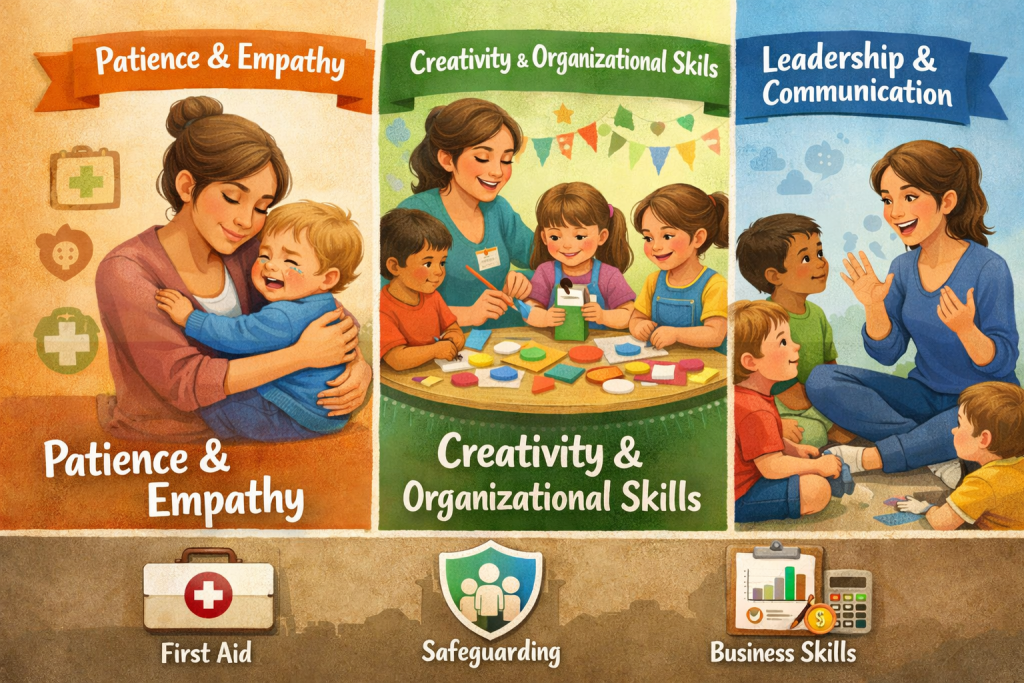
Patience and Empathy: Working with young children often requires immense patience, understanding, and the ability to empathise with their feelings, whether they are joyful, frustrated, or upset. This helps in building trust and fostering emotional well-being.
Excellent Communication Skills: Effective communication is vital for interacting with children at their level, explaining rules, engaging in conversation, and crucially, for building strong relationships with parents. Clear, regular updates and open dialogue are key to successful partnerships.
Organisational Skills: Managing multiple children, planning daily activities, preparing meals, maintaining records, and ensuring the safety of the environment demand strong organisational abilities. A well-organised childminder can manage their time and resources effectively.
Creativity and Playfulness: The ability to invent engaging games, adapt activities to different age groups, and bring a sense of fun to learning is crucial. Childminders need to inspire curiosity and make learning an enjoyable experience.
Leadership and Responsibility: Childminders are responsible for the safety, health, and development of the children in their care. This requires confidence, the ability to make quick decisions, and to take charge in various situations, from managing behaviour to responding to emergencies.
Observation Skills: Being able to observe children’s behaviour, interactions, and developmental milestones helps in tailoring activities and identifying any potential concerns. These observations also form the basis for progress reports to parents.
First Aid and Safety Awareness: A thorough understanding of paediatric first aid and robust safety protocols is non-negotiable. Childminders must be prepared to handle minor injuries and emergencies calmly and effectively.
Business Acumen: As self-employed professionals, childminders need basic business skills, including managing finances, marketing their services, setting fees, and understanding tax obligations.
Resilience and Adaptability: Every day with children can bring unexpected challenges. Childminders need to be resilient, able to adapt to changing situations, and maintain a positive attitude under pressure.
Knowledge of Child Development: A solid understanding of child development stages, learning theories, and the Early Years Foundation Stage (EYFS) framework provides a professional foundation for supporting children’s growth.
Cultivating these skills will not only enhance a childminder’s effectiveness but also contribute significantly to the positive development and well-being of the children in their care. The demand for compassionate and skilled individuals in childcare is consistently high, making it a fulfilling career choice.
UK Qualifications and Training Pathways for Childminders
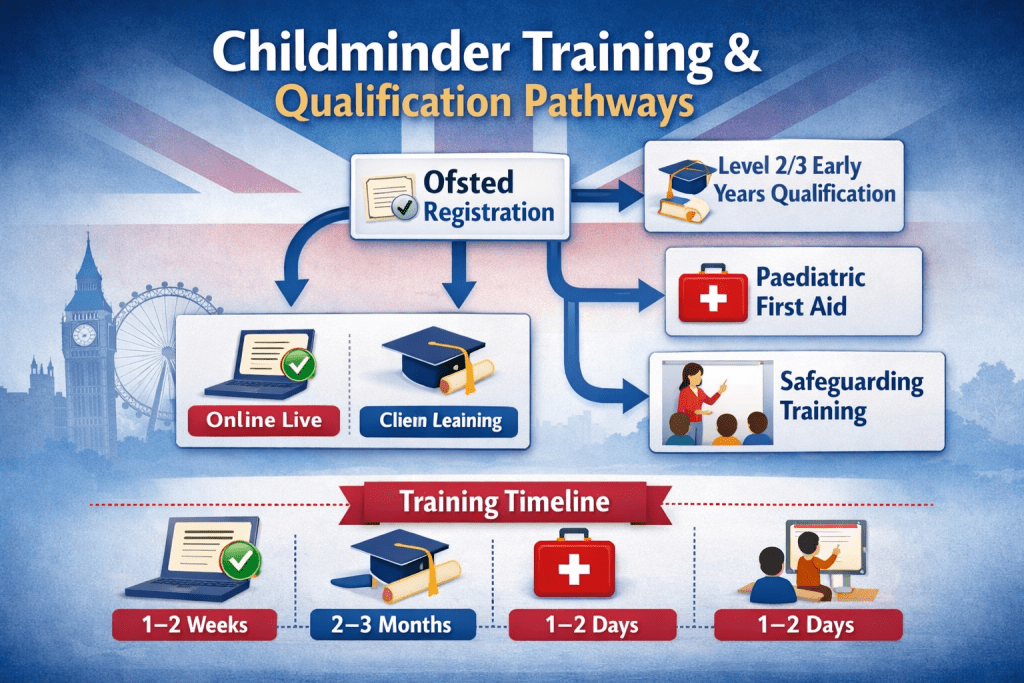
To become a registered childminder in the UK, particularly in England, you must complete a specific set of qualifications and training pathways mandated by regulatory bodies like Ofsted or a registered childminder agency. These requirements ensure that childminders are competent, safe, and capable of providing high-quality care and early education.
Consider Maria, who always dreamed of working with children. She started by completing her Level 3 Early Years Educator qualification at her local college. This gave her a solid foundation in child development and the EYFS framework. Next, she undertook a paediatric first aid course and a comprehensive safeguarding children training. Finally, she approached Ofsted, completed their pre-registration training, passed her home inspection, and registered as a childminder. Maria’s structured approach ensured she met all legal and professional requirements, giving parents confidence in her abilities.
Essential Steps and Qualifications
Gain Relevant Experience: While not a strict qualification, having prior experience working with children, whether through volunteering, working as a nursery assistant, or raising your own children, is highly beneficial. It provides practical insights and helps demonstrate your suitability.
Complete a Paediatric First Aid Course: This is a mandatory requirement for all registered childminders. The course must be an accredited 12-hour paediatric first aid qualification that covers infants and children. This ensures you can respond effectively to emergencies.
Undertake Safeguarding Children Training: All childminders must complete safeguarding training to understand how to protect children from abuse and neglect. This training teaches you to recognise signs of harm and the procedures for reporting concerns.
Complete a Childminder Pre-Registration Course: In England, if registering with Ofsted, you must complete a training course that helps you understand the Early Years Foundation Stage (EYFS) framework and prepare for your registration visit. If registering through a childminder agency, they will provide their own approved training.
Obtain a Level 2 or 3 Qualification in Early Years Education and Childcare (Highly Recommended): While not always strictly mandatory for registration with Ofsted if you’re caring for children aged three and above, having an accredited qualification like a Level 2 Certificate in an Introduction to Early Years Education and Care, or a Level 3 Diploma for the Early Years Workforce (Early Years Educator) is highly recommended. Many parents prefer childminders with these qualifications, as they demonstrate a deep understanding of child development and educational practices. For example, a Primary Teacher or EYFS Teacher might already possess equivalent or higher qualifications.
Level 2 Certificate: Provides a basic understanding of childcare and education principles.
Level 3 Diploma: This is often seen as the industry standard, preparing you to work unsupervised with children and giving you a strong foundation in the EYFS.
Apply for Registration (Ofsted or Childminder Agency):
Ofsted Registration: For childminders in England, you must apply to Ofsted. This involves an application form, a Disclosure and Barring Service (DBS) check for yourself and anyone over 16 living or working in your home, health declaration checks, and an interview/inspection visit at your home. The inspector will assess your understanding of the EYFS, safeguarding, and health and safety.
Childminder Agency Registration: Alternatively, you can register with a childminder agency. These agencies are regulated by Ofsted but manage the registration process, training, and ongoing support for their childminders. They often provide extensive resources and a supportive community.
Ongoing Professional Development (CPD): Once registered, childminders are expected to engage in continuous professional development to keep their knowledge and skills up-to-date with current best practices and regulations. This can include workshops, online courses, and networking with other childcare professionals.
The specific requirements can vary slightly depending on whether you operate in England, Scotland, Wales, or Northern Ireland, as each nation has its own regulatory body (e.g., Care Inspectorate in Scotland, Care Inspectorate Wales, RQIA in Northern Ireland). Always check the specific requirements for your region.
Career Opportunities and Job Outlook for Childminders in 2026
The career opportunities for childminders in the UK in 2026 remain robust, driven by a persistent demand for flexible and high-quality home-based childcare, especially as working parents seek options beyond traditional nursery settings. This career offers stability, autonomy, and the chance to make a profound impact on young lives.
The childcare sector, while experiencing some funding pressures [2], continues to be an essential service. The demand for flexible care options, particularly home-based care, means that skilled and registered childminders are consistently sought after. For instance, in 2026, many parents, like Emily, a freelance graphic designer, found that a childminder offered the flexible hours she needed that a nursery couldn’t match.
This personal fit ensures a steady stream of inquiries for well-regarded childminders. This consistent demand, combined with the ability to set your own terms as a self-employed professional, contributes to a positive job outlook for childminders.
Demand and Growth in 2026
The demand for childcare services in the UK continues to be significant. While the broader early childhood education sector has faced challenges, including workforce burnout and staff well-being issues reported by 43% of childcare respondents [1], home-based childcare often presents a more manageable model for individual practitioners. Many parents prefer the intimate setting and personalised attention a childminder can offer, especially for very young children.
Parental Preference for Flexibility: With more flexible working patterns becoming common, parents often seek childcare that aligns with their varied schedules, which childminders are often better equipped to provide than large institutions.
Small Group Settings: The appeal of a small, family-like group environment, as opposed to larger nursery settings, remains a key driver for parents choosing childminders.
Government Initiatives: Government initiatives aimed at increasing childcare provision, such as expanded free childcare hours for working parents, indirectly support the childminding sector by increasing the overall demand for childcare places.
Workforce Stability: While the wider childcare industry reports challenges, the self-employed nature of childminding can offer individuals more control over their working conditions, potentially mitigating some of the burnout reported in larger settings [1].
Career Progression and Specialisation
While many childminders enjoy the direct care role, there are several avenues for career progression and specialisation:
Specialising in Specific Age Groups: Some childminders might choose to focus on caring for babies exclusively or specialise in pre-school age groups, developing expertise in specific developmental stages.
Supporting Children with Special Educational Needs (SEN): With additional training and experience, childminders can specialise in providing inclusive care for children with SEN. This often involves collaborating with local authorities and other professionals. Individuals interested in this might consider roles like a SEN Autism Teacher.
Becoming a Childminder Mentor or Trainer: Experienced childminders can become mentors for new practitioners or deliver training courses for aspiring childminders, sharing their knowledge and expertise.
Joining a Childminder Agency: Some childminders might choose to work within a childminder agency, which can provide additional support, training, and marketing opportunities, potentially easing the administrative burden of self-employment.
Expanding Your Service: With sufficient space and demand, a childminder might expand their provision to become an ‘out-of-school’ club, offering before and after-school care for older children, or offer holiday clubs. This requires additional registration steps.
Earnings and Working Conditions
Childminders, being self-employed, have control over their rates, hours, and holiday schedules. Earnings can vary significantly based on location, experience, qualifications, and the number of children cared for.
Income Potential: Income is generated per child, and rates can range from £4 to £8+ per hour per child, depending on the region. A childminder caring for three or four children full-time can achieve a respectable income.
Flexibility: One of the most significant benefits is the flexibility to set your own working hours and structure your day to suit your family life.
Work-Life Balance: While demanding, running a home-based business can offer a better work-life balance for some, eliminating commute times and allowing for integration of personal and professional life.
Challenges: The role requires significant dedication, and like all early care and education workers, childminders can face economic hardship, with 70% reporting difficulty accessing basic needs like food and housing [2]. Careful financial planning and effective business management are crucial. The end of the Child Care Stabilization Program in September 2023 also highlights ongoing funding pressures in the sector [2].
The job outlook for childminders in 2026 remains positive for those willing to commit to the professional standards and ongoing development required. It offers a fulfilling career with direct community impact and the unique advantage of working from home.
Practical Steps to Get Started as a Childminder
Starting a career as a childminder in the UK involves a series of practical, regulated steps to ensure you are fully prepared and compliant with national childcare standards. It’s a journey that requires careful planning, dedicated training, and a thorough understanding of legal obligations to establish a safe and nurturing home-based childcare business.
Imagine Liam, a stay-at-home parent who decided to become a childminder. His first step was researching Ofsted’s requirements. He then attended an introductory workshop for aspiring childminders, which clarified the training needed and the application process. Liam systematically ticked off each requirement: completing his paediatric first aid, undergoing safeguarding training, and preparing his home for the inevitable inspection. He even networked with local childminders, gaining invaluable advice on setting up his routine and marketing. By taking one step at a time, Liam transformed his vision into a successful and registered childcare service.
Step-by-Step Guide to Becoming a Childminder
Research and Self-Assessment:
Understand the Role: Fully grasp what childminding entails, including the responsibilities, challenges, and rewards. Read guides from Ofsted (or relevant national bodies) and childminder agencies.
Assess Your Home: Evaluate if your home environment is suitable. Consider space, safety (indoor and outdoor), and the impact on your family life.
Personal Suitability: Reflect on whether you possess the necessary skills and temperament (patience, energy, enthusiasm) to work with children.
Financial Planning: Understand the start-up costs (training, equipment, DBS checks) and how you will manage your finances as a self-employed individual.
Attend an Information Session:
Many local authorities or childminder agencies offer free information sessions for prospective childminders. These sessions provide an overview of the registration process, legal requirements, and support available.
Complete Mandatory Training:
Paediatric First Aid: Enrol in and complete an accredited 12-hour paediatric first aid course. Ensure it covers training for both infants and children.
Safeguarding Children: Complete an approved safeguarding children course to understand how to protect children and report concerns.
Childminder Pre-Registration Training: Undertake a specific course designed to prepare you for childminding, covering the Early Years Foundation Stage (EYFS), record-keeping, health and safety, and preparing for your registration visit.
Obtain Necessary Checks and Permissions:
DBS Check: Apply for an enhanced Disclosure and Barring Service (DBS) check for yourself and anyone aged 16 or over living or regularly working in your home. This is crucial for safeguarding.
Health Declaration: Complete a health declaration booklet, which will be reviewed by a GP.
Local Authority Checks: Some local authorities may require additional checks or provide specific advice.
Landlord/Mortgage Provider Consent: If you rent, you’ll need written permission from your landlord. If you have a mortgage, check your terms or inform your provider.
Prepare Your Home Environment:
Safety Audit: Conduct a thorough safety check of your home and garden. Identify and mitigate potential hazards (e.g., secure chemicals, gate stairs, cover electrical outlets).
Equipment and Resources: Acquire age-appropriate toys, books, play equipment, and safety gear (e.g., car seats, high chairs). Consider where children will eat, sleep, and play.
Policy Documents: Develop essential policies and procedures, such as safeguarding, complaints, behaviour management, and health and safety.
Apply for Registration:
Ofsted (England): Submit your application form to Ofsted. They will then assign an inspector who will schedule a home visit. During the visit, the inspector will assess your readiness, knowledge of EYFS, and the suitability of your home.
Childminder Agency: If opting for an agency, follow their specific application and assessment process, which typically includes similar checks and a home visit.
Set Up Your Business:
Insurance: Obtain appropriate public liability insurance for childminders.
Contracts and Fees: Develop clear contracts for parents outlining hours, fees, payment terms, and notice periods. Research local rates to set competitive fees.
Marketing: Create a simple marketing plan. This could involve local advertising, social media, or registering with online childcare directories. Word-of-mouth is also very powerful.
Financial Management: Register as self-employed with HMRC and set up a system for tracking income and expenses.
By diligently following these steps, you can confidently embark on a rewarding career as a childminder, providing essential childcare services within your community.
Choosing Between Ofsted and a Childminder Agency
This decision is often one of the first practical considerations for aspiring childminders in England. Each route has its distinct advantages:
Feature
Ofsted Registration
Childminder Agency Registration
Regulatory Body
Direct inspection and regulation by Ofsted.
Agency is regulated by Ofsted; the agency regulates you.
Initial Training
You arrange and pay for pre-registration training.
Agency provides and often includes training in their fees.
Support & Advice
Limited direct support post-registration; you seek advice independently.
Ongoing support, advice, and networking opportunities from the agency.
Paperwork & Admin
You manage all administrative tasks (policies, contracts, etc.).
Agency often provides templates and guidance, reducing your administrative load.
Marketing
You are responsible for your own marketing.
Agency may help market your services to parents.
Inspection & Monitoring
Direct Ofsted inspections (usually every 3-4 years, plus unannounced visits).
Agency conducts regular quality assurance visits and supports you through Ofsted inspections of the agency itself.
Costs
Annual Ofsted fee, plus costs for training and checks.
Agency fees (usually a monthly charge or percentage of earnings), which can cover training, support, and insurance.
Autonomy
High level of autonomy in running your business.
Some autonomy, but also adherence to agency policies and procedures.
Choose Ofsted Direct if: You prefer maximum autonomy, are comfortable with managing all aspects of your business and regulation independently, and have a good understanding of the EYFS and childcare compliance.
Choose a Childminder Agency if: You prefer more ongoing support, guidance with paperwork and training, and assistance with marketing. This can be particularly beneficial for new childminders or those seeking a more structured support system.
Frequently Asked Questions About Becoming a Childminder
How long does it take to become a registered childminder?
The entire process, from initial training to final registration with Ofsted or a childminder agency, typically takes between 3 to 6 months, depending on how quickly you complete training, DBS checks, and home preparation.
Can I be a childminder if I have my own children?
Yes, many childminders have their own children. In fact, this can be a significant advantage, providing you with practical experience and a flexible way to earn an income while caring for your family. Your own children count towards the adult-to-child ratios.
What are the age limits for children a childminder can care for?
Registered childminders in England can care for children aged from birth up to 8 years old. If you wish to care for children older than 8, you usually do not need Ofsted registration, but local authority guidelines may apply.
How many children can a childminder care for at once?
In England, the standard ratio for childminders is generally no more than six children under the age of eight, with specific limits within that group: no more than three children under the age of five (of which only one can be under one year old). These ratios include the childminder’s own children if they are under eight.
Do I need a specific qualification to be a childminder?
While a Level 2 or 3 Early Years qualification is highly recommended and often preferred by parents, it is not strictly mandatory for Ofsted registration in England if you are only caring for children aged three and above. However, mandatory training in paediatric first aid, safeguarding, and a pre-registration course is required.
What is the Early Years Foundation Stage (EYFS)?
The EYFS is a framework that sets standards for the learning, development, and care of children from birth to 5 years old in England. All registered childminders must adhere to the EYFS framework, planning activities that support children’s development across seven key areas.
What if my home isn’t very large?
The size of your home is less important than its suitability. You need enough safe space for children to play, eat, and rest comfortably, both indoors and outdoors. Your Ofsted inspector or agency representative will assess your specific setup during their visit.
How much does it cost to become a childminder?
Start-up costs can vary but typically include fees for DBS checks, paediatric first aid and safeguarding training, pre-registration courses, Ofsted or agency registration fees, and initial equipment. This could range from a few hundred to over a thousand pounds.
Do I need insurance as a childminder?
Yes, public liability insurance is mandatory for all registered childminders to protect against claims of injury or damage. Your chosen childminder agency might include this in their fees, or you will need to purchase it independently.
Can I work flexible hours as a childminder?
Yes, one of the main advantages of being a childminder is the flexibility to set your own working hours and days, allowing you to tailor your services to the needs of the families you serve and your own family life.
What support is available for childminders?
Support can come from various sources, including childminder agencies (if registered with one), local authority early years teams, professional organisations, and local childminder networks. These resources often provide training, advice, and peer support.
Conclusion
Becoming a childminder in the UK in 2026 offers a deeply rewarding and flexible career path for those passionate about early childhood development. It provides the unique opportunity to build a thriving business from the comfort of your home, contributing significantly to your community by nurturing young minds. The demand for quality home-based childcare remains strong, ensuring a positive job outlook for dedicated professionals.
While the journey involves essential training, rigorous checks, and adherence to specific regulations like the EYFS framework, the personal and professional satisfaction of watching children grow and flourish under your care is immense. By meticulously following the practical steps outlined – from gaining relevant experience and completing mandatory training to preparing your home and registering with Ofsted or a childminder agency – you can confidently embark on this fulfilling career. Remember that continuous professional development and strong communication with families are key to long-term success. If you’re seeking a career that blends autonomy with immense purpose, childminding could be your perfect fit.