Is There a 100 Move Rule in Chess? If you have ever wondered whether such a rule exists, the simple answer is no. In official chess rules, there is no separate “100-move rule” in the way many people describe it. What actually exists is the 50-move rule in chess, and that is where the confusion usually begins.
Quick Overview
When players ask “Is There a 100 Move Rule in Chess?”, it’s usually because they’ve miscounted half-moves. There is no official 100-move rule. The official rules are the 50-move rule and the 75-move automatic draw rule. You’ll learn why the distinction matters, how the rules work, and how to apply them in practical games.
Whether you’re a beginner or an experienced player, this guide covers:
✅ Understanding the 50-move rule and how to claim a draw.
✅ Knowing the 75-move automatic draw rule and exceptions like checkmate.
✅ Distinguishing between 50-move rule and threefold repetition.
✅ Avoiding common misconceptions about the “100-move rule.”
Under FIDE’s Laws of Chess, a player may claim a draw if the last 50 moves by each player have been completed without any pawn move and without any capture. FIDE also has a separate 75-move automatic draw rule, which works differently.
That confusion is understandable. A lot of players hear “50 moves by each side” and mentally convert that into 100 half-moves. From there, people start referring to it as the “100-move rule”, even though that is not the official term. In formal chess rules, the recognised terms are the fifty-move rule and the 75-move automatic draw rule. So, if you are searching for what the 50-move rule in chess is, you are already much closer to the correct concept than if you are looking for a “100-move rule”.
When asking Is There a 100 Move Rule in Chess, much of the confusion comes from how chess moves are counted.
When chess players casually talk about a “move”, they do not always mean the same thing. In official rule language, the 50-move rule refers to 50 moves by White and 50 moves by Black without a pawn move or a capture. That totals 100 half-moves, which is why some players casually refer to it as a “100-move situation”. However, the official draw claim is still called the fifty-move rule.
So, the answer to how many moves in chess must pass before a draw can be claimed under this rule depends on how you count:
That is the entire source of the myth.
There is no official article in modern FIDE rules stating, “The game is drawn after 100 moves.” The wording is tied to 50 moves by each player without a pawn move or capture.
The 50-move rule in chess is straightforward in principle.
If neither side makes a pawn move and neither side makes a capture for 50 consecutive moves each, the player whose turn it is may claim a draw. That is what the fifty-move rule is really about. It exists to prevent games from continuing indefinitely in positions where no real progress is being made.
This also means the rule does not end the game automatically the moment the count reaches 50 moves each. A player has to claim it. This point matters, because many casual players assume the game should stop on its own. Under Article 9 of the FIDE Laws of Chess, the 50-move rule is a claimable draw, not an automatic one.
So, when someone asks what the 50-move rule in chess is, the best short answer is:
It allows a player to claim a draw if 50 consecutive moves by each side occur without any pawn move or capture.
This is where things become even more confusing.
Modern FIDE rules also include a 75-move rule, and this one is automatic. FIDE states that the game is drawn if the last 75 moves have been completed by each player without any pawn move or capture. The only exception is if the final move results in checkmate, in which case checkmate takes priority.
That means there are two separate ideas:
Once you understand that difference, the entire subject becomes much clearer.
Many articles oversimplify this by saying something like, “After 50 moves, the game is drawn.” That is not fully accurate. The 50-move rule is claimable, whereas the 75-move rule is automatic.
When discussing Is There a 100 Move Rule in Chess, it helps to understand why the fifty-move rule exists in the first place.
The fifty-move rule is there to prevent endless manoeuvring in positions where nothing meaningful is happening. Imagine an ending where no pawns can move safely and no captures are taking place. Without such a rule, players could keep shuffling pieces for a very long time. The rule gives chess a practical stopping point.
FIDE’s current laws reflect that logic by allowing a draw claim at 50 moves each and enforcing an automatic draw at 75 moves each if the game still has not progressed. This is the foundation of the 50 move rule in chess and why it remains important in modern play.
This is especially relevant in endgames, where one side may be trying to make progress but cannot force anything quickly. In most practical games, the 50 move rule chess players refer to only becomes relevant late in the game, rather than in the opening or middlegame.
In official FIDE play, yes. The rule is part of the standard laws of chess. The current FIDE Laws of Chess, which took effect on 1 January 2023, include both the fifty-move rule (claimable) and the 75-move automatic draw rule.

That said, casual games are different. If you are playing with a friend at home, you can agree on your own approach. However, in rated play, tournament play, and games governed by FIDE rules, the 50 move rule and related draw rules are part of the official framework.
FIDE’s Arbiters’ Manual for 2025 reflects the same structure, referring to Article 9.3 for the 50 move rule chess claim and Article 9.6 for the automatic draw rule. From a formal point of view, there is no real debate here—the rulebook is clear.
Let’s say both players are moving only kings and minor pieces around. No pawn has moved for a long time, and no piece has been captured.
Once 50 moves have been completed by each side under those conditions, the player to move can claim a draw under the 50 move rule in chess. If nobody claims it and the game continues, it becomes automatically drawn once 75 moves by each side are completed without a pawn move or a capture, unless the final move results in checkmate.
This example shows why the idea of a 100 move rule chess concept is misleading—it oversimplifies what is actually a more precise rule.
No, not as an official named rule.
There is the 50 move rule chess players can claim, and there is the 75-move automatic draw rule. People sometimes say “100 moves” because 50 moves by each side equal 100 half-moves, but that is simply informal shorthand. It is not the official name of any rule in the laws of chess.
So, if you are asking Is There a 100 Move Rule in Chess, the accurate answer is no. The correct terms are the fifty-move rule (claimable) and the 75-move automatic draw rule.
That single distinction clears up most of the confusion around the topic.
When exploring Is There a 100 Move Rule in Chess, this is the part that causes the most confusion.
The 50 move rule in chess is not just a random number in the rulebook. It has a very specific trigger. Under FIDE Article 9.3, a player can claim a draw if the last 50 moves by each player have occurred without any pawn move and without any capture. That means both conditions must be true at the same time. If even one pawn moves, or even one capture happens, the count starts over.
So the rule is not about the total number of moves in the entire game. It only applies to the most recent uninterrupted sequence of moves in which:
That is the core of the fifty move rule chess principle.
This part becomes simple once you see it clearly.
Two things reset the count: a pawn move or a capture. FIDE’s wording is direct on this point, because the draw claim only becomes available after 50 moves by each player have been made without either of those events occurring.
So, if you are counting and one player pushes a pawn, the whole count goes back to zero. The same happens if one player captures a piece. It does not matter whether the capture is large or small—capturing a queen, a bishop, or even a pawn all reset the count. The rules do not consider the value of the piece, only that a capture has taken place.
That is why the chess 50 move rule most often arises in quieter endgames, where there are few or no pawns left and no easy captures available.
Many players assume that checks reset the count, but they do not.
Giving check does not reset the 50 move rule in chess count. Repeating moves does not reset it either. Shuffling your king, moving a rook back and forth, or forcing the opponent into awkward positions does not matter unless a pawn moves or a capture occurs. Under FIDE Article 9.3, the only relevant triggers are pawn moves and captures.
This explains why some endgames can look very active even while the count is still increasing. A player may be giving checks, improving piece placement, or probing for mistakes, but none of that affects the count unless it results in a pawn move or a capture.
So when people talk about move rules, it is important to understand that this rule is narrower than many assume.
This is exactly where the confusion behind the “100 move rule chess” idea begins.
FIDE’s wording specifies 50 moves by each player. That means White makes 50 moves and Black makes 50 moves. In half-move terms, that equals 100 individual turns. However, the official name remains the fifty move rule, not a “100-move rule”.
So, if someone asks how many move in chess are required before this draw rule applies, the correct answer is:
Both ways of counting describe the same sequence, but only one matches the official terminology.
To summarise clearly:
What is the 50 move rule in chess? It is a rule that allows a player to claim a draw if 50 consecutive moves by each side occur without any pawn move or capture.
It is one of the key 50 moves rule in chess principles designed to prevent games from continuing indefinitely without progress.
When discussing Is There a 100 Move Rule in Chess, this is one of the more technical aspects of the move rules that often gets overlooked.
Yes, a draw can be claimed before the full sequence is completed, and this is an important detail. Under Article 9.3.1, a player can claim a draw not only after the last 50 moves by each player have been completed, but also by indicating a move that will produce that result. In other words, if your intended move will complete the sequence required by the 50 move rule in chess, you can record that move and declare your claim before physically playing it on the board.
This may sound formal, and it is. In tournament play, such procedures matter because claims are made under arbiter supervision.
So the chess 50 move rule is not simply about waiting until a number is reached and then saying “draw”. There is a defined procedure attached to it in official play, which is a key part of understanding what is the 50 move rule in chess.
No, and this is one of the biggest misunderstandings.
The 50 moves rule in chess is a claimable draw, not an automatic one. FIDE Article 9.3 states that the game is drawn only upon a correct claim by the player whose turn it is. This means someone has to notice the situation and formally claim it. If nobody does, the game continues.
This is a major distinction between the fifty move rule chess concept and the 75-move rule.
This difference explains why the topic can be confusing. Many explanations blur together these two separate mechanisms within the move rules of chess.
FIDE also addresses this situation clearly.
If a player makes a draw claim under Article 9.3 and the claim is incorrect, the arbiter will add two minutes to the opponent’s remaining time, and the game will continue. If the claim was based on an intended move, that move must then be played.
This is why players should not guess when applying the rule. The 50 move rule chess framework is procedural, not just conceptual—you need to be accurate with the count.
Understanding these details helps answer common questions such as how many move in chess are required before a draw can be claimed. It also reinforces why the idea of a “100-move rule” is misleading.
So, when revisiting Is There a 100 Move Rule in Chess, the answer remains the same: there is no officially named rule like that. Instead, there is the fifty move rule, supported by clear procedures and complemented by the 75-move automatic draw rule.
When discussing Is There a 100 Move Rule in Chess, small procedural details like this often get overlooked.
Yes, and this is a detail many club players forget. FIDE Article 9.4 states that if a player touches a piece as described under the touch-move rules, that player loses the right to claim a draw under Articles 9.2 or 9.3 on that move.
That means timing matters. You cannot casually reach for a piece and then suddenly decide to claim a draw under the 50 move rule in chess on the same move after changing your mind. In formal play, the order of actions is important.
In most games, the 50 move rule in chess is not something players think about very often.
Openings and middlegames usually involve frequent pawn moves and captures, so the count resets constantly. The rule becomes relevant mainly in certain endgames, especially those with very few pawns left, or none at all.
That is why the rule is often discussed alongside king-and-piece endings, fortress positions, or technical endgames where one side is trying to make progress without immediate material change. The FIDE rules do not specifically mention endgames, but the practical impact of the fifty-move rule is felt most strongly there, because long sequences without pawn moves or captures are far more likely.
So, if you are learning what the 50-move rule in chess is, it helps to think of it as an endgame rule in practical terms, even though it officially applies throughout the entire game.
Several misconceptions come up repeatedly when people discuss this topic or ask Is There a 100 Move Rule in Chess.
A very common mistake is believing that any checking sequence stops the count. It does not. Checks are irrelevant unless they lead to a pawn move or a capture.
Another mistake is thinking the game automatically ends the moment 50 moves each are reached. That is also incorrect—the player must claim it.
A third misunderstanding is thinking the rule counts all moves from the start of the game. It does not. It only applies to the most recent uninterrupted sequence without a pawn move or capture.
Finally, many people believe the official rule is the “100 move rule chess” rule. It is not. That wording is simply informal shorthand based on counting half-moves rather than full moves by each player.
If you want a simple way to remember the fifty-move rule, use this:
Then, if the game somehow continues:
This simple memory trick clears up most of the confusion around the rule and reinforces the correct answer to Is There a 100 Move Rule in Chess.
When exploring Is There a 100 Move Rule in Chess, one of the easiest ways to get confused about draw rules is to mix up the 50 move rule in chess with threefold repetition.
They are not the same thing.
Under FIDE Article 9.2, a player can claim a draw when the same position has appeared at least three times, with the same player to move, the same pieces on the same squares, and the same possible moves available. FIDE also makes it clear that positions are not considered the same if, for example, en passant rights or castling rights are different.
By contrast, under Article 9.3, the fifty-move rule has nothing to do with repeating positions. It is based solely on a sequence of 50 moves by each player with no pawn move and no capture.
This means a game can trigger one rule without triggering the other.
That is why stronger players treat these as two completely separate draw mechanisms, even though casual players often group them together.
This detail matters more than most people realise.
FIDE states that positions are considered the same only if:
So even if the board looks identical at first glance, the position may not legally be the same if a player has gained or lost castling rights, or if an en passant capture was previously possible but is no longer available.
This is very different from the 50 move rule in chess, where the only question is whether any pawn move or capture has occurred during the sequence.
So, when trying to understand move rules in chess, it helps to remember this:
There is another similarity between the two rules, but only at the initial stage.
Under FIDE Article 9.2, threefold repetition results in a draw only after a correct claim by the player whose turn it is. Under Article 9.3, the fifty-move rule chess draw also depends on a correct claim by the player to move.
So in both cases, a player must recognise the situation and claim it.
However, FIDE also defines automatic versions of these rules:
This provides a clear structure:
That pattern applies to both repetition-based draws and no-progress draws, and it helps clarify the correct answer to Is There a 100 Move Rule in Chess.
When considering Is There a 100 Move Rule in Chess, the real importance of these rules becomes clear in practical play.
In real games, these rules matter because a player may have more than one drawing route available. Imagine a player defending a difficult ending. They might aim for a repeated position to claim a draw by threefold repetition. At the same time, they may try to avoid any pawn move or capture so that the 50-move count continues to increase.
Depending on the position, one rule may become available before the other. That is why experienced tournament players pay attention not only to the board but also to the move count and repetition patterns.
Yes, and this is one of the most interesting aspects of the subject.

A position can be theoretically winning in the sense that perfect play would eventually force checkmate, yet still end in a draw in practical tournament chess. This happens if the win cannot be completed before the move-count rule allows a draw claim or forces an automatic draw.
FIDE’s current rules do not provide modern exceptions for special endgames that require more than the usual no-progress limit. The laws simply apply the 50-move claim rule and the 75-move automatic draw rule as written.
This is exactly why the topic has fascinated players, arbiters, and endgame theorists for many years. There are endgames where a position may be mathematically winning but not practically winnable under move-count limits if no pawn move or capture resets the count in time.
So, when people ask Is There a 100 Move Rule in Chess, the more insightful answer is not just “no”. It is also that move-count rules can affect the practical outcome of positions that appear theoretically decisive.
If you have read older chess discussions, you may have seen references to longer move limits in certain rare endgames.
This is part of the reason why the phrase “100 move rule chess” still appears online. Historically, chess rules sometimes recognised special exceptions for particular endgames that could require more than 50 moves without a pawn move or capture.
However, the current FIDE Laws of Chess, in force from 1 January 2023, do not include such special extended limits in Article 9. Instead, they provide a standard framework: a 50-move claim and a 75-move automatic draw.
So, when writing or speaking about the modern rules, it is best not to describe chess as having an official 100-move rule, as that would be inaccurate under the present laws.
The 50-move rule in chess matters most in endgames where one side is trying to make progress without pawn moves.
This can occur in certain rook endings, bishop and knight checkmating attempts, fortress-type positions, or rare technical endings where the stronger side must manoeuvre very carefully. The rule itself does not mention specific endgames, but its practical effect is strongest there because long sequences without pawn moves or captures are most likely to arise.
For everyday players, the key takeaway is not to memorise obscure endgame theory straight away. Instead, it is to understand that the chess 50-move rule is not just a minor technicality. In some endings, it is exactly what allows the defending side to save the game.
When discussing Is There a 100 Move Rule in Chess, this is an important detail that often gets overlooked.
Yes.
FIDE Article 9.6.2 states that if a sequence of at least 75 moves by each player has been completed without any pawn move or capture, the game is drawn. However, it also specifies that if the final move results in checkmate, that result takes precedence.
This detail matters because it shows that FIDE treats a completed checkmate as stronger than the automatic draw trigger if mate occurs on that final move.
So, while the fifty-move rule and the 75-move automatic draw rule are both designed to prevent endless play, they still allow for a genuine checkmate result where the rules explicitly permit it.
In practical over-the-board play, players are expected to understand and apply the draw claim rules themselves.
FIDE’s Laws place responsibility for claiming a draw under the control of the player for both threefold repetition and the 50 move rule in chess. The Arbiters’ Manual also states that verifying a “threefold occurrence of the position” or a “50-move” claim is primarily the responsibility of the players, under the supervision of the arbiter.
This means you should not assume the arbiter will automatically intervene at the 50-move point. For the 50 move rule chess claim, the player must act. For the later automatic rules, the result follows from the laws themselves.
If all of this feels technical, here is a simple way to keep it clear:
Once you see this pattern, the topic becomes much easier to understand.
Part 4 of 4
Now that we have covered all the details, we can answer the question clearly: Is There a 100 Move Rule in Chess?
No, there is no official modern 100-move rule in chess under the current FIDE Laws of Chess. What does exist is the 50 move rule chess players can claim, along with the separate 75-move automatic draw rule.
The confusion arises because 50 moves by each player equal 100 half-moves, so some people casually describe this as a “100-move” situation. However, that is not the official name of the rule.
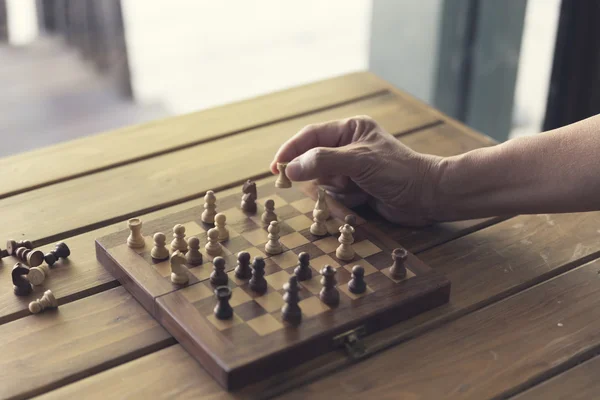
So, if someone asks, Is There a 100 Move Rule in Chess?, the most accurate answer is:
Not officially. The real rule is the fifty-move rule, together with a separate 75-move automatic draw rule.
If you want to explain it as simply as possible, here is how it works:
If no pawn moves and no captures occur for 50 moves by each side, the player whose turn it is may claim a draw. If the game continues and reaches 75 moves by each side under the same conditions, it is automatically drawn, unless the final move results in checkmate.
That is the current FIDE framework.
When people ask Is There a 100 Move Rule in Chess, many are really trying to answer a more basic question: how many move in chess before a game ends.
A lot of players who search “how many move in chess” are not actually asking about the total number of moves in a full game. Instead, they are usually trying to understand whether chess has a move limit before a draw can occur.
The answer is that chess does not have a single overall move limit for the entire game. A game can be very short or very long, depending on what happens on the board. What the rules do include are specific draw mechanisms, such as:
So, the number of moves in a chess game is not fixed in advance. What matters is whether the conditions for one of these draw rules are met.
That is an important distinction, especially for newer players.
At first glance, the fifty move rule chess discussion can seem like a minor technical detail that only arbiters care about.
However, it actually matters a great deal because it affects real game results. It shapes endgame strategy, gives defenders practical drawing chances, and prevents games from dragging on indefinitely when no progress is being made.
FIDE’s rule structure clearly reflects this intention by allowing a draw claim at 50 moves each and enforcing a draw automatically at 75 moves each if no pawn moves or captures occur.
So this is not just a trivial point—it is part of how chess balances logic, fairness, and practicality.
If there is one thing to avoid, it is mixing up these rules and treating them as a single “draw rule”.
Once you clearly separate these ideas, the whole topic becomes much easier to understand—and it also helps answer the common question: Is There a 100 Move Rule in Chess?
So let’s pull it all together.
If you are asking Is There a 100 Move Rule in Chess, the answer is clear: there is no official modern chess rule by that name. The official rule is the 50 move rule in chess, which allows a player to claim a draw after 50 moves by each side without a pawn move or capture.
If the game continues beyond that, FIDE also provides an automatic draw after 75 moves by each side without a pawn move or capture, unless the last move delivers checkmate.
Threefold repetition is an entirely different rule and depends on the same position appearing multiple times, not on move count alone.

That is the modern, official answer—what matters if you are referring to the FIDE Laws of Chess today.
If you came into this article wondering about a strict “100-move rule,” the confusion is understandable. Counting 50 moves by each player can naturally sound like 100 moves when people think in half-moves.
However, in proper chess terminology, this is still the fifty-move rule, not a separate “100-move rule.” Once you also consider the automatic 75-move draw rule, it becomes clear why precise wording is important.
So, the next time someone asks, Is There a 100 Move Rule in Chess?, you can answer confidently:
No, not officially. There is a 50-move rule, and there is also a 75-move automatic draw rule under current FIDE Laws of Chess.