A Support Worker plays a vital role in the UK, providing practical and emotional assistance to individuals who need help with daily living, often due to age, disability, mental health conditions, or learning difficulties. This career path offers immense personal satisfaction, allowing you to make a tangible difference in people’s lives and contribute directly to their well-being and independence.
Key Takeaways
Support Workers assist diverse individuals with daily living tasks, personal care, and community integration.
Key skills include empathy, communication, patience, problem-solving, and resilience.
Formal qualifications like the Care Certificate, NVQs (QCF Diplomas), and apprenticeships are highly valued in the UK.
Entry into the field is often possible with GCSEs, relevant experience, or through entry-level roles and on-the-job training.
Career progression opportunities are robust, leading to senior roles, specialisation, or management positions within the care sector.
The job outlook for Support Workers in the UK remains strong due to an aging population and increasing demand for care services.
Networking, volunteering, and continuous professional development are crucial for long-term success.
What is a Support Worker, and What Do They Do?
A Support Worker provides crucial care and assistance to individuals in the UK who require help to live independently, manage their daily routines, or participate more fully in their communities. This role is incredibly varied, encompassing everything from personal care and medication support to assisting with errands, social activities, and emotional well-being.
Support Workers are the backbone of the care sector, enabling people to maintain their dignity and quality of life. They work with a diverse range of individuals, including older adults, people with physical disabilities, learning disabilities, mental health conditions, sensory impairments, and those recovering from illness or injury. The core purpose of a Support Worker is to empower individuals, respecting their choices and promoting their independence wherever possible.
Typical daily tasks for a Support Worker in the UK might include:
Personal Care: Assisting with washing, dressing, toileting, and feeding. This requires sensitivity and respect for the individual’s privacy.
Medication Support: Administering or prompting medication according to care plans and strict safety guidelines.
Meal Preparation: Helping with cooking, grocery shopping, and ensuring nutritional needs are met.
Mobility Support: Assisting with moving and handling, using mobility aids, or helping individuals get to appointments.
Emotional Support and Companionship: Offering a listening ear, engaging in conversation, and providing reassurance. Building trust is essential.
Community Integration: Supporting individuals to access local services, attend social events, or participate in hobbies, fostering a sense of belonging.
Household Management: Light cleaning, laundry, and other domestic tasks to maintain a comfortable living environment.
Advocacy: Speaking up on behalf of the individual, ensuring their rights and preferences are heard and respected.
Documentation: Keeping accurate records of care provided, observations, and any concerns, crucial for continuity of care.
For example, a Support Worker might spend the morning assisting an elderly client with their breakfast and medication, then accompany them to a doctor’s appointment. In the afternoon, they might help a young adult with learning disabilities develop independent living skills, such as budgeting or preparing a simple meal, before taking them to a local community group. The role demands flexibility and a genuine commitment to the well-being of others. If you’re looking for an immediate opportunity, many organisations are frequently looking for dedicated individuals, such as this Support Worker role.
What Skills Are Required to Be a Successful Support Worker?
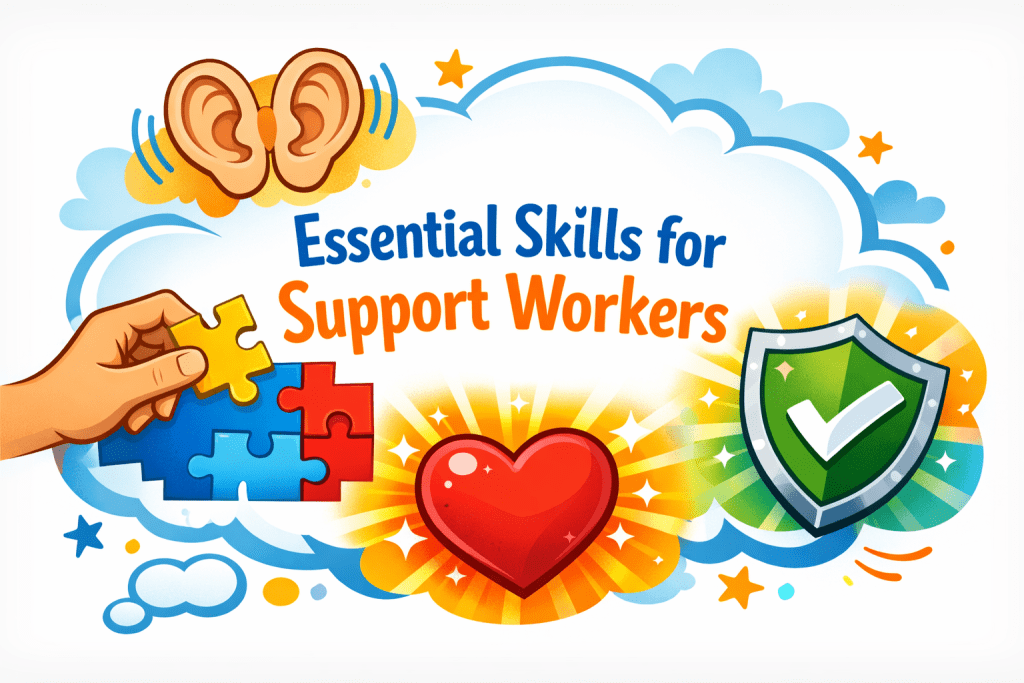
To excel as a Support Worker, a blend of personal attributes and practical skills is essential, enabling effective and compassionate care. Empathy, excellent communication, and strong problem-solving abilities are fundamental, as the role often involves navigating complex personal situations and adapting to individual needs.
A successful Support Worker is not just someone who performs tasks; they are a trusted companion, an advocate, and a facilitator of independence. These skills are often developed through life experience as well as formal training.
Core Skills for Support Workers:
Empathy and Compassion: The ability to understand and share the feelings of another, approaching every interaction with kindness and sensitivity. Without genuine care, it’s hard to connect meaningfully with those you support.
Communication Skills: Clear verbal and non-verbal communication is vital for understanding needs, explaining tasks, and building rapport. This includes active listening, being patient, and adapting your communication style to suit different individuals, including those with communication challenges.
Patience: Many individuals you support may take longer to complete tasks, express themselves, or adapt to changes. Patience is crucial to avoid frustration and ensure a calm, supportive environment.
Problem-Solving and Adaptability: Every day presents unique challenges. Support Workers must be able to think on their feet, find practical solutions, and adapt care plans as situations change. For instance, if a client refuses a particular meal, you need to find an alternative that meets their dietary needs and preferences.
Observation Skills: The ability to notice subtle changes in a person’s mood, health, or behaviour is critical for identifying potential issues and ensuring prompt intervention.
Reliability and Responsibility: Clients depend on their Support Workers. Punctuality, commitment, and a strong sense of duty are paramount.
Resilience and Emotional Strength: Working closely with people in vulnerable situations can be emotionally demanding. Support Workers need resilience to manage stress and maintain a positive outlook.
Organisational Skills: Managing multiple clients, schedules, and care plans requires good organisation and time management.
Teamwork: Support Workers often collaborate with other professionals, such as nurses, social workers, and family members, making teamwork a key skill.
Respect for Privacy and Dignity: Upholding the individual’s right to privacy and treating them with respect at all times is non-negotiable.
Decision Rule: Choose to develop your problem-solving skills if you are often faced with unexpected situations, or focus on communication if you find it challenging to connect with diverse individuals. One common mistake is assuming that “common sense” is enough; while valuable, specific training in areas like safe moving and handling or medication management is indispensable.
Qualifications and Training Pathways in the UK for Support Workers
Becoming a Support Worker in the UK doesn’t always require a specific degree, but certain qualifications and training pathways significantly enhance your employability and professional capability. The sector highly values practical skills, experience, and a commitment to continuous learning, with a clear focus on person-centred care standards.
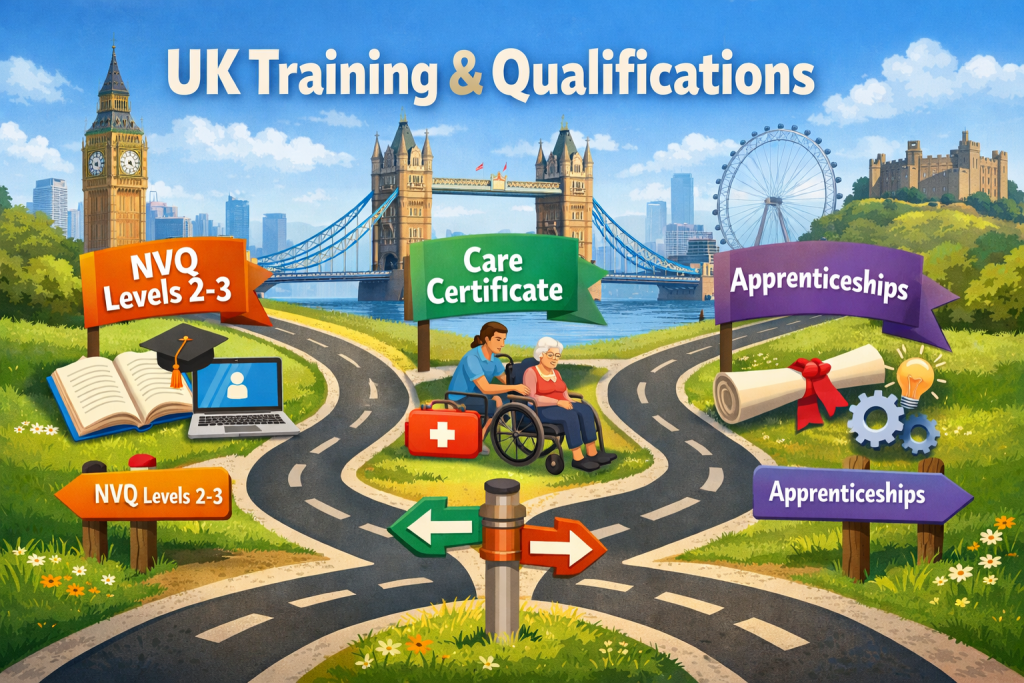
Most employers in the UK will require you to complete foundational training, often including the Care Certificate, and may encourage you to pursue vocational qualifications like NVQs (now known as QCF Diplomas).
Key Qualifications and Training Pathways:
The Care Certificate:
What it is: This is a set of 15 standards that all health and social care workers must meet. It covers fundamental aspects of care, including duty of care, communication, privacy and dignity, safeguarding, and health and safety.
How to get it: It’s typically completed during your induction period with an employer or through an accredited training provider. Many entry-level Support Worker roles will offer this training as part of the onboarding process.
Why it’s important: It demonstrates your understanding of the essential knowledge, skills, and behaviours required to provide safe, compassionate, and high-quality care.
Vocational Qualifications (QCF Diplomas/NVQs):
What they are: These are work-based qualifications that assess your competence in a real care setting. They replace the older NVQ system.
Levels relevant to Support Workers:
Level 2 Diploma in Health and Social Care (Adults): Ideal for those new to care or in entry-level Support Worker roles. It covers core care principles and practical skills.
Level 3 Diploma in Health and Social Care (Adults): Suitable for those with some experience looking to take on more responsibility or specialise. This qualification deepens understanding of person-centred approaches, communication, and health conditions.
How to get them: Often funded by employers, these diplomas involve a mix of practical assessments, observations, and written work. You’ll typically have an assessor who guides you through the process.
Apprenticeships:
What they are: Apprenticeships combine on-the-job training with formal study, allowing you to earn a salary while gaining a recognised qualification.
Levels: Healthcare Support Worker Apprenticeships are available at various levels, typically leading to a Level 2 or Level 3 Diploma in Health and Social Care.
Benefits: This pathway is excellent for school leavers or those changing careers, as it provides a structured learning environment, practical experience, and a wage.
GCSEs and Functional Skills:
Entry Requirements: While not always strictly required, having GCSEs (or equivalent functional skills qualifications) in English and Maths at Grade 4 (C) or above is often preferred by employers, especially for roles involving documentation or medication calculations.
If you don’t have them: Many colleges and training providers offer Functional Skills courses that are equivalent to GCSEs.
Specialised Training:
Depending on the client group, Support Workers may also need specific training in areas like:
First Aid
Safeguarding Adults and Children
Moving and Handling (Hoists, Lifts)
Dementia Awareness
Mental Health First Aid
Administering Medication
Autism Awareness
Basic Life Support
Example: Sarah, 22, was keen to become a Support Worker. She didn’t have specific qualifications but demonstrated strong empathy during her interview. Her employer, a local care agency, hired her and put her through the Care Certificate training in her first month. After six months, they enrolled her in a Level 2 Diploma in Health and Social Care, which she completed while working, giving her both experience and a formal qualification. She found a great role as a Community Support Worker.
Career Opportunities and Job Outlook for Support Workers in the UK
The career outlook for Support Workers in the UK is exceptionally positive and stable, driven by an aging population and increasing demand for personalised care services. This means there are numerous opportunities for both entry-level positions and career progression, making it a reliable and rewarding field to enter in 2026 and beyond.
The versatility of the Support Worker role also opens doors to various specialisations and settings, from residential care to community-based support.
Current Job Market and Outlook (2026):
High Demand: The UK is facing a growing need for care professionals across all sectors. Projections consistently indicate a sustained demand for Support Workers due to demographic shifts, particularly the increase in the elderly population and people living longer with complex health needs.
Diverse Settings: Opportunities are available in a wide array of environments:
Residential Care Homes: Providing 24/7 support for residents.
Nursing Homes: Working alongside medical staff to support individuals with higher health needs.
Community Care: Supporting individuals in their own homes, which often involves travel between clients, such as an Extra Care Support Worker.
Supported Living Facilities: Assisting individuals with learning disabilities or mental health conditions to live as independently as possible.
Hospitals: Offering non-clinical support to patients, often in roles like Healthcare Assistants, which are closely related to Support Worker duties.
Specialised Services: Working with specific client groups, such as those with dementia, autism, or profound learning disabilities.
Salary Expectations: While Support Worker salaries can vary based on location, experience, and the specific organisation, the average annual salary in the UK is competitive, with opportunities for increased earnings through specialist roles or overtime. As of early 2026, entry-level positions generally start around £20,000-£22,000, with experienced Support Workers earning upwards of £25,000-£30,000, particularly in London or specialist fields. Relief and Waking Night roles often offer enhanced hourly rates. For example, a Waking Night Support Worker might receive a higher hourly wage.
Career Progression:
The Support Worker role is an excellent entry point into the wider health and social care sector, with numerous pathways for advancement.
Senior Support Worker: With experience and further qualifications (e.g., Level 3 Diploma), you can progress to a senior role, taking on more responsibility, mentoring new staff, and assisting with care planning.
Team Leader/Coordinator: Managing a small team of Support Workers, overseeing schedules, and ensuring consistent care delivery.
Specialist Support Worker: Focusing on a particular area, such as dementia care, challenging behaviour, palliative care, or mental health support. This often requires additional training and experience.
Care Manager/Registered Manager: For those with significant experience and advanced qualifications (e.g., Level 5 Diploma in Leadership for Health and Social Care Services), roles in management become accessible, overseeing entire care services or facilities.
Other Health and Social Care Roles: The experience gained as a Support Worker is highly valuable for pursuing careers as a Social Worker (requiring a degree like a Qualified Social Worker), Occupational Therapist Assistant, or even progressing into nursing roles through further education.
Training and Assessment: Experienced Support Workers often transition into roles as trainers or assessors, helping new recruits gain their Care Certificate or vocational qualifications.
The flexibility offered by various types of contracts, such as Relief Support Worker positions, also allows individuals to balance work with other commitments while gaining invaluable experience.
Practical Steps to Get Started as a Support Worker
Embarking on a career as a Support Worker is a straightforward process, even if you don’t have prior experience, as the sector values compassion and a willingness to learn. The most practical first steps involve gaining foundational knowledge, securing essential checks, and actively seeking entry-level opportunities.
The journey often begins with a genuine desire to help others and can quickly lead to a fulfilling career. Here’s a step-by-step guide:
Research the Role and Sector:
Understand the day-to-day responsibilities, client groups, and different care settings (residential, community, supported living).
Read job descriptions for Support Worker vacancies to get a clear picture of employer expectations.
Develop Key Skills (Even Without Experience):
Volunteer: Volunteering with charities, community groups, or in care settings can provide invaluable experience, demonstrate your commitment, and help you develop practical skills.
Life Experience: Reflect on any instances where you’ve cared for family members or friends. Highlight these experiences on your CV, focusing on transferable skills like empathy, patience, and organisation.
Ensure Basic Requirements are Met:
Right to Work in the UK: You must have the legal right to work in the UK.
DBS Check: A Disclosure and Barring Service (DBS) check is mandatory for anyone working with vulnerable adults or children. Employers will typically arrange and cover the cost of this.
Driving Licence (Optional but Beneficial): For community-based roles, a driving licence and access to a vehicle are often essential, allowing you to reach clients in different locations.
Consider Entry-Level Qualifications:
While not always required for initial entry, completing a Care Certificate course (which many employers provide) or even a Level 2 Diploma in Health and Social Care will make you a more attractive candidate. Look for short courses offered by local colleges or private training providers.
Craft a Strong CV and Cover Letter:
Tailor your CV to highlight relevant skills (even if from non-care roles), life experiences, and any volunteering.
Your cover letter should convey your passion for care work and your understanding of the Support Worker role.
Search for Job Opportunities:
Look on job boards (like Jobsland), care agency websites, NHS jobs, and local council job portals.
Entry-level positions are often advertised as “Care Assistant,” “Support Worker,” “Healthcare Assistant,” or “Residential Support Worker.”
Don’t overlook “Relief Worker” positions, such as this Relief Worker opportunity, as they can be an excellent way to gain experience and lead to permanent roles.
Prepare for Interviews:
Be ready to discuss why you want to be a Support Worker, how you demonstrate empathy, how you handle challenging situations, and your understanding of person-centred care.
Show enthusiasm and a willingness to learn.
Quick Tip: If you’re unsure where to start, contacting local care agencies directly can be highly effective. Many are consistently recruiting and often provide comprehensive induction training for new starters. They can also offer diverse roles, from full-time to flexible options.
Frequently Asked Questions About Becoming a Support Worker
What is the difference between a Support Worker and a Care Assistant?
While often used interchangeably, a Support Worker typically focuses more on empowering individuals to live independently and participate in their community, which can involve a broader range of activities beyond direct personal care. A Care Assistant primarily provides hands-on personal care and daily living assistance, often in residential settings. Many roles encompass both sets of duties.
Do I need a degree to become a Support Worker in the UK?
No, a university degree is generally not required to become a Support Worker in the UK. Most employers value a genuine desire to help others, relevant life experience, and a willingness to undertake foundational training like the Care Certificate and vocational qualifications such as the Level 2 or 3 Diploma in Health and Social Care.
How long does it take to get qualified as a Support Worker?
The initial qualification, the Care Certificate, can typically be completed within a few weeks to three months as part of an employer’s induction programme. Vocational qualifications like the Level 2 Diploma in Health and Social Care usually take 9-12 months to complete while working.
What are the typical working hours for a Support Worker?
Working hours for Support Workers can vary significantly. They can include full-time, part-time, evening, weekend, and “waking night” shifts, depending on the care setting and the needs of the individuals being supported. Many roles offer flexible contracts, which can include roles as a Relief Support Worker.
Is Support Worker a challenging job?
Yes, being a Support Worker can be challenging both physically and emotionally. You may encounter complex situations, challenging behaviours, or individuals with significant needs. However, it is also incredibly rewarding, offering the chance to make a profound positive impact on people’s lives. Resilience, empathy, and good support from your employer are key.
What is the average salary for a Support Worker in the UK in 2026?
As of early 2026, the average annual salary for a Support Worker in the UK is approximately £22,000-£26,000, but this can vary based on experience, location, and whether the role is with the NHS, a private provider, or a charity. Specialist roles or those with unsociable hours often command higher rates. Top earners in specific roles or locations can reach £30,000 or more annually.
Can I get a Support Worker job without any experience?
Yes, many organisations are happy to hire individuals without prior professional experience, particularly if you can demonstrate transferable skills, a compassionate attitude, and a strong willingness to learn. Volunteering or personal care experience can be highly beneficial in these cases. Employers often provide full training and support for new starters.
What are the next steps for career progression after being a Support Worker?
After gaining experience as a Support Worker, you can advance to roles like Senior Support Worker, Team Leader, or specialise in areas like mental health or learning disabilities. Further qualifications (e.g., Level 3 or 5 Diplomas) can lead to management positions, or you could pursue related careers like Social Work or Nursing.
How does the pay for Support Workers compare between different regions of the UK?
Pay for Support Workers in the UK can vary geographically. Generally, salaries tend to be higher in London and the South East due to the higher cost of living, while regions like the North East or parts of Wales might have slightly lower averages. However, demand for Support Workers remains high across the entire UK.
Conclusion
Embarking on a career as a Support Worker in the UK in 2026 is an excellent decision for anyone seeking a role that offers profound personal satisfaction and a stable job outlook. This guide has shown that with the right blend of empathy, communication skills, and a commitment to continuous learning, you can thrive in this vital sector, making a tangible difference to the lives of vulnerable individuals. Whether you’re starting with no experience, aiming for vocational qualifications, or looking to specialise, the pathways for development are clear and accessible.
The demand for compassionate and skilled individuals remains consistently high, presenting a wealth of opportunities for growth and specialisation. If you are ready to contribute meaningfully to your community and develop a rewarding career, the role of a Support Worker awaits. Take the initiative to research local vacancies, consider a volunteer role, and confidently apply for entry-level positions. Your journey to a truly impactful career starts now.