Embarking on a career as a teacher in the UK offers a deeply rewarding path, allowing you to shape young minds and contribute significantly to society. This comprehensive guide will walk UK job seekers and working professionals through what it means to be a teacher, the skills required, available training pathways, career opportunities, and practical steps to begin your journey in 2026.
Key Takeaways
A teacher guides learning across various educational settings, requiring strong communication, empathy, and adaptability.
Essential skills for a teacher include excellent communication, patience, adaptability, organisational prowess, and a passion for learning.
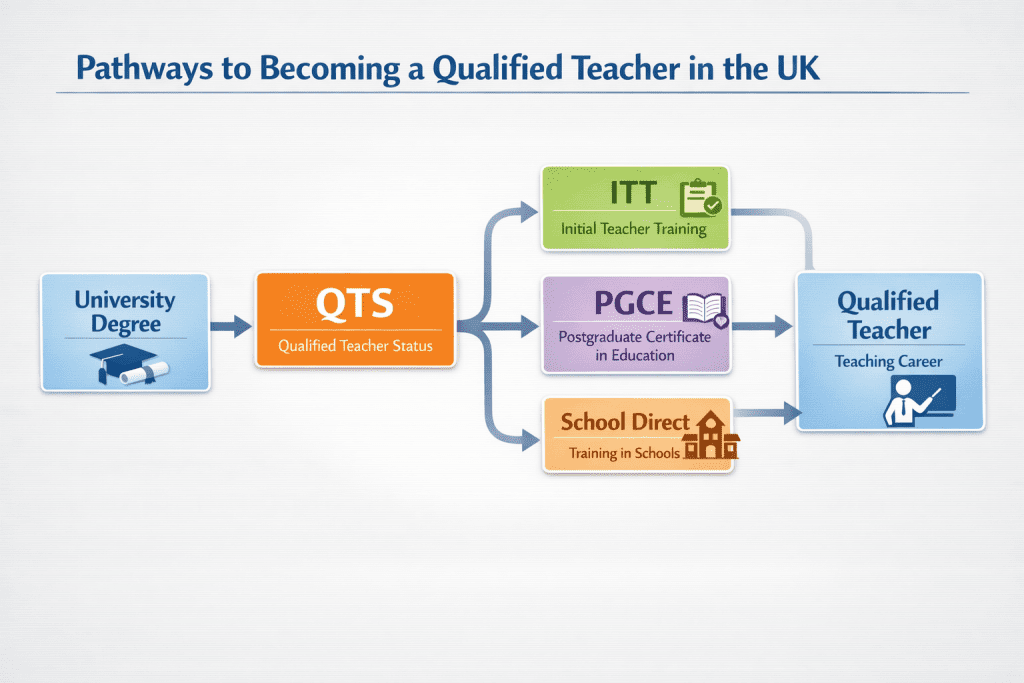
To become a qualified teacher in the UK, you typically need a degree and Qualified Teacher Status (QTS), achievable through various Initial Teacher Training (ITT) programmes like PGCEs or School Direct.
The job outlook for teachers in the UK remains consistently strong across primary, secondary, and Special Educational Needs (SEN) sectors, with ongoing demand in 2026.
Practical steps involve researching ITT courses, gaining school experience, and applying for programmes.
Teacher shortages are a significant issue in many regions, creating opportunities for new educators [1].
Continuous professional development is vital for career progression and staying effective in the classroom.
Exploring different age groups and subject specialisms early can help define your ideal teaching path.
What is the Role of a Teacher in the UK?
A teacher in the UK is a dedicated professional responsible for educating students across various age groups and subjects, fostering their intellectual, social, and emotional development. This vital role extends beyond simply delivering curriculum content to include creating engaging learning environments, assessing progress, and providing pastoral care. For example, a Primary Teacher might focus on foundational literacy and numeracy, while a Science Teacher or Maths Teacher will specialise in more advanced topics for older students.
At its heart, the teaching profession in the UK is about inspiring and empowering the next generation. Teachers work in a variety of settings, from state-funded schools to independent schools, and from early years foundations to post-16 education. Their daily tasks involve lesson planning, classroom management, marking assignments, communicating with parents, and participating in school-wide activities and meetings. The landscape of education is dynamic, with ongoing discussions around curriculum development, student well-being, and integrating technology, meaning a teacher’s role is constantly evolving. The core mission, however, remains to facilitate learning and personal growth for every student.
Different Types of Teachers
The UK education system offers a diverse range of teaching roles, each with its own focus and challenges:
Early Years Teacher: Works with children from birth to five years old, focusing on foundational learning through play in nurseries, pre-schools, and reception classes. An Early Years Teacher helps develop basic social, emotional, and cognitive skills.
Primary Teacher: Educates children aged 5 to 11 (Key Stages 1 and 2), covering a broad curriculum including English, Maths, Science, and Humanities. A Year 5 Teacher or Year 1 Teacher would fall into this category.
Secondary Teacher: Specialises in one or more subjects for students aged 11 to 18 (Key Stages 3, 4, and 5) in secondary schools and sixth forms. Examples include a Geography Teacher or an English Teacher.
Special Educational Needs (SEN) Teacher: Works with students who have a range of learning difficulties, disabilities, or behavioural challenges, tailoring instruction to meet individual needs. This is a highly specialised and rewarding area, with roles like a SEN Autism Teacher.
Further Education (FE) Teacher: Teaches vocational or academic subjects to students over 16, often in colleges. This could involve anything from apprenticeships to A-levels.
What Skills are Required to be a Teacher?
To be an effective teacher, a blend of interpersonal, organisational, and pedagogical skills is essential, enabling you to manage a classroom, engage students, and adapt to diverse learning needs. Without these core competencies, even the most knowledgeable individual might struggle to connect with students and deliver impactful lessons.
Consider a moment when a class isn’t quite grasping a concept, or when energy levels are low on a Friday afternoon. It’s in these scenarios that a teacher’s adaptability and ability to re-explain, re-engage, or even just brighten the mood with a quick anecdote truly shines. The demands on a teacher are considerable, ranging from instructional planning to administrative tasks and individualising instruction for every child [7]. This means that the ability to manage time effectively and maintain a positive attitude under pressure is paramount.
Key Skills for a Successful Teacher:
Communication Skills: Being able to explain complex ideas clearly, listen actively to students, and communicate effectively with parents and colleagues. This includes both verbal and written communication.
Patience and Empathy: Understanding that every student learns at their own pace and may face different challenges. A patient teacher can provide the support needed to help students overcome obstacles.
Adaptability and Flexibility: The classroom environment is unpredictable. Teachers must be able to adjust lesson plans on the fly, respond to unexpected situations, and cater to various learning styles and needs.
Organisational Skills: Effective planning, time management, and the ability to keep track of student progress, resources, and administrative tasks are crucial for a smooth-running classroom.
Passion for Learning: A genuine enthusiasm for your subject and for education in general is infectious and can inspire students.
Classroom Management: The ability to maintain an orderly and respectful learning environment, setting clear expectations and managing student behaviour constructively. Concerns about student behaviour are widespread among teachers [3].
Subject Matter Expertise: A deep understanding of the curriculum you teach, allowing you to answer questions confidently and provide rich, accurate information. For example, a German Teacher must have excellent linguistic skills.
Resilience: Teaching can be demanding, and coping with challenges, setbacks, and high workloads requires mental toughness and the ability to bounce back. The national Teacher Morale Index shows a slight decline, highlighting the ongoing need for resilience [3].
Teamwork and Collaboration: Working effectively with other teachers, teaching assistants, and school leadership to create a cohesive educational experience for students.
A common mistake aspiring teachers make is underestimating the emotional labour involved. While academic knowledge is foundational, the human element—managing emotions, building relationships, and inspiring—is equally, if not more, critical for daily success.
Qualifications and Training Pathways to Become a Teacher in the UK
To become a qualified teacher in the UK, you generally need a degree and Qualified Teacher Status (QTS), which can be obtained through various Initial Teacher Training (ITT) programmes. The pathway you choose often depends on your existing qualifications, whether you have a degree, and your preferred learning style. The government is expanding on-the-job preparation and apprenticeships in response to teacher shortages, indicating growing flexibility in pathways [2].
It’s crucial to understand that QTS is the essential accreditation needed to teach in most state-maintained schools in England and Wales. Without it, you might be limited to independent schools or teaching assistant roles. For Scotland and Northern Ireland, separate qualifications apply, though similar principles of academic study combined with practical training are involved.
Main Training Pathways in England:
University-led PGCE (Postgraduate Certificate in Education) or PGDE (Professional Graduate Diploma in Education):
Who it’s for: Graduates who want a university-based academic qualification alongside practical school placements.
Requirements: A degree (usually 2:2 or above), GCSE English and Maths (and Science for primary teaching) at grade 4 (C) or equivalent.
Structure: Typically one academic year full-time. Combines university-based learning (theory, pedagogy, subject knowledge) with two or more placements in schools.
Outcome: Leads to QTS and a postgraduate qualification.
Choose this if: You prefer a more academic approach to your training, value university support, and want a postgraduate qualification.
School Direct (salaried or unsalaried):
Who it’s for: Graduates who want to learn on the job and be part of a school team from day one.
Requirements: Similar to PGCE (degree, GCSEs). Salaried programmes require three years of work experience.
Structure: You are recruited by a school or a school-led partnership. Training is largely school-based, often with elements of university support.
Outcome: Leads to QTS. Can include a PGCE qualification depending on the provider.
Choose this if: You thrive in a practical, hands-on environment and want to quickly integrate into a school setting. Salaried options are great for those needing to earn while they learn.
SCITT (School-Centred Initial Teacher Training):
Who it’s for: Graduates who want school-based training run by groups of schools.
Requirements: Similar to PGCE (degree, GCSEs).
Structure: Training is delivered by experienced teachers in partner schools, often with bespoke programmes tailored to local needs.
Outcome: Leads to QTS. Some SCITTs offer a PGCE as well.
Choose this if: You want a strong emphasis on practical classroom experience and benefit from being immersed in a school from the start.
Teach First:
Who it’s for: High-achieving graduates and career changers committed to addressing educational inequality.
Requirements: A 2:1 degree or higher, strong academic record, and leadership potential.
Structure: An intensive two-year programme combining teaching in schools in disadvantaged areas with leadership development. You gain QTS in the first year and a PGDE by the end of the second.
Choose this if: You are passionate about making a difference in challenging contexts and want a fast-paced leadership-focused pathway.
Assessment Only Route:
Who it’s for: Experienced graduates with significant teaching experience (usually two or more years) who can demonstrate they already meet the Teachers’ Standards.
Requirements: Degree, GCSEs, and extensive evidence of teaching.
Structure: No formal training programme. You are assessed against the Teachers’ Standards over a short period (e.g., 12 weeks).
Outcome: Leads directly to QTS.
Choose this if: You have been teaching in schools for a considerable time without QTS and are confident in your existing abilities.
After completing any of these ITT programmes and gaining QTS, new teachers enter their Early Career Teacher (ECT) induction period. This typically lasts two years and involves reduced timetables, mentoring, and structured support to help them transition into independent teaching. Many entry-level teaching positions are specifically advertised for ECTs, recognising this crucial developmental stage.
Career Opportunities and Job Outlook for a Teacher
The job outlook for a teacher in the UK remains robust in 2026, driven by ongoing demand across various sectors, especially in primary, secondary, and Special Educational Needs (SEN) education. While there are regional variations, teaching continues to be a profession with stable employment prospects, particularly given persistent teacher shortages in certain subjects and geographical areas. Data from mid-2025 indicated over 411,000 teaching positions nationwide were either vacant or staffed by under-certified educators, highlighting a significant need [1].
This means that if you’re looking to become a teacher, your skills are likely to be in demand. For instance, specific subjects like Maths, Physics, Chemistry, and Modern Foreign Languages often face shortages at secondary level, while SEN roles are consistently needed across all age groups. The cost of replacing a single teacher is substantial for districts, ranging from $12,000 to $25,000, which incentivises retaining qualified staff and attracting new talent [1].
Progression and Specialisms
Once qualified, a teacher’s career path is not static; numerous opportunities exist for professional development and advancement:
Subject Leader/Head of Department: Taking on leadership for a specific subject area, managing curriculum, resources, and often line-managing other teachers, such as a Maths Teacher with TLR opportunity.
Pastoral Roles: Becoming a Head of Year or Head of House, focusing on student well-being, behaviour, and academic progress across a specific year group or house.
SEN Coordinator (SENCO): A specialised role requiring further training, responsible for identifying and supporting students with special educational needs within the school.
Assistant Headteacher/Deputy Headteacher: Moving into senior leadership, taking on broader school management responsibilities, curriculum development, and strategic planning.
Headteacher: The ultimate leadership role within a school, responsible for its overall vision, management, and performance.
Advanced Skills Teacher (AST): Some schools offer roles for highly effective teachers to share their expertise and mentor colleagues.
Educational Consultant/Inspector: After significant experience, some teachers move into advisory roles for local authorities or Ofsted.
Current Trends Affecting Teachers in 2026
Teacher Shortages: These continue to be a structural, rather than cyclical, issue, with preparation enrollment declining [2]. This creates a favourable market for newly qualified teachers, particularly in high-need subjects and areas. These shortages disproportionately affect low-income students and students of colour [1].
Burnout and Morale: Teacher burnout remains a concern, with educators feeling stretched by instructional demands and administrative tasks [7]. The national Teacher Morale Index stands at +13 in 2026, a slight decline from the previous year [3]. This means that schools are increasingly focusing on teacher well-being and workload management to retain staff.
Professional Learning: Effective professional learning in 2026 is moving towards sustained, job-embedded approaches with personalised coaching and collaborative inquiry [6]. Teachers can expect more tailored development opportunities that align with their specific needs.
Technology Integration: The ongoing integration of technology in classrooms continues to evolve, requiring teachers to be proficient in using digital tools for teaching and learning.
Focus on Well-being: There’s a growing emphasis on student and staff mental health and well-being, with teachers often playing a key role in supporting students’ emotional needs.
While the profession demands a great deal, the opportunity to impact lives and grow professionally makes it a deeply satisfying career choice for many.
Practical Steps to Get Started as a Teacher
Beginning your journey to become a teacher in the UK involves several clear, actionable steps, from gaining initial experience to applying for training programmes. By following these steps methodically, you can navigate the qualification process smoothly and prepare for a successful career in education.
Imagine Sarah, a marketing professional in her late 20s, who always felt a pull towards teaching. She started by volunteering at her local primary school one afternoon a week. This “taste” of the classroom was invaluable, helping her confirm her passion and understand the realities of the role before committing to a full training programme. This initial step is often the most revealing.
Step-by-Step Guide:
Assess Your Qualifications:
Degree: Ensure you have an undergraduate degree (or are working towards one). A 2:2 or above is generally required for postgraduate ITT programmes. For secondary teaching, your degree should ideally be in or closely related to the subject you wish to teach.
GCSEs: You need at least Grade 4 (C) in English Language and Maths. For primary teaching, you’ll also need a Grade 4 (C) in a Science subject. If you don’t have these, you may need to take equivalency tests.
Subject Knowledge Enhancement (SKE): If your degree isn’t directly in a shortage subject (like Physics, Chemistry, Maths, MFL), but you have strong A-levels in it, you might be eligible for an SKE course. These are government-funded courses to bring your subject knowledge up to the required level.
Gain School Experience:
This is a crucial step and often a requirement for ITT applications. It helps you understand daily school life, confirm your commitment, and demonstrate your suitability.
How to get experience: Volunteer at a local school (primary, secondary, or SEN), observe lessons, support teachers, or assist with after-school clubs. Even a few days can be incredibly insightful. Contact schools directly to inquire about opportunities.
Tip: During your experience, take notes on classroom management techniques, lesson structures, and how teachers engage students. This will be invaluable for your application and future training.
Research Initial Teacher Training (ITT) Programmes:
Explore the different routes available (PGCE, School Direct, SCITT, Teach First) and decide which best suits your learning style, financial situation, and career aspirations.
Consider the age group (primary, secondary, early years) and subject you wish to teach. Resources like the UK government’s ‘Get Into Teaching’ website are excellent starting points.
Look for specific roles like a Key Stage 1 Teacher or a Year 6 Teacher to understand the daily responsibilities associated with different age groups.
Prepare Your Application:
Applications for ITT programmes are typically made through the UK government’s Apply for Teacher Training service.
You’ll need to write a compelling personal statement outlining your motivation, relevant experience, and understanding of the teaching profession.
Secure strong academic and professional references.
Attend Interviews and Assessment Days:
If your application is successful, you’ll be invited for an interview, often involving a teaching task, a written task, and subject knowledge assessment.
Be prepared to discuss your understanding of education, current issues in teaching, and your personal qualities.
Undergo DBS Checks and Fitness to Teach:
All successful applicants will undergo Disclosure and Barring Service (DBS) checks to ensure their suitability to work with children. You’ll also need to pass a ‘fitness to teach’ assessment.
By carefully planning and dedicating time to each of these steps, you can effectively prepare yourself for a rewarding career as a teacher in the UK.
Frequently Asked Questions about Becoming a Teacher
What is QTS and do I need it?
QTS stands for Qualified Teacher Status, and it is the professional accreditation required to teach in most state-maintained schools in England and Wales. Yes, you generally need QTS to teach in these schools.
How long does it take to become a qualified teacher?
Most full-time Initial Teacher Training (ITT) programmes, like a PGCE or School Direct, take one academic year to complete. After this, you undertake a two-year Early Career Teacher (ECT) induction period to become fully qualified.
Can I become a teacher without a degree?
No, generally you need an undergraduate degree to enter Initial Teacher Training (ITT) programmes in the UK. If you have significant experience but no degree, the Assessment Only Route might be an option, but a degree is usually still a prerequisite.
What are the entry requirements for a PGCE?
Typically, you need a UK undergraduate degree (2:2 or above), GCSEs at grade 4 (C) or equivalent in English Language and Maths, and for primary teaching, Science. Some secondary subjects may require a degree specifically in that subject.
Is there a teacher shortage in the UK in 2026?
Yes, there is an ongoing and significant teacher shortage in many parts of the UK and in specific subjects, particularly at secondary level (e.g., Maths, Science, MFL) and in Special Educational Needs [1, 2].
What is the Early Career Teacher (ECT) induction?
The ECT induction is a two-year statutory period following the completion of Initial Teacher Training (ITT) where new teachers receive structured support, mentoring, and a reduced timetable to consolidate their practice and develop into independent teachers.
Can I teach in the UK with qualifications from another country?
Potentially, yes. If you are a qualified teacher from certain countries, you may be able to apply for QTS in England without further training. The UK government provides guidance on overseas qualification recognition.
What is the average starting salary for a teacher in the UK?
The starting salary for a qualified teacher (ECT) on the main pay scale in England (outside London) is typically around £30,000 in 2026, with higher rates in London and for teachers with additional responsibilities or in shortage subjects.
How much school experience do I need before applying for ITT?
While there isn’t a strict minimum number of days, most ITT providers recommend or require some recent experience in a school setting (e.g., 2-5 days) to demonstrate your understanding of the classroom environment and commitment to teaching.
What is the difference between a PGCE and School Direct?
A PGCE is typically university-led, combining academic study with school placements. School Direct is school-led, immersing you in a school from the start with practical, on-the-job training, though it may still involve some university-based sessions.
Conclusion
Becoming a teacher in the UK is a challenging yet profoundly rewarding career choice for 2026, offering the chance to inspire and educate the next generation. With various pathways to qualification, a strong job outlook, and ample opportunities for professional growth, the profession welcomes dedicated individuals from diverse backgrounds. Whether you’re fresh out of university or considering a career change, the steps outlined—from gaining school experience to selecting the right training programme—provide a clear roadmap to achieving Qualified Teacher Status and making a real difference in young lives. The journey demands passion, resilience, and a commitment to continuous learning, but the impact you can have as a teacher is immeasurable.
To explore specific teaching roles and find opportunities tailored to your subject or age group interest, remember to check out resources like the Primary Teacher English Lead or EYFS Teacher listings on Jobsland.co.uk. Take that first step, gain some classroom experience, and you might just find your true calling in education.