
Home » Uncategorized » Teaching: Your Comprehensive UK Guide to an Enriching Career in 2026
Quick Answer: Teaching in the UK is a dynamic and rewarding profession focused on educating and inspiring students across various age groups and subjects, requiring specific qualifications and a diverse skill set. For UK job seekers and working professionals, 2026 presents numerous opportunities to enter or advance within the education sector, with clear pathways for training and significant career development potential.
Key Takeaways:
Teaching is the process of helping others learn new knowledge, develop skills, and acquire values, beliefs, and habits. It encompasses a broad spectrum of activities, from designing lesson plans to assessing progress and fostering a supportive learning environment, with the ultimate goal of empowering individuals for their future.
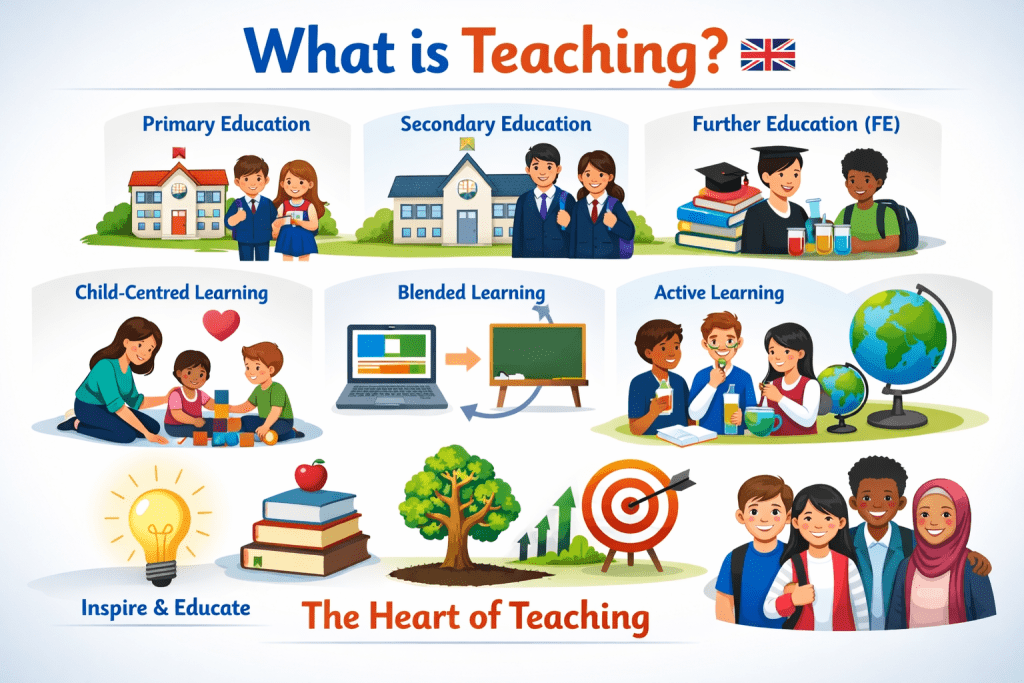
In the UK, the role of a teacher is multifaceted, extending beyond simply delivering curriculum content. Teachers act as mentors, facilitators, and role models, shaping the academic and personal development of their students. This can occur in various settings, including primary schools, secondary schools, further education colleges, and even adult learning centres. For example, a primary teacher focuses on foundational literacy and numeracy, while a secondary Teaching specialist might delve deep into a specific subject like Science or History. The essence of Teaching lies in making complex ideas accessible and igniting a passion for lifelong learning. It’s a career that offers immense satisfaction through seeing students grasp new concepts and grow into confident individuals.
One of the most rewarding aspects of Teaching is the direct impact you have on young lives. Sarah, a primary school teacher in Bristol, shared, “There’s nothing quite like seeing a child’s face light up when they finally understand a tricky concept. It’s those ‘aha!’ moments that make every challenging day worthwhile.” This profound connection is a key motivator for many entering the profession.
Successful teaching requires a diverse blend of interpersonal, organisational, and cognitive skills to manage a classroom effectively and inspire learning. These skills are not only crucial for daily classroom management but also for adapting to evolving educational landscapes, such as the increasing integration of AI in learning environments [1].
To excel in Teaching, professionals need to cultivate a robust set of abilities that go beyond subject knowledge. Strong communication is paramount, not just for explaining concepts but also for connecting with students, parents, and colleagues. Patience is also key, especially when dealing with diverse learning paces and challenges. Think about a time you struggled to understand something new; a patient teacher made all the difference.
Moreover, adaptability is vital, as no two days in a classroom are ever the same, and lessons often need to be modified on the fly. Digital literacy is becoming increasingly important, with calls for AI training as part of preservice clinical training for teachers [1].
A common mistake new teachers make is underestimating the importance of classroom management. It’s not just about discipline, but about creating an environment where learning can thrive. Mastering this skill from the outset can significantly enhance a teacher’s overall effectiveness and job satisfaction. For example, consistent routines and clear expectations can prevent many common disruptions.

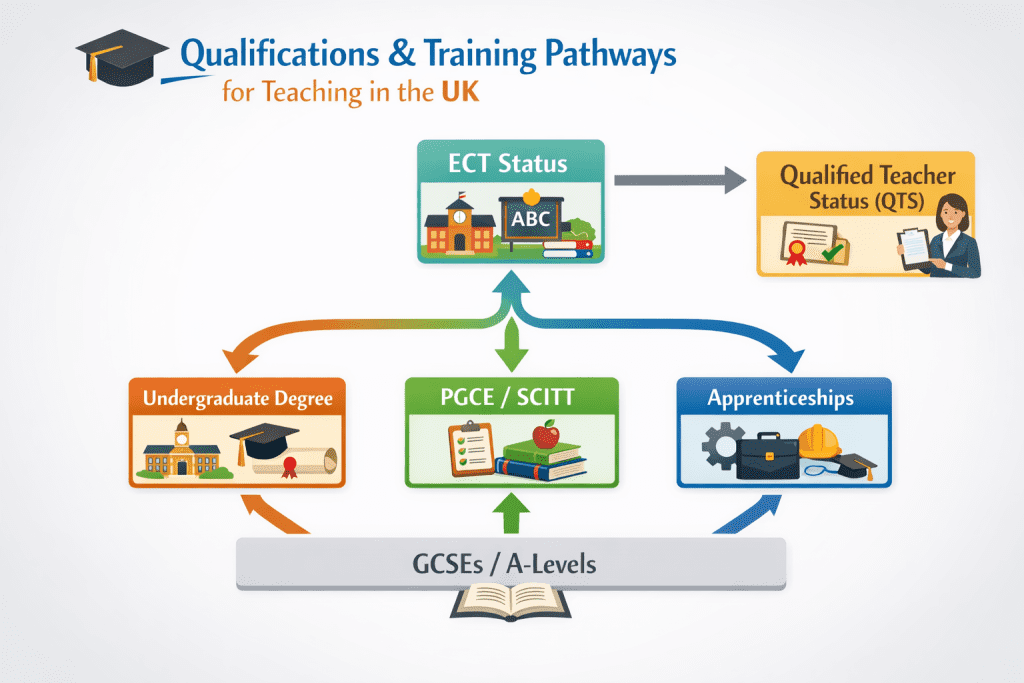
Becoming a qualified teacher in the UK typically requires a university degree, followed by a recognised Initial Teacher Training (ITT) programme leading to Qualified Teacher Status (QTS). These pathways ensure that new teachers are equipped with both subject knowledge and pedagogical skills.
The journey to QTS in the UK is structured to prepare individuals thoroughly for the demands of the classroom. Most routes begin with a university degree, ideally in the subject you wish to teach, though some pathways allow for conversion courses. The next crucial step is an ITT programme. The most common is the Postgraduate Certificate in Education (PGCE), often combined with a Master’s-level qualification.
Another popular route is School-Centred Initial Teacher Training (SCITT), which offers a more hands-on, school-based experience from the start. Both pathways lead to QTS, which is mandatory for Teaching in most state-maintained schools in England and Wales. Recent changes, such as those addressing interstate teacher mobility, demonstrate an ongoing effort to streamline teacher licensure and recruitment across different regions [2].
Once you achieve QTS, you become an Early Career Teacher (ECT). You’ll then complete a two-year induction period in a school, supported by a mentor. Successful completion of this induction marks the end of your statutory training and confirms your professional standing. This period is crucial for consolidating skills and gaining confidence.
My friend Liam, who completed a SCITT programme, told me, “Being in the classroom from day one was intense but invaluable. I learned practical skills much faster than I think I would have through a purely university-based route.” This highlights the varied experiences and benefits each pathway offers.
| Feature | PGCE (University-led) | SCITT (School-Centred) | School Direct (Fee-funded) | School Direct (Salaried) |
| Focus | Strong academic grounding, pedagogical theory. | Practical, hands-on learning within a school setting. | Practical, school-based, specific school focus. | Paid employment, practical, school-based. |
| Study Structure | Mix of university lectures/seminars and school placements. | Predominantly in-school, with some training days. | Predominantly in-school, with some training days. | Primarily working as an unqualified teacher in school. |
| Qualification | QTS + PGCE (often Master’s-level credits). | QTS (some offer PGCE). | QTS (often with PGCE). | QTS (often with PGCE). |
| Funding | Tuition fees, potential bursaries/scholarships. | Tuition fees, potential bursaries/scholarships. | Tuition fees, potential bursaries/scholarships. | Salary paid by the school. |
| Entry Requirements | Degree (2:2+), GCSEs (Eng, Maths, Sci for Primary). | Degree (2:2+), GCSEs (Eng, Maths, Sci for Primary). | Degree (2:2+), GCSEs (Eng, Maths, Sci for Primary). | Degree (2:2+), GCSEs (Eng, Maths, Sci for Primary), 3+ years work experience. |
| Ideal For | Academic learners, those seeking a university environment. | Experiential learners, those wanting school immersion. | Those with a preferred school or school group. | Experienced professionals seeking a career change and income. |
If you’re considering a career in primary education, exploring specific roles like a Year 4 Teacher or a Primary Teacher ECT can give you a clearer picture of day-to-day responsibilities. For secondary education, options like a Maths Teacher or a Science Teacher are often in high demand.
The UK teaching profession offers stable career opportunities with clear progression pathways and a consistent demand for skilled educators, especially in specific subject areas and regions. The job outlook for Teaching in 2026 remains positive, though it is influenced by regional needs and government educational policies.
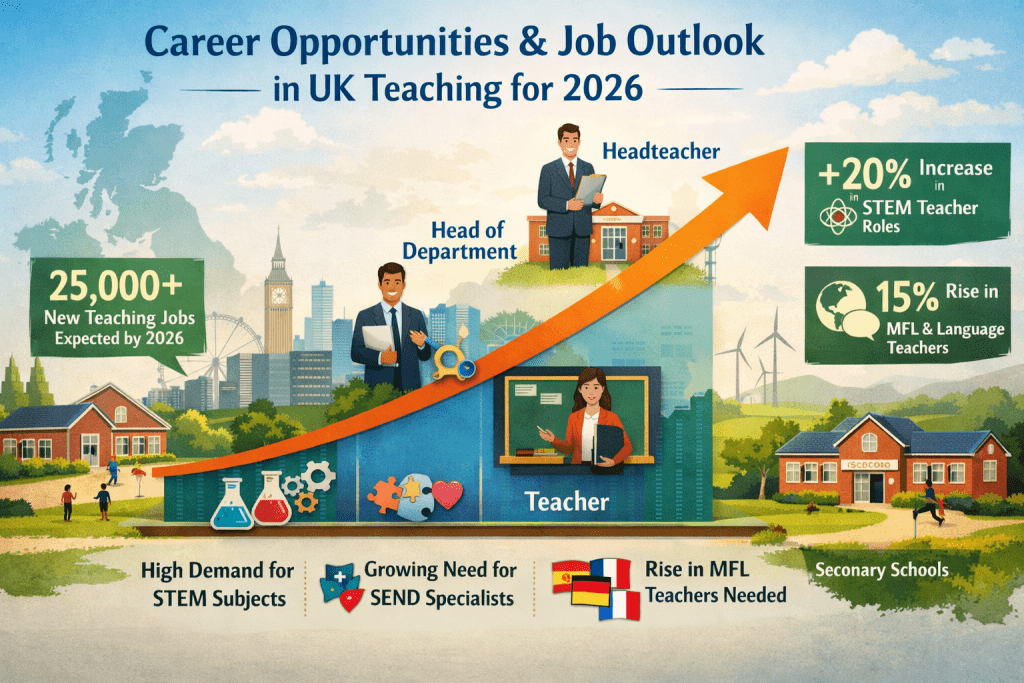
The education sector is a cornerstone of society, ensuring a continuous need for teachers. In 2026, the demand for teachers remains robust, particularly in subjects such as Science, Technology, Engineering, and Mathematics (STEM), Modern Foreign Languages (MFL), and Special Educational Needs and Disabilities (SEND). States are actively pursuing initiatives to recruit and retain teachers, including increasing pay and providing high-quality professional development [2]. There’s also a growing focus on expanding opportunities for retired educators to fill open positions and address shortages [2]. This creates varied entry points and sustained career growth for those committed to Teaching.
It’s worth noting that while federal initiatives in the US have seen some grants for teacher preparation ended in recent years, congressional support for teacher-preparation programs in the UK has largely been maintained [1]. This suggests a stable, if evolving, landscape for those entering the profession.
For those considering a leadership path, roles such as Assistant Head of Department for Construction or Head of Business and Economics illustrate the diverse leadership opportunities available beyond classroom Teaching.
Embarking on a teaching career in the UK involves a structured process, starting with foundational qualifications and progressing through experience and formal training. Following a clear plan can simplify the journey from interested applicant to Qualified Teacher Status.
To begin your journey in Teaching, the first step is to ensure you meet the basic academic requirements. This typically means having a good degree and the necessary GCSEs. Following this, gaining some practical experience in an educational setting is highly beneficial, as it helps confirm your career choice and strengthens your application for Initial Teacher Training (ITT). Researching and choosing the right ITT programme for your subject and preferred learning style is crucial. Finally, securing a position for your Early Career Teacher (ECT) induction will complete your qualification process and launch your career in education.
A common pitfall is rushing into an ITT programme without enough school experience. Taking the time to observe different schools and age groups can prevent future career dissatisfaction by ensuring Teaching is the right fit for you. For instance, if you’re drawn to younger learners, observing a Year 2 Primary Teacher could provide valuable insight.
The journey doesn’t end after induction. Teaching is a profession of lifelong learning. Engaging in regular CPD keeps your skills sharp, introduces you to new pedagogical approaches (such as integrating AI effectively, as called for by AACTE [1]), and opens doors for career advancement. Schools typically provide dedicated CPD budgets and opportunities for their staff.
Q: Do I need a degree to become a teacher in the UK?
A: Yes, generally you need a Bachelor’s degree (2:2 or above) to enter an Initial Teacher Training (ITT) programme, along with GCSEs in English and Maths (and Science for primary teaching).
Q: How long does it take to become a fully qualified teacher in the UK?
A: After your degree, an ITT programme (PGCE/SCITT) usually takes one year full-time. This is followed by a two-year Early Career Teacher (ECT) induction period, making it roughly three years post-degree to become fully qualified.
Q: Are there funding options available for teacher training?
A: Yes, government bursaries and scholarships are available for ITT in high-priority subjects like Maths, Sciences, and Modern Foreign Languages. Eligibility depends on your degree classification and the subject you train to teach.
Q: Can I teach without Qualified Teacher Status (QTS) in the UK?
A: You can teach in academies, free schools, or independent schools without QTS, but QTS is required to teach in maintained primary, secondary, and special schools in England and Wales.
Q: Is there a demand for teachers in specific subjects?
A: Yes, there is consistently high demand for teachers in STEM subjects (Science, Technology, Engineering, Maths), Computer Science, and Modern Foreign Languages. Special Educational Needs and Disabilities (SEND) teachers are also highly sought after.
Q: What is an Early Career Teacher (ECT) induction?
A: The ECT induction is a statutory two-year period for newly qualified teachers, providing a structured programme of support, mentoring, and professional development to help them become expert practitioners.
Q: How do I choose between a PGCE and SCITT?
A: A PGCE offers a more academic, university-led approach with practical placements, while SCITT is school-centred, providing a more immersive, hands-on experience from the start. Your learning style and preference for academic vs. practical focus should guide your choice.
Q: What if my degree isn’t in a shortage subject?
A: You may still be eligible for Initial Teacher Training if you complete a Subject Knowledge Enhancement (SKE) course to bring your subject knowledge up to the required standard.
Q: How important is school experience before applying for teacher training?
A: It is highly recommended. Gaining school experience, even through observation or volunteering, confirms your interest, enhances your application, and provides valuable insights into the teaching profession.
Q: How is AI impacting teaching and teacher training in 2026?
A: AI is becoming increasingly integrated into education, leading to calls for specific AI training within preservice clinical training for teachers to help them effectively use and manage new technologies in the classroom [1].
Embarking on a career in Teaching in the UK in 2026 offers a profound opportunity to shape futures, inspire learning, and contribute significantly to society. With clear training pathways like PGCEs and SCITTs leading to Qualified Teacher Status, a consistent demand for skilled educators, especially in high-priority subjects, and robust career progression opportunities, the profession remains an attractive and stable choice for UK job seekers and working professionals.
Success in Teaching hinges on a blend of essential skills, from communication and adaptability to patience and digital literacy, with a commitment to continuous professional development. By taking practical steps like gaining classroom experience and thoroughly researching training programmes, aspiring teachers can confidently navigate their journey into this rewarding career.
Actionable Next Steps:
[1] Education groups push $2.5 billion plan to rebuild teacher preparation – https://www.edweek.org/teaching-learning/education-groups-push-2-5-billion-plan-to-rebuild-teacher-preparation/2026/02
[2] February 2026 State Actions Update K 12 Education Policies Progress – https://excelinedinaction.org/2026/03/04/february-2026-state-actions-update-k-12-education-policies-progress/