Quick Answer: TEFL, or Teaching English as a Foreign Language, is a qualification that equips UK job seekers and professionals with the essential skills to teach English to non-native speakers around the globe, either in person or online. In 2026, a Level 5 TEFL certification with observed teaching practice and specialised modules is the gold standard for securing reputable and well-paying roles, offering a dynamic path for career development and international experience.
Key Takeaways
TEFL is Your Passport: A TEFL qualification opens doors to teaching English worldwide and remotely.
Level 5 is Key: The industry now demands Level 5 TEFL certifications with 120+ hours and practical teaching experience for the best opportunities [2].
Specialisation Matters: Employers increasingly expect modules in areas like Young Learners, Business English, or Online Teaching [1].
2026 is a Hot Year: Global teacher shortages and booming online learning mean unprecedented job prospects for qualified TEFL teachers [3].
Higher Pay for Quality: Qualified teachers are earning significantly higher rates, both online (up to £30/hour) and overseas, often with paid benefits [3].
Digital Skills are Essential: Proficiency in digital classrooms and AI tools for lesson planning is a must [4].
Practical Experience is Crucial: Supervised teaching practice is now a baseline requirement for reputable schools and visa sponsorship [2, 4].
Beware of Cheap Courses: Unaccredited, low-hour certificates are largely rejected by serious employers [3].
What is TEFL and Why is it So Popular in 2026?
TEFL stands for Teaching English as a Foreign Language, and it’s a globally recognised certification that trains individuals to teach English to non-native speakers. It’s particularly popular in 2026 because it offers UK professionals a flexible and rewarding career path that combines travel, cultural immersion, and meaningful work, all while addressing a significant global demand for English language education [3].
The Role of a TEFL Qualified Teacher
A TEFL-qualified teacher’s primary role is to create engaging and effective English lessons for students of all ages and levels. This involves more than just speaking English; it’s about understanding language acquisition principles, developing lesson plans, managing a classroom, and adapting teaching methods to suit different learning styles and cultural backgrounds. Whether teaching young children in a primary school in Vietnam, adults in a corporate setting in Germany, or providing one-on-one online tutoring from a home office in the UK, the core objective remains the same: to foster English language proficiency and confidence.
A Personal Anecdote:I remember Sarah, a former accountant from Manchester, who felt stuck in her career. She took a Level 5 TEFL course in 2025, completed her teaching practice, and by early 2026, she was teaching Business English to executives in Tokyo. She often remarks how the skills she gained in her TEFL course, like public speaking and adapting to diverse groups, were surprisingly transferable and made her feel truly revitalised in her career. It wasn’t just about teaching English; it was about building confidence and connecting with people globally.
Why 2026 is an Unprecedented Year for TEFL
The year 2026 represents a unique and incredibly strong period for TEFL job prospects, perhaps the strongest in over a decade [3]. This surge is driven by several converging factors:
Global Teacher Shortages: Many countries are experiencing significant shortages of qualified English teachers, opening up numerous positions.
Post-Pandemic Education Reform: Governments and educational institutions worldwide are investing heavily in improving language education after pandemic disruptions.
Exploding Online Learning Demand: Remote ESL teaching has become fully mainstream, with a massive increase in demand for online tutors, especially for adults and corporate English training [3].
Increased Value for Qualified Teachers: Employers are actively seeking highly qualified TEFL teachers, leading to better salary packages, benefits, and visa sponsorship for those with advanced certifications [3].
This combination means that UK professionals considering a TEFL career in 2026 will find a landscape rich with opportunity, rewarding roles, and pathways for significant career growth.
Essential Skills for a Successful TEFL Career
To thrive as a TEFL teacher, a blend of linguistic, pedagogical, and interpersonal skills is crucial. While a TEFL course will train you in many of these, having a foundation in certain areas will give you a significant advantage.
Core Teaching Competencies
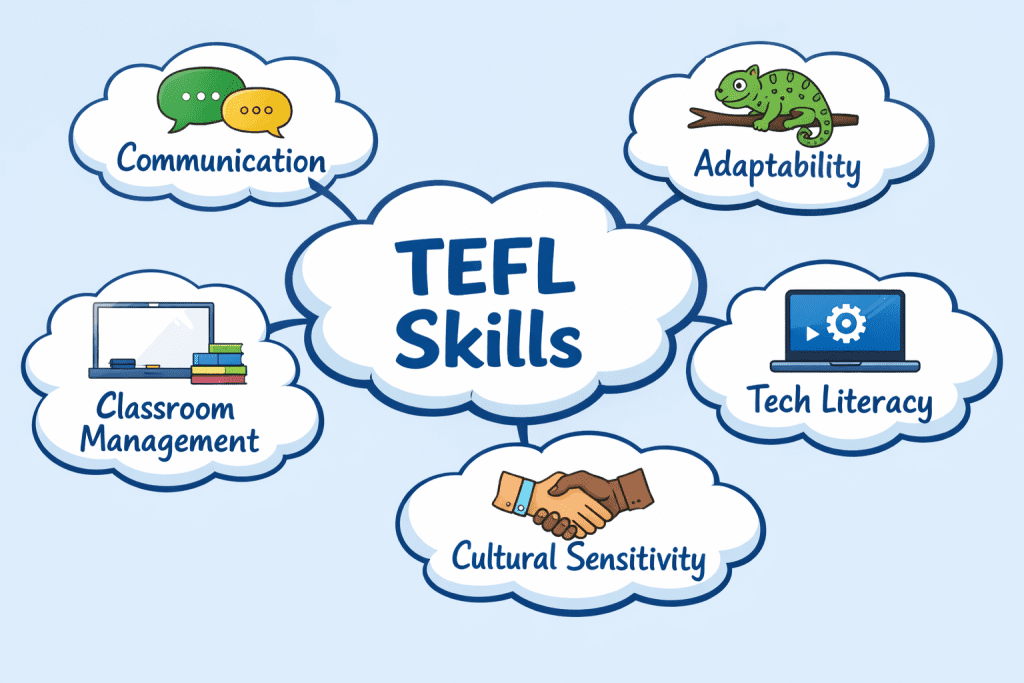
Clear Communication: The ability to explain complex grammar and vocabulary simply and precisely, adapting your language to your students’ level.
Classroom Management: Skills to maintain an orderly, engaging, and productive learning environment, whether online or in person. This includes managing student behaviour, facilitating group activities, and ensuring everyone participates.
Lesson Planning & Delivery: Crafting well-structured lessons with clear objectives, engaging activities, and appropriate assessment methods. This also involves delivering these lessons dynamically and confidently.
Adaptability & Flexibility: The capacity to adjust lesson plans on the fly, respond to unexpected challenges, and tailor teaching methods to diverse student needs, cultural contexts, or technological hiccups.
Patience & Empathy: Learning a new language can be challenging. A great TEFL teacher understands this and provides encouragement, support, and understanding to help students overcome hurdles.
Interpersonal and Professional Skills
Cultural Sensitivity: An open mind and respect for different cultures are paramount. Understanding cultural nuances helps build rapport with students and navigate diverse classroom dynamics effectively.
Organisation & Time Management: Managing multiple classes, preparing materials, grading assignments, and meeting deadlines efficiently are essential for any teaching role.
Problem-Solving: From dealing with unexpected classroom situations to troubleshooting technical issues during an online lesson, the ability to think on your feet is invaluable.
Enthusiasm & Positivity: A positive attitude and genuine enthusiasm for teaching can be infectious, motivating students and making the learning process more enjoyable for everyone.
Technological Proficiency: In 2026, this is non-negotiable. Teachers need to be comfortable using virtual learning platforms, interactive whiteboards, presentation software, and even AI tools like ChatGPT for lesson planning or engagement tools like Kahoot! [4]. For online teaching specifically, strong internet connection management and familiarity with video conferencing are critical.
TEFL Qualifications and Training Pathways in the UK for 2026
To teach English effectively, UK professionals need more than just native English proficiency; they need specific training on how to teach it. In 2026, the landscape for TEFL qualifications has matured, with a clear emphasis on higher-level certifications and practical experience.
The Evolving Standard: Beyond the 120-Hour Minimum
While the 120-hour certification was once the global baseline, often linked to the Cambridge CELTA format, it is no longer sufficient as a standalone qualification for many reputable roles in 2026 [1, 4]. The industry has shifted significantly towards more robust and externally accredited qualifications.
The Gold Standard: Level 4 and Level 5 TEFL Certifications
For UK job seekers, Level 4 and, more critically, Level 5 TEFL certifications are now considered the gold standard. These qualifications typically involve:
120+ Hours of Training: This foundational component covers teaching methodology, grammar, phonology, and lesson planning.
External Accreditation: Crucial for international recognition, ensuring the course meets high educational standards. Look for accreditation from bodies like Ofqual (the UK government’s qualifications regulator) or recognised international TEFL accreditation bodies.
Clear Learning Outcomes: Aligned to international frameworks, ensuring graduates possess verifiable teaching competencies.
Observed Teaching Practice (Practicum): This is a non-negotiable requirement for reputable schools and visa sponsorship in many countries. It provides hands-on experience teaching real students under the supervision of experienced instructors [2, 4]. Many online Level 5 courses now include a mandatory practicum element, either in-person or virtually.
Decision Rule: Choose a Level 5 TEFL if you aim for the best job prospects, higher salaries, and easier visa sponsorship with established schools globally. A Level 4 TEFL might suffice for some entry-level or online roles, but a Level 5 offers a significant competitive edge [3].
Specialised Modules: A Competitive Edge
In 2026, general TEFL certification alone often isn’t enough. Employers expect candidates to have additional specialised training to meet specific market demands [2]. Common and highly sought-after modules include:
Teaching Young Learners (TYL): Essential for roles in primary schools or language academies focusing on children.
Teaching Business English (TBE): Crucial for corporate roles or teaching professionals, a growing segment in online ESL.
Teaching English Online (TEO): Covers digital classroom management, virtual engagement strategies, and platform-specific tools, essential for the booming remote teaching market [4].
Exam Preparation (e.g., IELTS, TOEFL): Valued in countries where students need to pass these exams for university entrance or immigration.
Common Mistake: Opting for a cheap, unaccredited certificate (like a $50 Groupon course) is a major pitfall. The era of these low-cost alternatives has ended; employers and visa authorities now easily distinguish between them and professional, accredited qualifications [3, 4]. Such certificates are increasingly rejected, leading to wasted time and money.
Bachelor’s Degree Requirement
It’s important to note that while a TEFL certificate qualifies you to teach, a bachelor’s degree (in any subject) is now an expected requirement in most regions, particularly across Asia and the Middle East, for visa sponsorship and employment [2]. Some private schools in certain regions might still be flexible, but having a degree significantly broadens your opportunities.
Related Reading: Considering other teaching roles? Explore options like becoming a Primary Class Teacher or a Teacher of Biology if you have a subject specialism.
Career Opportunities and Job Outlook for TEFL Graduates in 2026
The job market for qualified TEFL teachers in 2026 is exceptionally buoyant, offering a diverse array of opportunities both internationally and remotely. This is truly an excellent year to leverage a TEFL qualification.
Global In-Person Teaching Roles
Thousands of language schools, private academies, public schools, and universities across the globe are actively recruiting TEFL-certified teachers. Popular destinations for UK teachers include:
Asia: Countries like South Korea, Japan, China, Vietnam, and Thailand consistently have high demand, often offering attractive packages including flights, accommodation, and competitive salaries.
Middle East: Nations such as the UAE, Saudi Arabia, and Qatar provide some of the highest-paying opportunities, especially for experienced and highly qualified teachers.
Europe: While often requiring EU citizenship for public school roles, private language schools in countries like Spain, Italy, France, and Germany frequently hire UK TEFL teachers.
Latin America: Mexico, Colombia, and Costa Rica offer vibrant cultural experiences alongside teaching opportunities, though salaries may be lower than in Asia or the Middle East.
Edge Case: While most reputable roles require a Level 5 TEFL, some volunteer positions or smaller, less formal schools in certain developing countries might accept a 120-hour certificate, though these often come with fewer benefits or lower pay. It’s vital to research specific country and school requirements carefully.
The Rise of Remote ESL Teaching
Online teaching is no longer just a side hustle; it’s a fully mainstream, professional career path. The demand for online ESL teachers has exploded, with a significant increase in adult learners seeking corporate English, exam preparation, and one-on-one tutoring [3].
Flexibility: Online teaching offers unparalleled flexibility, allowing teachers to set their own hours, work from anywhere, and balance teaching with other commitments.
Diverse Clientele: Opportunities range from teaching young learners via established platforms to providing specialised English coaching for adult professionals globally.
Competitive Pay: Qualified online ESL teachers are commanding hourly rates of £15–£30/hour, which can be highly lucrative, especially with a full schedule [3].
Specialised Niches: There’s strong demand for teachers specialising in Business English, accent reduction, conversation practice, or IELTS/TOEFL preparation.
Salary and Benefits Expectations in 2026
With the increased demand for qualified teachers, salaries and benefits packages have become significantly more attractive in 2026 [3].
Overseas: Reputable schools are offering more competitive salaries, often including benefits such as:
Paid accommodation or housing allowances.
Return flights.
Health insurance.
End-of-contract bonuses.
Direct visa sponsorship (which often depends on a Level 5 TEFL and a bachelor’s degree) [2].
Online: As mentioned, hourly rates are strong, and consistent work can lead to a comfortable income, all without the overhead of commuting or living abroad.
Career Development Beyond the Classroom
A TEFL qualification can also be a springboard for various career paths:
Academic Management: Progressing to roles like Director of Studies, Head of Department, or Academic Coordinator.
Teacher Training: Becoming a TEFL trainer, helping new teachers get started.
Curriculum Development: Designing English language courses and materials.
Educational Technology: Working in the EdTech sector, developing digital learning tools and resources.
International School Teaching: With further qualifications (e.g., a PGCE or QTS), TEFL can lead to teaching subject-specific roles in international schools, such as an EYFS Teacher or a Spanish Teacher.
The outlook for TEFL graduates in 2026 is incredibly positive, offering stability, growth, and the chance for genuinely global adventures.
Practical Steps to Get Started with Your TEFL Journey
Embarking on a TEFL career path is an exciting prospect, but like any significant life change, it requires careful planning and execution. Here’s a step-by-step guide for UK professionals in 2026.
Step 1: Research and Choose the Right TEFL Course
This is the most critical first step. Given the evolving requirements in 2026, prioritise quality and accreditation above all else.
Accreditation is Key: Look for courses accredited by recognised bodies (e.g., Ofqual-regulated Level 5 TEFL or CELTA/Trinity CertTESOL). Avoid unaccredited or suspiciously cheap courses [3, 4].
Course Hours: Aim for 120+ hours, with Level 5 being highly recommended for the best job prospects.
Observed Teaching Practice: Ensure your chosen course includes a practical teaching component, ideally with real students and feedback from experienced trainers [2, 4]. This is often mandatory for reputable jobs and visas.
Specialised Modules: Consider adding modules relevant to your interests, such as young learners, business English, or online teaching, to boost your employability [2].
Online vs. In-Person:
Online: Offers flexibility and can be completed from the UK. Ensure it includes an online or in-person practicum.
In-Person: Provides an immersive learning experience and direct classroom practice. Can be done in the UK or abroad.
Quick Tip: Many UK providers offer flexible payment plans. Factor in the cost of course materials and potential travel for a practicum if it’s not included locally.
Step 2: Enrol and Complete Your TEFL Training
Once you’ve chosen your course, commit to your studies.
Engage Actively: Participate in all lessons, activities, and assignments. The more you put in, the more you’ll get out.
Practise, Practise, Practise: Take every opportunity to teach, whether it’s during your official practicum, to friends, or volunteer groups. Feedback is invaluable.
Build Your Teaching Portfolio: Keep records of your lesson plans, materials, and any feedback received. This will be useful when applying for jobs.
Step 3: Gain Relevant Experience (Even Before Your First Job)
While your TEFL course provides foundational experience, seeking out additional opportunities can make you stand out.
Volunteer Teaching: Offer to teach English at local community centres, libraries, or to immigrant groups in the UK.
Online Tutoring: Start with informal online tutoring platforms to build confidence and gain digital classroom experience.
Create Your Own Materials: Develop supplemental resources, games, and activities to showcase your creativity and initiative.
Step 4: Prepare Your Application Materials
With your qualification in hand, it’s time to prepare for the job search.
Professional CV/Resume: Tailor your CV to highlight your TEFL certification, any teaching experience, and relevant transferable skills.
Cover Letter: Customise each cover letter to the specific school or platform you’re applying to, demonstrating your understanding of their needs.
Demo Lesson Video: Many online platforms and some overseas schools will request a short video of you teaching a demo lesson. Practise and record a high-quality video.
References: Secure professional references, ideally from your TEFL instructors or supervisors from your teaching practice.
Background Checks (DBS): Most reputable employers globally will require a recent enhanced Disclosure and Barring Service (DBS) check from the UK.
TEFL Job Boards: Websites specifically for TEFL jobs list opportunities worldwide.
Online Platforms: Apply directly to major online ESL companies. Research their specific requirements for hours, qualifications, and pay.
Recruitment Agencies: Many agencies specialise in placing TEFL teachers abroad. They can streamline the application and visa process.
Networking: Connect with other TEFL teachers and alumni from your course for insights and potential leads.
Step 6: Navigate Visa and Relocation (for Overseas Roles)
If you’re heading abroad, this step involves significant logistical planning.
Understand Visa Requirements: This is where a Level 5 TEFL and bachelor’s degree become crucial. Many countries have strict regulations [2].
Save Money: Have funds for initial living expenses, flights, and unexpected costs before your first paycheck.
Health Insurance: Arrange adequate travel and health insurance.
Research Your Destination: Learn about the culture, cost of living, transport, and local customs.
Following these steps meticulously will set you up for a smooth and successful transition into your TEFL teaching adventure in 2026.
Frequently Asked Questions About TEFL
Q1: Is TEFL worth it in 2026?
A1: Yes, TEFL is absolutely worth it in 2026, especially a Level 5 certification. There’s an unprecedented demand for qualified English teachers globally, both in person and online, leading to excellent job prospects and competitive salaries for those with the right qualifications [3].
Q2: What’s the difference between TEFL, TESOL, and CELTA?
A2: TEFL (Teaching English as a Foreign Language) and TESOL (Teaching English to Speakers of Other Languages) are broad terms for certifications that train you to teach English. CELTA (Certificate in English Language Teaching to Adults) is a specific, highly respected, and intensive TEFL qualification awarded by Cambridge Assessment English, renowned for its strong practical component. Generally, a CELTA is considered a Level 5 qualification.
Q3: Do I need a university degree to get a TEFL job?
A3: In 2026, a bachelor’s degree (in any subject) is required for visa sponsorship and employment in most countries, particularly in Asia and the Middle East [2]. While some private schools in certain regions might be more flexible, having a degree significantly broadens your opportunities.
Q4: How long does it take to get TEFL certified?
A4: A 120-hour TEFL course can typically be completed in 4-6 weeks full-time, or 2-4 months part-time. Level 5 courses with teaching practice might take longer, often 150-200 hours, extending to 3-6 months depending on the provider and your pace.
Q5: Can I teach English online with a TEFL?
A5: Yes, absolutely! Online teaching with a TEFL is fully mainstream in 2026, with huge demand for teachers. Many TEFL courses now include specialised modules on teaching English online to prepare you for this thriving sector [3, 4].
Q6: How much can I earn with a TEFL?
A6: Salaries vary widely by country, school type, and your qualifications. Qualified online ESL teachers can earn £15–£30/hour [3]. Overseas, salaries can range from £800 to over £3,000 per month, often with benefits like housing, flights, and health insurance, especially for Level 5 certified teachers in high-demand regions [3].
Q7: Are cheap TEFL certificates reputable?
A7: No. The era of cheap, unaccredited TEFL certificates (e.g., $50 courses) has largely ended. Employers and visa authorities in 2026 actively reject these in favour of professional, externally accredited qualifications, such as Level 4 or Level 5 TEFLs [3, 4].
Q8: Do I need to speak another language to teach English?
A8: No, you do not need to speak another language. TEFL methodology focuses on immersion and teaching English in English, using various techniques like visuals, gestures, and simplified language to aid understanding.
Q9: What are the most in-demand specialisations for TEFL teachers?
A9: In 2026, highly sought-after specialisations include Teaching Young Learners, Teaching Business English, Teaching English Online, and Exam Preparation (e.g., IELTS, TOEFL) [2].
Conclusion
Embarking on a TEFL journey in 2026 presents an extraordinary opportunity for UK job seekers and professionals seeking meaningful career development and global adventures. The landscape is ripe with potential, driven by unprecedented demand for qualified English teachers worldwide, both in traditional classrooms and the booming online sector.
For those considering this path, the message is clear: invest in a high-quality, externally accredited Level 5 TEFL certification that includes practical teaching experience and specialised modules. This commitment to professional development will unlock the best-paying roles, streamline visa processes, and equip you with the advanced skills necessary to excel in diverse teaching environments.
Whether your dream is to experience life abroad, teach remotely from the comfort of your home, or simply gain invaluable transferable skills, TEFL offers a dynamic and rewarding route. Seize this moment, embrace the training, and prepare to embark on a fulfilling career that truly connects you to the world.