
Home » Uncategorized » Virtual Assistant: Your Comprehensive UK Career Guide for 2026
Quick Answer: A Virtual Assistant (VA) is a self-employed professional who provides administrative, technical, or creative assistance to clients remotely from a home office or other off-site location. This dynamic role is booming in the UK in 2026, offering significant flexibility and diverse opportunities for job seekers and professionals looking to develop a rewarding career path without traditional office constraints.
Key Takeaways:

A Virtual Assistant (VA) is an independent contractor who offers professional support services to businesses, entrepreneurs, or individuals from a remote location, typically their own home office. This role encompasses a broad spectrum of tasks, from day-to-day administrative duties to highly specialised technical, creative, or strategic support, making it an incredibly versatile career choice in 2026.
The demand for Virtual Assistants is experiencing significant growth, driven by the global shift towards remote and hybrid work models and businesses seeking flexible, cost-effective support. The global virtual assistant market is projected to reach an impressive $44.25 billion by 2027, demonstrating a compound annual growth rate (CAGR) of 20.3% [1]. This surge means more companies, both large and small, are looking to outsource tasks, creating a wealth of opportunities for skilled VAs in the UK.
Many organisations are now favouring dedicated, subscription-based VA models for long-term, predictable support, ensuring continuity and reliability [5]. This trend is also seeing a shift towards full-time nearshore teams over purely freelance VAs, as businesses seek more predictable and ongoing support, while VAs themselves look for stability and long-term career paths [3].
Common Tasks a Virtual Assistant Might Handle:
Choosing to become a Virtual Assistant in 2026 means stepping into a role that values adaptability, digital proficiency, and self-management. It’s ideal if you thrive on variety and enjoy the autonomy of managing your own client portfolio, rather than being tied to a single employer or a rigid 9-to-5 schedule. For instance, a VA might spend their morning managing a client’s social media, their afternoon drafting reports for another, and their evening booking travel for a third – a level of diversity rarely found in traditional roles.
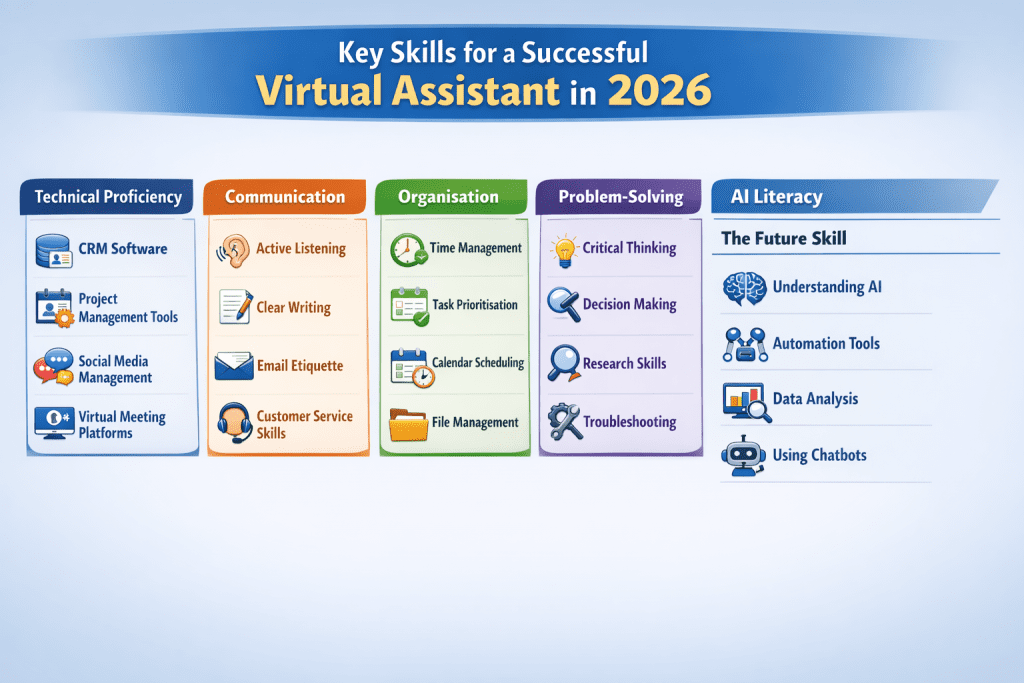
To excel as a Virtual Assistant, a blend of strong organisational, communication, technical, and interpersonal skills is crucial. While specific client needs vary, a core set of competencies forms the bedrock of a successful VA career in 2026. These skills not only enable efficient task completion but also build trust and long-term client relationships.
Key Skills for a Virtual Assistant:
A common mistake aspiring VAs make is underestimating the importance of self-discipline and initiative when working remotely. Without a manager physically present, VAs must be self-starters and highly accountable for their work. Developing a strong personal workflow and setting clear boundaries can prevent burnout and maintain productivity.
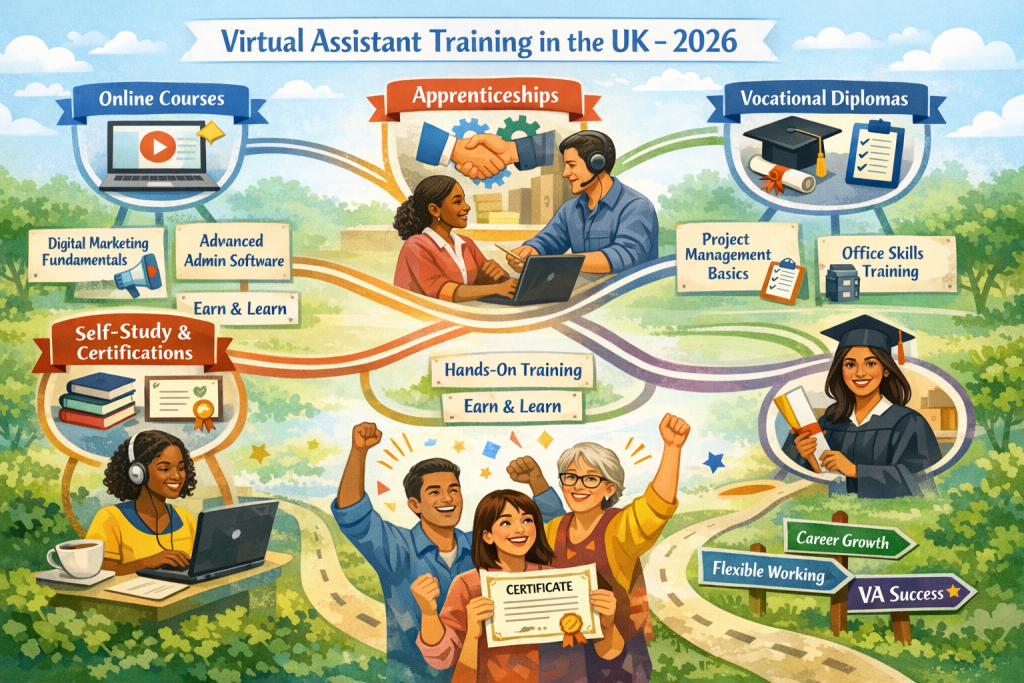
Becoming a successful Virtual Assistant in the UK in 2026 doesn’t necessarily require a specific degree, but a combination of practical skills, relevant training, and continuous professional development is highly valued. Many VAs come from administrative, secretarial, or executive assistant backgrounds, bringing transferable skills directly to the remote setting.
Training and Qualification Options in the UK:
When selecting training, consider your existing skill set and any areas you wish to specialise in. If you have a background as a PA to COO or an Administrator, you likely possess many core administrative skills and might focus on digital tools or a niche specialisation. Conversely, if you’re new to administrative roles, a comprehensive VA course covering fundamental business practices would be more appropriate.
Example: Sarah, a former Receptionist, wanted to transition to a Virtual Assistant role. She enrolled in an online VA course focusing on social media management and email marketing, complementing her excellent customer service and organisational skills. She then built a small portfolio by managing social media for a local charity pro bono, which helped her secure her first paying client.
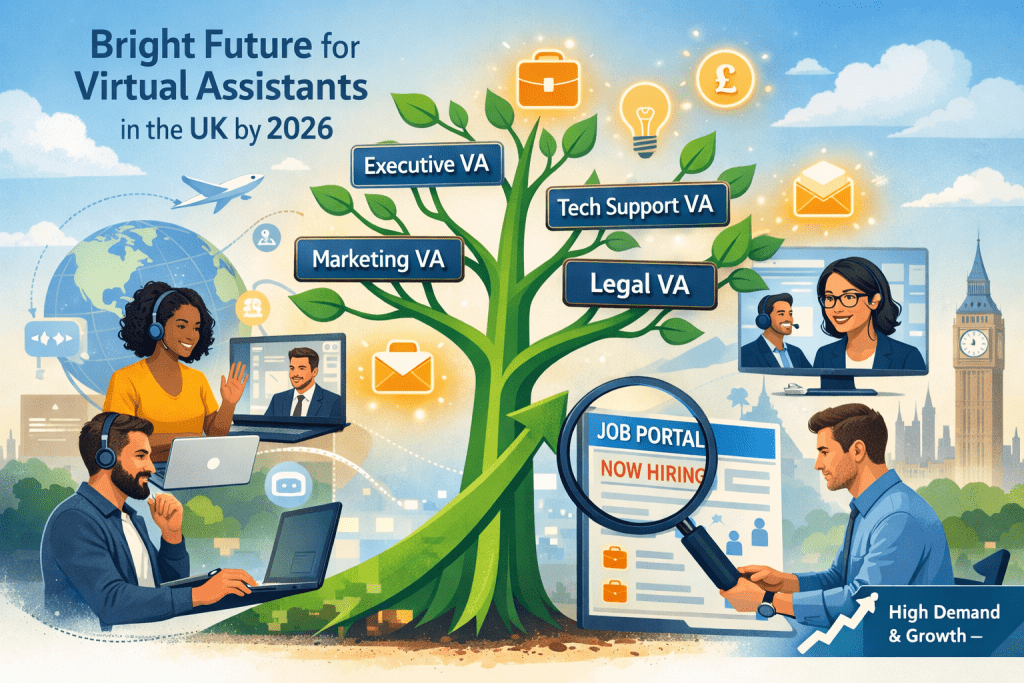
The career landscape for Virtual Assistants in the UK is vibrant and full of potential in 2026, offering diverse opportunities and a robust job outlook. The increasing demand for remote talent, coupled with the evolution of business operations, positions VAs as essential partners for many organisations.
Promising Career Opportunities:
The job outlook for Virtual Assistants in the UK is exceedingly positive. Global demand for remote talent increased by 29% year-over-year, driven by companies transitioning to hybrid and remote operations [1]. This trend is expected to continue, with approximately 32.6 million Americans (22% of the workforce) projected to work remotely by 2026, indicating a broader global shift that will naturally impact the UK market [2]. The ability to offer “on-demand” services through marketplaces, allowing clients to hire within hours, further reduces downtime and accelerates business growth for VAs [5].
Factors Contributing to Positive Job Outlook:
Career Progression: A VA can start with general administrative tasks and gradually specialise as they gain experience, potentially commanding higher rates. Some VAs even expand their operations to become virtual assistant agency owners, employing other VAs. The shift towards full-time nearshore teams also means VAs can find more stable, long-term contracts with companies that value dedicated support and offer training for career progression [3].
Embarking on a career as a Virtual Assistant in the UK in 2026 requires a structured approach, focusing on preparation, marketing, and client acquisition. It’s a journey that blends entrepreneurial spirit with practical skills, offering significant rewards for those who are proactive and dedicated.
1. Define Your Services and Niche:
Before anything else, identify what services you’ll offer. Will you be a general administrative VA, or specialise in a niche like social media management, legal support, or executive assistance? Consider your strengths, past experience (e.g., from being an Admin Assistant or PA), and what areas are in high demand. Specialising can help you stand out in a crowded market.
2. Acquire Necessary Skills and Training:
Even if you have prior administrative experience, consider upskilling in digital tools, AI literacy, or specific software relevant to your chosen niche.
3. Set Up Your Home Office:
Create a dedicated workspace with reliable internet, a good computer, essential software, and professional communication tools (webcam, microphone). Ensure it’s a quiet environment conducive to focused work.
4. Determine Your Pricing Model:
Research industry rates for VAs in the UK. You can charge hourly, per project, or offer retainer packages. Clearly define your rates and what’s included in your service agreements. Consider offering tiered packages to cater to different client needs.
5. Build a Professional Online Presence:
This is your shop window.
6. Network and Market Your Services:
Getting clients requires proactive marketing.
7. Legal and Administrative Setup:
As a self-employed professional in the UK, you’ll need to:
Anecdote: When Liam decided to become a Virtual Assistant, he initially struggled to find clients. He realised his online presence was too generic. He then spent a month creating a stunning portfolio website, specifically showcasing his expertise in managing social media for small businesses – a skill he’d honed as a volunteer for a local charity. Within weeks of launching his improved site and actively engaging in online business groups, he secured two long-term clients, proving the power of a clear niche and a strong online brand.
Thinking about becoming a Virtual Assistant but unsure which specialisation suits you best? Use this interactive tool to explore different paths based on your interests and skills.
Yes, 2026 is an excellent time to become a Virtual Assistant in the UK due to the continued growth of remote work and the increasing demand for flexible, skilled support from businesses. The global VA market is expanding rapidly, offering numerous opportunities [1].
No, a specific degree is not typically required, but relevant skills, training, and experience in administration, digital tools, or a specialised field are highly valued. Practical certifications and a strong portfolio are often more important than a traditional degree.
Earnings vary significantly based on experience, specialisation, client base, and pricing model. Experienced VAs with niche skills can command higher rates, especially if they offer specialised services like legal or technical support.
Yes, absolutely. Over 40% of VAs now use AI-powered tools for automation, and this trend is expected to grow. Modern VAs are blending human judgment with AI efficiency to enhance productivity in tasks like data entry, scheduling, and content drafting [1, 5].
Start by defining your services, building a professional online presence (website, LinkedIn), networking within business communities, and exploring online VA marketplaces or job boards. Offering initial services at a reduced rate or for testimonials can also help build your portfolio.
Key challenges include finding consistent clients, managing your own time and workload, staying motivated and disciplined while working remotely, and continuously updating your skills to remain competitive in a dynamic digital landscape.
Yes, specialisation is increasingly important. By 2026, 40% of VAs are expected to offer highly specialised services in areas like IT, legal, or medical support, allowing them to target specific clients and command higher rates [1].
Essential software includes Microsoft 365/Google Workspace, project management tools (e.g., Asana, Trello), communication platforms (e.g., Zoom, Slack), CRM systems, and potentially AI tools like ChatGPT for content or research, and automation platforms like Zapier or Make [1, 5].
Yes, if you’re working for yourself and earning money from your services, you must register as self-employed with HMRC in the UK. This ensures you pay the correct taxes and National Insurance contributions.
Protecting confidentiality involves using secure communication channels, signing Non-Disclosure Agreements (NDAs), implementing strong password practices, regularly backing up data, and maintaining a secure home office environment.
The role of a Virtual Assistant in the UK is transforming into a highly sought-after and rewarding career path in 2026, offering unprecedented flexibility and diverse opportunities. From traditional administrative support to advanced technical and highly specialised services, the demand for skilled remote professionals is undeniable. By understanding the core skills required, pursuing relevant training, embracing digital tools and AI, and strategically marketing your expertise, you can carve out a successful and fulfilling career as a Virtual Assistant. The future is remote, and the virtual assistant is at its forefront. Take the practical steps outlined in this guide, and you’ll be well on your way to joining this dynamic and growing profession.
[1] Virtual Assistant Statistics Insights Trends – https://thereistalent.com/virtual-assistant-statistics-insights-trends/
[2] Remote Work Statistics – https://join.virtuallatinos.com/blog/remote-work-statistics/
[3] Virtual Assistant Trends In 2026 – https://kongusto.co/virtual-assistant-trends-in-2026/
[4] How Virtual Assistants Are Redefining Business Scalability In 2026 – https://www.bruntwork.co/how-virtual-assistants-are-redefining-business-scalability-in-2026
[5] Virtual Assistant Industry Trends – https://www.wishup.co/blog/virtual-assistant-industry-trends/
[6] Future Of Virtual Assistants Trends 2026 – https://anywheretalent.com/future-of-virtual-assistants-trends-2026/