
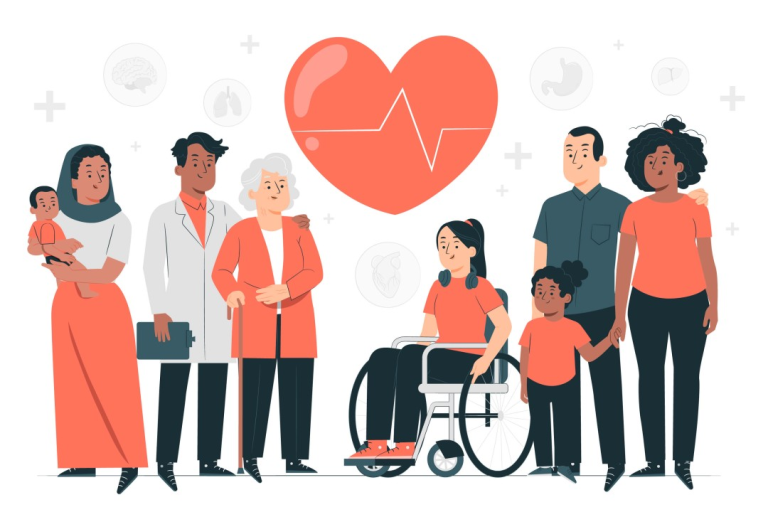
Understanding PIES in health and social care gives students and care workers a simple way to think about the whole person rather than concentrating only on illness, disability or practical care tasks.
Quick Overview
PIES in health and social care is a simple framework for understanding four connected areas of a person’s development and wellbeing: Physical, Intellectual, Emotional and Social.
This guide covers:
✅ What PIES means in health and social care
✅ The four areas of the PIES model
✅ How PIES can be applied across different life stages
✅ Examples of PIES in health and social care
✅ How PIES supports holistic and person-centred care
✅ The limitations of the PIES framework
PIES stands for Physical, Intellectual, Emotional and Social development. These four areas provide a framework for considering how people grow, change and experience wellbeing throughout their lives.
The model is particularly useful because the four areas are connected. A physical health problem can affect confidence. Reduced mobility can make social participation harder. Changes in memory may influence independence and decision-making. A strong family or friendship network can help someone cope emotionally with illness or major change.
That is why questions such as what is PIES in health and social care, what are PIES in health and social care, what is PIES health and social care, and what does PIES stand for often appear in care courses and assessments.
The central idea is straightforward: good care should consider the person’s body, thinking, emotions and relationships together.
The PIES model is useful for learning about development and person-centred care, but it should not be confused with a diagnostic test or formal clinical assessment. Professional care decisions require appropriate assessments, judgement, legal compliance and meaningful involvement of the individual.
What Is PIES in Health and Social Care?
PIES in health and social care is a framework used to understand four important dimensions of a person’s development and wellbeing: Physical, Intellectual, Emotional and Social.
The PIES framework helps learners explore what may be happening in different areas of a person’s life and how these areas can influence one another. It encourages a broader, more holistic view of a person’s needs rather than focusing only on their physical health.

For example, consider someone recovering from a stroke. Their physical needs may include support with mobility, rehabilitation and daily activities. They may also experience difficulties processing information, reduced confidence and changes in their relationships because they can no longer participate in activities in the same way.
A purely physical assessment could therefore miss important aspects of that person’s overall experience.
Using PIES as a thinking framework encourages learners to consider the different areas of development and wellbeing and how they are connected.
What Does PIES Stand For?
If you are asking what is PIES in health and social care, PIES stands for:
| Component | Meaning | Focus |
| Physical | Physical development | Health, mobility and physical abilities |
| Intellectual | Intellectual development | Learning, thinking and knowledge |
| Emotional | Emotional development | Feelings, confidence and emotional wellbeing |
| Social | Social development | Relationships, communication and interaction |
The PIES meaning is therefore not simply a definition to memorise. It is a reminder that development and wellbeing involve several connected dimensions.
What Are PIES in Health and Social Care?
When considering what are PIES in health and social care, it is useful to look at each area separately while recognising that they can affect one another.
Physical
The physical dimension relates to a person’s physical health, development, mobility and ability to carry out everyday activities. This may include factors such as movement, strength, coordination, nutrition and general health.
Intellectual
The intellectual dimension relates to learning, thinking, understanding and gaining knowledge. It can include a person’s ability to process information, solve problems, make decisions and develop new skills.
Emotional
The emotional dimension focuses on feelings and emotional wellbeing. It may include confidence, self-esteem, independence, coping with change and how a person responds to difficult experiences.
Social
The social dimension relates to relationships, communication and interaction with other people. It can include friendships, family relationships, participation in activities and a person’s ability to communicate and maintain meaningful connections.
What Is the PIES Model?
The PIES model in health and social care is a framework for understanding different aspects of a person’s development and wellbeing.
It helps learners and professionals look beyond immediate medical needs and consider wider factors that may affect a person’s quality of life.
The framework may prompt questions such as:
- Can the person move around safely and independently?
- Can they understand information about their care?
- How are they feeling about their circumstances?
- Are they able to maintain relationships that are important to them?
- How might changes in one area affect other areas of their wellbeing?
These questions can support holistic thinking, helping people consider the individual as a whole rather than focusing on one aspect of their needs.
What Is PIES Health and Social Care Used For?
The question what is PIES health and social care often relates to how the framework can be applied when considering a person’s overall development and wellbeing.
PIES can be used as an educational tool to help learners identify different areas that may affect an individual’s quality of life. For example, a physical health problem may affect a person’s confidence, ability to socialise or ability to learn new information.
Similarly, emotional difficulties may affect relationships, communication or participation in everyday activities.
However, PIES should not be described as a universal statutory assessment used by every health and social care professional. Actual health and social care services use formal assessment, care-planning and clinical methods that are appropriate to the person’s needs and the professional setting.
PIES is best understood as a structured educational model that supports broader and more holistic thinking about people. It encourages consideration of physical, intellectual, emotional and social factors and how these different areas can interact with one another.
Understanding the Four Areas of PIES
The four areas of PIES in health and social care can be studied separately, but human development is holistic. A change in one area can influence the others. Understanding the PIES model therefore involves considering how physical, intellectual, emotional and social development are connected.
When asking what does PIES stand for, the acronym represents Physical, Intellectual, Emotional and Social development. The PIES meaning provides a useful way of exploring different aspects of a person’s development and wellbeing throughout life.
Physical Development
Physical development covers the body, physical health and a person’s physical abilities.
In childhood, this includes growth, coordination, movement and motor development. During adolescence, puberty brings major physical changes. In adulthood and older age, health conditions, injury, disability and ageing may affect physical abilities.

Within PIES in health and social care, physical development can involve:
- Health conditions
- Mobility and balance
- Nutrition and hydration
- Strength and coordination
- Sensory abilities
- Sleep
- Personal care
- Physical independence
- Changing support needs
Imagine an older adult who develops arthritis. The physical effects may include pain and difficulty walking. However, reduced mobility could also affect the person’s ability to shop independently, attend social activities or continue with hobbies.
If the person becomes increasingly dependent on others, their confidence may also decrease.
This shows how physical needs can affect the emotional and social areas of PIES. Good support should therefore consider what independence means to the individual rather than simply completing tasks for them.
Intellectual Development
Intellectual development concerns learning, thinking and the ability to understand and use information.
It can include:
- Learning
- Memory
- Concentration
- Reasoning
- Cognitive skills
- Language
- Decision-making
- Creativity
- Problem-solving
Intellectual development continues throughout life.
Young children gradually develop language and understanding. Adolescents may develop more complex reasoning skills and increasingly independent decision-making. Adults continue learning through education, work, relationships and life experiences.
Later in life, some people may experience cognitive changes, while others remain intellectually active well into older age.
In health and social care, intellectual needs may affect how information should be communicated. For example, someone with cognitive impairment may need information to be broken down into smaller steps. A person with a learning disability may benefit from accessible formats or additional time to process information.
The appropriate response is not to assume that a person cannot participate in decisions. Instead, care should be adapted so that they can understand information and express their choices as far as possible.
Intellectual wellbeing can also involve access to meaningful stimulation. Reading, hobbies, conversation, learning new skills and familiar routines may all be important, depending on the individual’s interests.
Emotional Development
Emotional development concerns feelings, self-esteem, confidence, identity, resilience and the ability to cope with experiences.
People continue to develop emotionally throughout life.
A young child learns to recognise and express emotions. Adolescence may involve significant changes in self-image and identity. Adults may experience emotionally demanding events such as changes in employment, relationships, parenthood, illness or bereavement.
Receiving health or social care can itself have an emotional impact.
Someone entering residential care may feel anxious about losing independence. A person newly diagnosed with a long-term condition may feel frightened or frustrated. Someone recovering from an accident may struggle with their confidence.
Emotional support can include:
- Listening carefully
- Allowing people to express their concerns
- Respecting routines and preferences
- Supporting meaningful choice
- Maintaining dignity
- Encouraging independence where possible
Not every emotional difficulty represents a mental health condition. However, where significant psychological distress or mental illness is suspected, appropriate professional support may be required.
Social Development
Social development concerns relationships, communication and interaction with other people.
It can involve family, friendships, education, work, community participation and wider support networks.
Social development begins early. Children learn to interact with family members and peers, share, communicate and build relationships.
During adolescence, friendships and peer groups may become particularly influential.
In adulthood, relationships may develop through work, family, partnerships and community life.
Older age can bring social changes through retirement, bereavement, reduced mobility or relocation.
Within PIES in health and social care, social wellbeing can involve helping people maintain relationships that are important to them.
This does not mean forcing everyone to take part in organised group activities. One person may enjoy a busy communal environment, while another may prefer weekly contact with a close friend and quiet activities.
Person-centred social support respects these individual preferences.
The question what does PIES stand for can be answered simply: PIES stands for Physical, Intellectual, Emotional and Social.
These four areas provide a structured way of thinking about development and wellbeing. The meaning of PIES is not limited to four separate categories; it also highlights how different aspects of a person’s life can influence one another.
Why Is PIES Important in Health and Social Care?
PIES in health and social care is important because health, development and wellbeing are rarely one-dimensional. PIES development encourages a broader understanding of how physical, intellectual, emotional and social factors can influence a person’s experiences throughout life.

A person’s medical diagnosis may explain something about their physical health, but it does not automatically explain how they feel, what they understand or which relationships matter to them. Looking at these different areas can help provide a more complete picture of the individual.
Supporting Person-Centred Care
The PIES approach aligns closely with the principles of person-centred care promoted by recognised UK care organisations.
The Care Quality Commission (CQC) emphasises that people should be treated as individuals, supported to have choice and control, and involved in decisions about their own care. Its guidance also highlights the importance of maintaining relationships and supporting independence.
For more information, see the CQC guidance on independence, choice and control.
Skills for Care similarly promotes approaches that put people at the centre of support and encourage practitioners to understand what matters to each individual. Its person-centred approaches in health and care guidance includes learning resources relating to care planning, shared understanding and personalised support.
PIES fits naturally with these principles because it prompts staff and learners to think about several dimensions of a person’s life.
However, this does not make PIES a regulatory requirement. Rather, the framework can help learners understand the broader principles behind person-centred practice in PIES health and social care.
Understanding Individual Needs
Two people with the same health condition can have very different care needs.
Imagine two people who are both living with Parkinson’s disease. One lives with a supportive partner, enjoys regular visits from friends and remains confident about participating in community activities.
The other lives alone, has become anxious about falling and has gradually stopped seeing friends.
Their medical diagnosis may be the same, but their social and emotional circumstances differ substantially. Their communication preferences and intellectual needs may also be different.
This is why a diagnosis should not become a shortcut for assuming what someone needs. PIES in health and social care encourages consideration of the individual and their specific circumstances.
Improving Care Planning and Outcomes
PIES information can contribute to more personalised support planning by helping staff identify needs, strengths and goals across several areas of development.
A care plan might include goals around:
- Maintaining mobility
- Understanding medication
- Building confidence
- Maintaining family contact
- Participating in a valued hobby
- Increasing independence with everyday tasks
The important point is that these goals should be meaningful to the individual.
PIES itself is not a care plan. Formal care planning should follow appropriate organisational, legal and professional requirements. The model simply helps broaden the questions being considered when thinking about a person’s needs and goals.
Promoting Holistic Wellbeing
Holistic care means looking at the whole person rather than focusing on one aspect of their health or development.
A physical approach might ask whether someone can walk independently. A holistic approach may also ask:
- Do they understand how to use their mobility equipment?
- Are they afraid of falling?
- Has reduced mobility stopped them from seeing friends?
- Would improved mobility allow them to return to something meaningful?
These additional questions help connect treatment or support with everyday quality of life.
PIES Development Throughout Life
PIES development continues throughout the different stages of life. Physical, intellectual, emotional and social development may change as a person moves from childhood through adolescence and into adulthood and older age.
During PIES in adolescence, for example, young people may experience significant physical changes associated with puberty, develop more advanced intellectual and decision-making abilities, explore their identity and become increasingly influenced by friendships and peer relationships.
Understanding PIES adolescence therefore involves considering how these four areas can develop together and how changes in one area may affect the others.
For example, physical changes during adolescence may influence self-confidence and emotional wellbeing, while changing friendships may affect a young person’s social and emotional development. This demonstrates why PIES can be useful when considering development as a whole.
Overall, PIES in health and social care provides a useful educational framework for understanding how physical, intellectual, emotional and social factors can interact. It encourages a person-centred and holistic approach while recognising that formal assessment and care planning must follow the appropriate professional, organisational and legal requirements.
How Is the PIES Model Used in Health and Social Care?
The PIES model in health and social care can be useful at different stages of support, from understanding a person’s needs to reviewing their progress. It provides a structured way of considering physical, intellectual, emotional and social factors together.
When considering what is PIES in health and social care, it is important to understand that PIES is a framework for thinking about a person’s wider development and wellbeing. It can help learners and care professionals consider different areas of a person’s life rather than focusing only on their medical or physical needs.
Assessing a Person’s Physical, Intellectual, Emotional and Social Needs
Professionals and carers can gather relevant information from several sources.
Observation can help identify changes in movement, mood, communication or behaviour.
Communication with the person is central because they are often the best source of information about what matters to them. Asking about their preferences, experiences and goals can help ensure that support is person-centred.
Formal assessments may provide professional evidence about areas such as mobility, cognition, communication or mental health.
A person’s personal history can help explain their preferences, routines, interests and relationships.
Families, carers and advocates may also provide relevant information where appropriate, particularly when the individual wants them involved or when lawful decision-making arrangements require their participation.
Information gathering should always respect confidentiality, consent, mental-capacity principles and data-protection requirements. PIES does not override any of these responsibilities.
Creating Individualised Care Plans
Information gathered through assessment can then be translated into meaningful goals.
Suppose someone wants to remain able to prepare breakfast independently. The physical dimension might involve safe movement around the kitchen. The intellectual dimension could involve remembering the steps involved or understanding how to use equipment.
The emotional dimension might concern confidence following a previous fall. The social dimension could involve maintaining the morning routine they share with a partner.
A person-centred plan can address these factors together.
The result is more meaningful than simply writing “support with breakfast”. Instead, the plan can consider what the person wants to achieve, what matters to them and what support may help them maintain their independence.
This demonstrates how PIES in health and social care can encourage a broader approach to individualised care planning.
Reviewing Changes in Health and Wellbeing
People’s needs can change over time.
A person recovering after an operation may gradually regain strength and independence. Someone living with a progressive condition may require increasing levels of support. A bereavement could affect emotional and social wellbeing even when physical health remains unchanged.
Regular reviews allow professionals to identify changes and adjust support accordingly.
PIES can help make these reviews broader by prompting consideration of each area of development and wellbeing. This is useful when considering what are PIES in health and social care, as the framework demonstrates that different areas of a person’s life can be interconnected.
Working with Families and Other Professionals
Health and social care frequently involve multidisciplinary working. Depending on the situation, the people involved may include:
- Support workers
- Nurses
- Doctors
- Social workers
- Occupational therapists
- Physiotherapists
- Speech and language therapists
- Psychologists
- Family members
- Advocates
Different people may notice different aspects of an individual’s wellbeing.
For example, a physiotherapist may focus particularly on physical mobility. A support worker may observe changes in confidence or social engagement. A family member may notice that the person’s communication has changed.
Sharing relevant information appropriately can improve communication and coordination between those involved in a person’s care.
However, the individual’s choices, preferences, privacy and confidentiality should remain central throughout the process.
When considering what are PIES in health and social care, PIES refers to four interconnected areas: Physical, Intellectual, Emotional and Social.
The framework can help learners and professionals consider how these areas may affect one another. For example, reduced physical mobility may affect a person’s confidence and ability to maintain social relationships, while emotional difficulties may affect motivation and participation in everyday activities.
The question what is PIES health and social care relates to the use of PIES as a framework for considering a person’s wider needs and wellbeing.
PIES is not a replacement for formal professional assessments, clinical judgement or legally required care-planning processes. Instead, it provides a useful way of organising thinking about different aspects of a person’s development and experiences.
By considering physical, intellectual, emotional and social factors together, PIES in health and social care can support a more holistic and person-centred understanding of individual needs.
PIES in Health and Social Care Examples
A single, detailed scenario can show how the four areas of PIES connect more clearly than four unrelated examples. The following example demonstrates how PIES in health and social care can be applied to an individual receiving care.
Example: Applying the PIES Model to an Individual Receiving Care
Imagine Mary, aged 84, is moving into residential care after experiencing several falls at home.
Mary has arthritis, takes several prescribed medicines and uses a walking frame. Until recently, she lived independently.
Mary enjoys reading, completing crosswords and speaking with her grandchildren. However, she feels nervous about moving into residential care because she worries that staff will make every decision for her.
Her needs could be considered using the PIES model:
| PIES Area | Example Consideration |
| Physical | Mobility support, medication, nutrition, pain management and reducing the risk of falls |
| Intellectual | Memory activities, reading, crosswords, understandable information and mental stimulation |
| Emotional | Managing anxiety, protecting independence and rebuilding confidence |
| Social | Maintaining family relationships and participating in activities she genuinely enjoys |
The physical area may initially seem the most urgent because of Mary’s history of falls. However, focusing only on physical safety could result in care that does not fully meet her needs.
For example, staff might decide that the safest option is to do everything for Mary. Although this may reduce some immediate risks, it could unintentionally reduce her independence, confidence and opportunities to remain active.
A person-centred approach would instead ask what Mary can safely continue doing herself and what support would help her maintain choice and control.
Intellectually, Mary may value access to books, newspapers and crosswords. She should also receive information about her care in a way that she can understand, allowing her to participate in decisions about her support as far as possible.
Emotionally, acknowledging Mary’s anxiety can help staff understand why choice, independence and familiar routines matter so much to her.
Socially, regular contact with her grandchildren may be more important to Mary than attending every organised group activity. Her social needs should therefore be considered according to her own preferences rather than based on assumptions about what social participation should look like.
What Is PIES in Health and Social Care?
The question what is PIES in health and social care can be understood through Mary’s example. PIES provides a framework for considering four connected areas of a person’s development and wellbeing: Physical, Intellectual, Emotional and Social.
In Mary’s situation, her physical health and mobility are connected to her emotional confidence, intellectual interests and social relationships. Considering these areas together can provide a broader understanding of what matters to her.
What Are PIES in Health and Social Care?
When asking what are PIES in health and social care, the four areas are:
- Physical – health, mobility, strength, pain and physical abilities
- Intellectual – learning, thinking, understanding, memory and mental stimulation
- Emotional – feelings, confidence, self-esteem, anxiety and wellbeing
- Social – relationships, communication, interaction and participation
These areas should not be viewed as completely separate. A change in one area can affect the others.
The question what is PIES health and social care refers to the use of the PIES framework to consider a person’s wider needs in a health and social care context.
Mary’s example shows why PIES in health and social care can be useful when thinking about person-centred support. Her physical needs are important, but so are her independence, confidence, interests, relationships and ability to participate in decisions about her care.
This scenario demonstrates how the four areas of PIES can interact in one person’s everyday life and why looking at the whole person can support a more individualised approach to care.
PIES Across Different Life Stages
PIES development can be considered throughout the lifespan because people continue to change physically, intellectually, emotionally and socially.
PIES in Childhood and Adolescence
Childhood involves rapid development in every PIES area.
Physically, children grow and develop coordination.
Intellectually, language, memory and reasoning develop.
Emotionally, children gradually develop self-esteem, identity and emotional regulation.
Socially, they form relationships and learn how to communicate and cooperate.
PIES in adolescence can be particularly complex because several major changes may occur at once.
Physical development includes puberty, growth and sexual maturation.
Intellectual development may involve more advanced reasoning, greater independence and the ability to think about long-term consequences.
Emotional development can involve self-identity, confidence and increasing independence.
Social development often includes changing family relationships and the increasing importance of peer groups.
When learners encounter phrases such as PIES adolescence or PIES in adolescence, they are usually being asked to consider how these four areas develop during the teenage years.
It is important not to assume that every young person develops in the same way or at the same pace.
Pearson’s current health and social care materials explicitly recognise that different areas of development can progress at different rates and that development is holistic.
PIES in Adulthood and Older Age
Development continues in adulthood.
Physical health can change through lifestyle, pregnancy, illness, injury or ageing.
Intellectual development may continue through professional experience, education and everyday problem-solving.
Emotional life can be influenced by employment, relationships, parenthood, loss and major life transitions.
Social networks may also expand, contract or change.
Older age should not automatically be described as a period of decline.
Many older adults remain physically active, intellectually engaged, emotionally resilient and socially connected.
Others may experience health conditions, bereavement, retirement or isolation that affect several areas at once.
Health and social care practice should therefore consider the individual rather than relying on assumptions based on age.
Understanding PIES in health and social care means considering how physical, intellectual, emotional and social development can change throughout a person’s life. This also helps explain what is PIES in health and social care, what are PIES in health and social care, and what is PIES health and social care in relation to different life stages.
Limitations of the PIES Model
A good understanding of PIES includes understanding what the framework cannot do.
PIES Is a Framework, Not a Diagnostic Tool
PIES is useful for organising thinking about development and wellbeing in health and social care.
It cannot diagnose dementia, depression, developmental disorders, mobility conditions or any other clinical problem.
For example, noticing that someone’s memory has changed may highlight an intellectual concern. It does not establish the cause. Appropriate medical or cognitive assessment may be required.
Likewise, noticing low mood within emotional development does not mean that a person can be diagnosed with depression using PIES.
The framework should therefore support, rather than replace, professional judgement and recognised assessment methods.
Individual Experiences Are Different
Human development is influenced by many factors.
These may include:
- Genetics
- Health
- Disability
- Family
- Culture
- Education
- Economic circumstances
- Environment
- Relationships
- Trauma
- Life experience
Two people at the same life stage can therefore have very different strengths and needs.
A rigid use of PIES could become unhelpful if it encourages staff to decide what someone “should” be able to do based purely on age.
A better use of PIES in health and social care is to ask open questions about the individual and consider their unique circumstances.
Understanding what is PIES in health and social care and what are PIES in health and social care also means recognising that PIES is a framework rather than a diagnostic tool. The phrase what is PIES health and social care refers to how the model can be used to support broader thinking about an individual’s development and wellbeing, while recognising its limitations.
How Does PIES Compare With Other Wellbeing Frameworks?
PIES is not the only framework used when discussing development or wellbeing in health and social care.
PIES vs SPICE Model
The PIES and SPICE models share similarities because both encourage people to consider more than physical health.
PIES focuses on:
- Physical
- Intellectual
- Emotional
- Social
SPICE expands this type of framework by including:
- Social
- Physical
- Intellectual
- Cultural
- Emotional
The additional Cultural element draws particular attention to beliefs, values, traditions, identity and background.
This can be useful because culture may influence communication, food, relationships, religious practice, decision-making and expectations around care.
That does not mean culture is irrelevant when using PIES. Person-centred care should consider culture wherever it is important to the individual.
The difference is that SPICE makes culture a separate named component.
Neither framework replaces professional assessment. Both are tools for encouraging broader, more holistic thinking about a person’s needs and wellbeing.
PIES vs Maslow’s Hierarchy of Needs
Maslow’s hierarchy of needs is based on a different idea.
It focuses on categories of human motivation and need, commonly including physiological needs, safety, belonging, esteem and self-actualisation.
PIES focuses on areas of human development and wellbeing. It asks whether something is affecting the person’s physical, intellectual, emotional or social experience.
Maslow may be used to discuss what people need and what motivates them, while PIES is often used to organise discussion of development and wellbeing.
Both frameworks encourage people to look at wider aspects of human life instead of concentrating on one problem alone.
They should not be treated as identical models.
Understanding what is PIES in health and social care means recognising that PIES provides a framework for considering different areas of development and wellbeing. When considering what are PIES in health and social care, the four areas are Physical, Intellectual, Emotional and Social. The phrase what is PIES health and social care therefore refers to how this framework can be used within a health and social care context to support broader and more holistic thinking.
Frequently Asked Questions About PIES in Health and Social Care
What Does PIES Stand For in Health and Social Care?
PIES stands for Physical, Intellectual, Emotional and Social.
The four areas help students and care workers consider different aspects of human development and wellbeing.
The basic PIES meaning is therefore a way of remembering that care should look beyond physical health alone.
Why Is PIES Important in Care?
PIES can help people think holistically about an individual’s needs.
A physical condition may influence confidence, communication, independence and relationships.
Considering each area can contribute to a broader understanding of what matters to the person.
However, PIES does not replace formal professional assessment or care-planning processes.
What Are Examples of PIES in Health and Social Care?
Examples include:
- Physical: Mobility, nutrition, health conditions and physical independence.
- Intellectual: Memory, learning, reasoning and decision-making.
- Emotional: Confidence, self-esteem, emotional wellbeing and coping with change.
- Social: Communication, family relationships, friendships and community participation.
In real care situations, these areas usually overlap.
How Does PIES Support Person-Centred Care?
PIES encourages care workers to look beyond a diagnosis and think about the person’s wider life.
That can include their preferences, abilities, understanding, emotions and important relationships.
This complements person-centred practice because support can be shaped around what the individual actually values.
CQC and Skills for Care both emphasise individualised care, choice, independence and involvement, although neither requires PIES itself as a universal formal assessment tool.
What Are the Five Characteristics of Intellectual Development?
There is no official PIES rule stating that intellectual development must always contain exactly five characteristics.
However, five useful examples are:
- Learning – acquiring knowledge and skills.
- Memory – retaining and recalling information.
- Reasoning – understanding information and forming conclusions.
- Problem-solving – finding solutions to challenges.
- Decision-making – considering options and making choices.
Language, creativity, concentration and communication may also be relevant, depending on the person’s age and circumstances.
What Are the PIES for Different Life Stages?
The categories remain the same throughout life: physical, intellectual, emotional and social.
What changes is the way development appears.
In childhood, rapid physical growth, language development and early relationships are important.
PIES in adolescence may include puberty, increasingly complex thinking, identity formation and changing peer relationships.
In adulthood, work, family relationships, health and life events can shape development.
In older age, retirement, health conditions, bereavement and changing independence may become relevant, although experiences vary considerably between individuals.

Conclusion
Understanding PIES in health and social care provides a practical way to think about human development and wellbeing from a wider perspective.
PIES stands for Physical, Intellectual, Emotional and Social. These areas help explain why people’s needs cannot be understood through a diagnosis or physical condition alone.
A change in mobility can affect independence and social participation. Memory difficulties can influence decision-making. Anxiety can make somebody less willing to take part in activities. Supportive relationships may improve emotional wellbeing and help someone cope with change.
That interconnected understanding is at the heart of the PIES model in health and social care.
The framework is also useful for exploring PIES development throughout life. Childhood, PIES adolescence, adulthood and older age each involve different combinations of physical, intellectual, emotional and social change.
However, the model should be used carefully. It is not a diagnostic instrument, statutory assessment or substitute for professional judgement. Individual development is influenced by health, culture, environment, relationships and personal experience, so people should never be reduced to a checklist.
Jobsland currently lists a wide range of online health and social care courses from different providers. Learners interested in developing their understanding of person-centred care, human development or broader care practice may find relevant learning options there. Before enrolling, they should check the specific provider, course content, assessment and certificate or accreditation status, particularly where a regulated qualification is required for a role.
Ultimately, the meaning of PIES is simple but important: health and social care should consider the whole person. Their physical health matters, but so do their ability to think and learn, their emotional experience, their relationships, their independence and the life they want to lead.
The questions what is PIES in health and social care, what are PIES in health and social care, and what is PIES health and social care can therefore all be understood through the same core idea: PIES provides a way of considering the physical, intellectual, emotional and social aspects of a person’s development and wellbeing.